

Powell’s Surprise Stance Shakes Market Expectations After Rate Cut
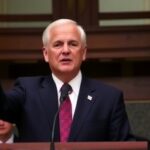
In a pivotal moment for global financial markets, Federal Reserve Chair Jerome Powell held a news conference this week following the central bank’s announcement of a 50-basis-point interest rate cut. What was expected to be a dovish signal for more easing turned into a sobering reminder of the Fed’s data-driven approach. Powell emphasized that another rate cut later this year is far from a foregone conclusion, contrary to What many investors had anticipated. “I always say that it’s a fact that we don’t make decisions in advance. But I’m saying something in addition here: that it’s not to be seen as a foregone conclusion—in fact far from it,” Powell stated, injecting a dose of caution into the economic discourse.
This week’s economics landscape is dominated by this unexpected pivot, as markets grapple with the implications. The rate cut, bringing the federal funds rate to a range of 4.75% to 5%, was aimed at supporting a softening labor market. However, Powell’s remarks highlight a tension within the Fed: while acknowledging a significant labor market slowdown—with unemployment ticking up to 4.2% in recent data—some policymakers are increasingly wary of persistent inflation risks. Consumer prices rose 2.5% year-over-year in the latest report, above the Fed’s 2% target, underscoring why further cuts might be on hold.
Investors reacted swiftly, with the S&P 500 dipping 1.2% in the immediate aftermath of the conference, reflecting disappointment over the tempered outlook. Meanwhile, bond yields climbed as traders adjusted bets on future policy. This development sets the tone for What‘s happening this week in economics, where optimism from the rate cut is tempered by broader concerns about the U.S. economy’s resilience.
Fed Leaders Voice Inflation Fears Despite Economic Strength
Delving deeper into the Federal Open Market Committee’s (FOMC) deliberations, several Fed leaders have expressed concerns that the U.S. economy may be stronger than initially realized, potentially fueling inflationary pressures. Atlanta Fed President Raphael Bostic, in a separate interview this week, noted that recent GDP growth estimates for the third quarter have been revised upward to 3.1%, driven by robust consumer spending and business investment. “We’re seeing signs that the economy has more momentum than we thought,” Bostic said, advocating for a pause in rate cuts to monitor inflation trends.
Meanwhile, Chair Powell held his news conference to clarify the Fed’s position, stressing that decisions would hinge on incoming data. He pointed to mixed signals: while job growth slowed to 142,000 nonfarm payrolls in September—below expectations—wage growth remains elevated at 4.1% annually, which could stoke price pressures. This dichotomy is central to what’s happening this week in economics, as analysts debate whether the Fed is pivoting toward a more hawkish stance.
To provide context, the Fed’s latest dot plot from the September meeting projected two additional cuts by year-end, but Powell’s comments suggest that projection could shift. Economists at Goldman Sachs adjusted their forecast, now predicting only one more cut in December, citing the Chair’s remarks as a key factor. This uncertainty is rippling through sectors like housing, where mortgage rates have edged up to 6.8%, dampening homebuyer activity despite the recent policy ease.
Labor Market Slowdown Raises Recession Red Flags
At the heart of Powell’s address was a candid acknowledgment of a significant labor market slowdown, a factor that prompted the initial rate cut. This week, fresh data from the Bureau of Labor Statistics revealed that initial jobless claims rose to 258,000 for the week ending October 5, the highest in six months. This uptick, coupled with revisions downward to prior months’ hiring figures, paints a picture of cooling employment that could signal broader economic weakness.
Powell was quick to highlight these trends, stating, “The labor market is moving into better balance, but we must remain vigilant.” Despite the slowdown, the unemployment rate holds steady at levels not seen in decades, and consumer confidence indices, like the Conference Board’s measure at 103.2, suggest households are still spending. However, sectors such as manufacturing and retail are feeling the pinch, with factory output declining 0.3% in September amid supply chain lingering effects from global trade tensions.
What’s happening this week in economics extends beyond U.S. borders, as international observers watch how this labor dynamic influences global growth. The International Monetary Fund (IMF) upgraded its 2024 U.S. GDP forecast to 2.7% this week, attributing it partly to the Fed’s proactive stance, but warned that persistent labor issues could drag on recovery. In Europe, the European Central Bank (ECB) is monitoring similar trends, with its own rate cut cycle potentially aligning—or diverging—from the Fed’s path.
Global Ripples: How Powell’s Words Echo in International Markets
The impact of Powell’s news conference is reverberating worldwide, influencing currency markets and trade policies. The U.S. dollar strengthened by 0.8% against a basket of major currencies this week, as traders interpreted the Fed’s caution as a sign of relative U.S. economic strength. Emerging markets, particularly in Latin America and Asia, felt the squeeze, with the Brazilian real depreciating 2% and Indian rupee facing pressure from capital outflows.
Meanwhile, in China, economic data released this week showed factory activity contracting for the fifth straight month, with the Caixin PMI at 49.3. Beijing’s stimulus measures, including a 50-basis-point cut in its reserve requirement ratio, aim to counter deflationary risks, but U.S. policy signals could complicate export-driven recovery. Powell’s emphasis on not pre-committing to cuts aligns with global central banks’ growing wariness of synchronized easing, potentially leading to volatile commodity prices—oil hovered around $73 per barrel amid these uncertainties.
Corporate earnings season, kicking off in earnest this week, is another focal point. Tech giants like Apple reported a 6% revenue increase, buoyed by iPhone sales, but warned of supply chain disruptions tied to economic slowdowns. Wall Street analysts, in a Bloomberg survey, now see S&P 500 earnings growth moderating to 8.5% for the year, down from earlier 10% estimates, reflecting the Fed-induced caution.
Investor Strategies Shift as Fed’s Path Remains Uncertain
As what’s happening this week in economics unfolds, investors are recalibrating portfolios in response to the Fed’s nuanced messaging. Bond funds saw inflows of $12 billion, per EPFR data, as savers seek safety amid equity volatility. Meanwhile, Chair Powell’s held news conference has prompted a surge in defensive stocks, with utilities and consumer staples outperforming the broader market by 1.5%.
Experts like those at JPMorgan advise diversification into inflation-protected securities, given the lingering price pressures. “Powell’s words remind us that the disinflation story isn’t over,” said senior economist Michael Feroli. Looking ahead, the next FOMC meeting in November will be crucial, with key data releases—including October’s jobs report and CPI figures—likely to sway the committee’s direction.
The broader implications for households are tangible: while the rate cut eases borrowing costs for autos and credit cards, uncertainty could prolong high mortgage rates, affecting the housing market’s 4 million pending sales. Policymakers, including Treasury Secretary Janet Yellen, have called for fiscal measures to support workforce re-skilling amid the slowdown.
In the coming weeks, eyes will be on regional Fed surveys and business sentiment indices to gauge if inflation eases enough for another cut. If labor data deteriorates further, the Fed might resume easing; conversely, strong growth could solidify a pause. This delicate balance defines the economic narrative, urging businesses and consumers to navigate with prudence while positioning for potential opportunities in a resilient yet challenged landscape.