

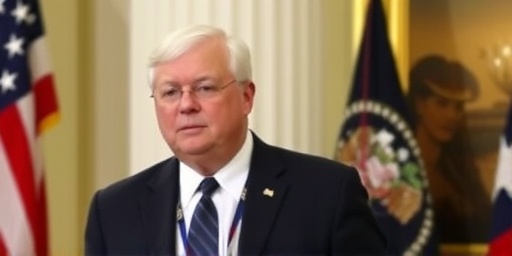
In a stunning development that underscores ongoing fiscal accountability battles in American politics, the United States government has filed a lawsuit against West Virginia Senator Jim Justice and his wife, Cathy Justice, seeking $5.1 million in unpaid taxes that trace back to 2009. This action, announced by the Department of Justice, highlights mounting legal pressures on the prominent political figure whose business empire has long been intertwined with the nation’s economy, particularly in the energy sector.
- Breakdown of the $5.1 Million Tax Claim Against the Justices
- Tracing the Roots: Tax Disputes Dating to 2009 Economic Turmoil
- Escalating Legal Woes: From Coal Debts to Federal Scrutiny
- Economic Ripples: How Justice’s Tax Battle Affects Broader U.S. Fiscal Health
- Path Forward: Potential Outcomes and Political Fallout for Justice
The suit alleges deliberate evasion of federal tax obligations, painting a picture of financial mismanagement that could ripple through West Virginia’s economy and beyond. As the United States grapples with broader economic recovery efforts post-pandemic, high-profile cases like this one draw scrutiny to how personal finances of lawmakers intersect with public trust and economic stability.
Breakdown of the $5.1 Million Tax Claim Against the Justices
The core of the lawsuit revolves around unpaid federal income taxes, penalties, and interest accrued over more than a decade. According to court documents filed in the U.S. District Court for the Southern District of West Virginia, the Internal Revenue Service (IRS) claims that Senator Justice and his wife failed to report and pay taxes on substantial income derived from their extensive business holdings, including coal mining operations and real estate ventures.
Sources close to the investigation reveal that the unpaid amount specifically includes $3.4 million in principal taxes, compounded by $1.7 million in penalties and interest. This figure stems from discrepancies in tax returns dating as far back as 2009, a period when Justice’s companies, such as Bluestone Industries, were navigating the volatile coal market amid shifting environmental regulations and economic downturns.
“The United States economy relies on fair taxation to fund essential services, and this case exemplifies why enforcement is crucial,” stated IRS Commissioner Danny Werfel in a prepared statement. “No individual, regardless of their position, is above the law when it comes to fulfilling tax obligations.”
The allegations detail how the Justices allegedly underreported income from asset sales and operational profits, a tactic that prosecutors argue was systematic. For instance, in 2012 alone, the suit points to over $800,000 in unreported earnings from a coal mine transaction that should have triggered immediate tax liabilities. This isn’t just a personal matter; with Justice’s businesses employing thousands in West Virginia, the case raises questions about corporate tax compliance in rust-belt economies.
Tracing the Roots: Tax Disputes Dating to 2009 Economic Turmoil
The timeline of this lawsuit is deeply rooted in the economic landscape of the late 2000s, when the United States economy was reeling from the Great Recession. Senator Jim Justice, a billionaire coal magnate turned politician, built his fortune during this era through aggressive expansions in the energy sector. However, as the lawsuit outlines, tax troubles began surfacing around 2009, coinciding with federal stimulus efforts aimed at stabilizing the broader economy.
Court filings describe a pattern where the Justices deferred reporting income from high-value deals, such as the acquisition of additional mining lands in 2010, which generated millions but were allegedly shielded through complex trusts and offshore entities. By 2013, the IRS had initiated audits, uncovering inconsistencies that ballooned into the current $5.1 million demand.
Historical context adds layers to the story. During the Obama administration’s push for clean energy transitions, coal-dependent states like West Virginia faced economic headwinds, with GDP contributions from mining dropping 15% between 2008 and 2015, according to U.S. Bureau of Economic Analysis data. Justice’s companies, while resilient, reportedly used tax strategies that the government now views as evasive, potentially depriving federal coffers of funds needed for economic recovery programs.
Experts note that such disputes aren’t isolated. A 2022 Government Accountability Office report highlighted that wealthy individuals in extractive industries often exploit loopholes, contributing to a $600 billion annual tax gap in the United States economy. “This case dating back to 2009 illustrates how long-standing issues in tax enforcement can fester, impacting everything from infrastructure funding to social services,” said tax policy analyst Elena Ramirez from the Brookings Institution.
Further details from the suit include specific instances, like a 2015 real estate flip in Charleston, West Virginia, where profits exceeded $2 million but were partially offset through questionable deductions. These revelations come at a time when the United States economy is showing signs of strength, with GDP growth at 2.5% in the latest quarter, yet persistent inflation and debt concerns amplify the stakes of fiscal accountability.
Escalating Legal Woes: From Coal Debts to Federal Scrutiny
Senator Jim Justice’s legal entanglements extend far beyond this tax suit, forming a web of financial controversies that have dogged his career. Elected as West Virginia’s governor in 2016 before ascending to the U.S. Senate in 2024, Justice has faced multiple lawsuits over unpaid debts, environmental violations, and now this high-stakes tax battle involving his wife.
Prior to the tax action, Justice’s family businesses were hit with a $4.5 million judgment in 2020 for defaulting on loans tied to his Greenbrier Resort, a luxury property that symbolizes his opulent lifestyle. Additionally, in 2017, the state sued his coal companies for over $1 million in unpaid workers’ compensation premiums, a case that dragged on for years and spotlighted labor issues in the declining coal sector.
The involvement of Cathy Justice, who co-manages several family enterprises, adds a personal dimension. The lawsuit accuses the couple of jointly filing returns that concealed joint assets, including a private jet and multiple properties valued at over $50 million. “These aren’t just oversights; they represent a deliberate strategy to minimize tax exposure,” alleged U.S. Attorney for the Southern District of West Virginia, Will Thompson, during a press briefing.
Public reaction has been swift, with watchdog groups like Citizens for Responsibility and Ethics in Washington (CREW) calling for Justice’s resignation. “As a senator influencing economic policy, his unpaid taxes dating to 2009 undermine credibility in an era where the United States economy demands transparent leadership,” CREW executive director Noah Bookbinder remarked.
Moreover, the suit intersects with ongoing probes into Justice’s 2021 bankruptcy filing for one of his coal firms, which creditors argued was a ploy to dodge $100 million in obligations. This mounting pressure could force asset sales, potentially disrupting jobs in West Virginia’s economy, where mining still accounts for 5% of employment and billions in output annually.
Economic Ripples: How Justice’s Tax Battle Affects Broader U.S. Fiscal Health
While the lawsuit targets the Justice family directly, its implications extend to the United States economy at large, where tax compliance among the elite is under intensified IRS scrutiny following the 2022 Inflation Reduction Act’s funding boost. That legislation allocated $80 billion to the IRS, enabling pursuits like this one, which aim to recover lost revenue estimated at $688 billion for 2021 alone by the Treasury Department.
In West Virginia, Justice’s troubles could exacerbate economic vulnerabilities. The state, heavily reliant on coal and tourism, has seen unemployment hover at 4.1%, above the national average. If the suit leads to liquidations, analysts predict a potential loss of 500-1,000 jobs, echoing the 2015-2016 coal bust that shuttered 200 mines nationwide and contributed to a 0.5% dip in regional GDP.
On a national scale, the case fuels debates over tax equity. With the United States economy posting robust consumer spending—up 2.2% in Q3 2024—critics argue that high-profile evasions erode public confidence in institutions. A Pew Research Center survey from last year found 62% of Americans believe the tax system favors the wealthy, a sentiment this lawsuit could amplify.
Economists like Mark Zandi from Moody’s Analytics warn that unresolved fiscal disputes among politicians distract from pressing issues, such as the $34 trillion national debt. “When leaders like Senator Justice face suits for unpaid taxes, it complicates legislative efforts on economic reforms, from infrastructure bills to green energy incentives,” Zandi observed.
Furthermore, the timing aligns with midterm election cycles, where economic narratives dominate. Justice’s Democratic affiliation—after switching from Republican in 2017—positions this as a partisan flashpoint, potentially influencing voter turnout in coal country and shaping perceptions of economic stewardship.
Path Forward: Potential Outcomes and Political Fallout for Justice
As the lawsuit progresses, Senator Justice and his wife have 30 days to respond, with a preliminary hearing scheduled for next month in Charleston. Legal experts anticipate a drawn-out battle, possibly involving settlements or trials that could drag into 2025, coinciding with key economic policy votes in Congress.
Possible resolutions include a negotiated payment plan, asset forfeitures, or even criminal referrals if fraud is proven. Justice’s team has hinted at countersuing, claiming IRS overreach, but sources suggest internal pressures to resolve quietly to salvage his Senate tenure.
Looking ahead, this case may catalyze broader reforms in congressional ethics, such as mandatory financial disclosures. With the United States economy projected to grow at 2% in 2025 per Federal Reserve estimates, ensuring tax compliance among elites could bolster revenue for initiatives like childcare credits and climate investments.
For West Virginians, the fallout might mean economic diversification pushes, as Governor Jim Justice’s dual role amplifies the stakes. Community leaders, including the West Virginia Chamber of Commerce, urge swift resolution to stabilize local markets. “We need focus on growth, not litigation,” said chamber president Kristen Keller.
Ultimately, this saga serves as a cautionary tale in an era of economic resurgence, reminding that personal fiscal responsibility is integral to national prosperity. As investigations continue, the eyes of the nation—and the economy—remain fixed on Senator Justice’s next moves.