
Trump Pushes Xi Jinping for Jimmy Lai’s Release in Tense US-China Summit Talks
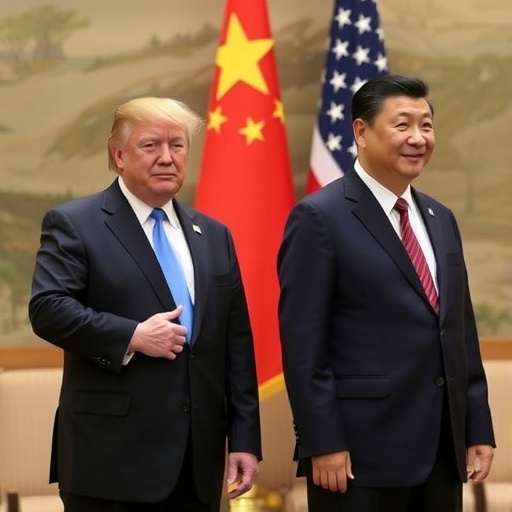
In a bold move that underscores escalating tensions in US-China relations, President Donald Trump has vowed to personally press Chinese President Xi Jinping for the immediate release of Hong Kong media tycoon Jimmy Lai during their forthcoming high-stakes meeting. The announcement, made during a White House press briefing on Wednesday, comes amid mounting humanitarian concerns over Lai’s deteriorating health after more than three years in detention, fueled by advocacy from over 30 bipartisan US lawmakers.
Trump‘s pledge highlights the intricate balance of diplomacy, human rights, and geopolitical strategy as the two superpowers navigate a fraught relationship marked by trade disputes, technological rivalries, and ideological clashes. Lai, a 76-year-old pro-democracy advocate and founder of the now-shuttered Apple Daily newspaper, has become a symbol of Beijing’s crackdown on press freedoms in Hong Kong, drawing international scrutiny to the city’s eroding autonomy under China’s National Security Law.
“Jimmy Lai is a fighter for freedom, and his health is failing behind bars— that’s not right, and Xi needs to hear it straight from me,” Trump stated emphatically, emphasizing the personal nature of his intervention. This development not only spotlights Lai’s plight but also signals potential shifts in how the US leverages bilateral talks to address human rights abuses in Hong Kong.
Lawmakers’ Bipartisan Push Ignites Call for Lai’s Freedom
The catalyst for Trump’s announcement was a fervent letter from over 30 US lawmakers, spanning both Republican and Democratic lines, urging the administration to prioritize Jimmy Lai’s release in discussions with Xi Jinping. Led by figures such as House Foreign Affairs Committee Ranking Member Michael McCaul (R-TX) and Representative Chris Smith (R-NJ), the group cited Lai’s worsening medical condition—including reports of kidney issues and weight loss—as a humanitarian crisis demanding urgent action.
“Jimmy Lai’s detention is a blatant assault on free speech, and with his health declining rapidly, we cannot stand idly by,” McCaul wrote in the letter, which was delivered to the White House last week. The document, signed by prominent voices like Senators Marco Rubio (R-FL) and Jeff Merkley (D-OR), frames Lai’s case as emblematic of broader erosions in Hong Kong’s freedoms since the 2020 imposition of the National Security Law by Beijing.
Statistics underscore the severity of the situation in Hong Kong: According to a 2023 report by Amnesty International, over 10,000 individuals have been arrested under the security law, with media outlets facing unprecedented censorship. Apple Daily, once Hong Kong’s most vocal pro-democracy publication with a circulation exceeding 70,000, was forced to cease operations in June 2021 after assets were frozen and key staff, including Lai, were jailed on charges of collusion with foreign forces and sedition.
The lawmakers’ initiative reflects a rare unity in a polarized Congress, with the letter invoking the US-Hong Kong Policy Act of 1992, which mandates annual reviews of Hong Kong’s special status. “This isn’t just about one man; it’s about upholding the promises China made to the world under the Sino-British Joint Declaration,” added Smith, a long-time advocate for religious and press freedoms.
Human rights organizations have amplified these calls. Freedom House, in its latest global assessment, rated Hong Kong’s press freedom score at a dismal 22 out of 100, down from 64 in 2019, attributing the decline directly to actions against figures like Lai. Lai’s family, including his son Sebastien, has publicly shared updates on his condition, noting in a recent interview with CNN that “my father’s spirit is unbroken, but his body is paying the price for speaking truth to power.”
Jimmy Lai’s Enduring Legacy as Hong Kong’s Press Freedom Icon
Jimmy Lai’s journey from a rags-to-riches entrepreneur to a jailed dissident encapsulates Hong Kong’s turbulent shift from a beacon of liberty to a tightening grip of control. Born in Guangzhou in 1947, Lai fled to Hong Kong as a teenager amid China’s Cultural Revolution, building a retail empire with Giordano before pivoting to media in the 1990s. He launched Next Magazine in 1990 and Apple Daily in 1995, transforming it into a crusading voice against corruption and authoritarianism.
Under Lai’s stewardship, Apple Daily became synonymous with investigative journalism, exposing scandals that reached the highest echelons of power. Its cartoons and editorials often lampooned Beijing’s leaders, earning it a loyal readership but also the ire of the Chinese Communist Party. Lai’s open support for the 2019 pro-democracy protests, where millions took to the streets against an extradition bill, marked him as a prime target.
Arrested in August 2020, Lai faces multiple charges, including under the National Security Law, which critics argue violates Hong Kong’s Basic Law guarantees of autonomy until 2047. His trial, ongoing since December 2023, has been marred by procedural delays and restrictions on international observers. Lai, who holds British citizenship, has rejected bail and pleaded not guilty, stating in court, “I stand by what I have done because I believe in a free Hong Kong.”
The media mogul’s health has deteriorated significantly in custody, with medical reports from his legal team indicating chronic conditions exacerbated by prison conditions at Stanley Prison. A UN human rights panel in 2022 urged his release, calling his detention “arbitrary” and a violation of international covenants on civil liberties.
Beyond Lai, the crackdown has silenced dozens of journalists. Reporters Without Borders ranks Hong Kong 140th out of 180 countries in its 2023 World Press Freedom Index, a sharp fall from 18th in 2002. Lai’s case has galvanized global campaigns, including #FreeJimmyLai, which has trended on social media with over 500,000 posts since his arrest, according to analytics firm Brandwatch.
Experts like Maria Montgomery, a Hong Kong-based analyst, note that Lai’s imprisonment serves as a deterrent. “By targeting Lai, Beijing sends a message: Challenge the narrative, and you’ll pay dearly,” she told Reuters. This legacy positions Lai not just as a victim, but as a rallying point for those defending Hong Kong’s identity amid US-China relations’ broader strains.
Trump’s Strategy: Human Rights as Leverage in US-China Diplomatic Arena
President Trump’s decision to elevate Jimmy Lai’s release in talks with Xi Jinping fits into a pattern of using human rights as a bargaining chip in US-China relations, reminiscent of his first term’s aggressive posture. During his 2017-2021 presidency, Trump imposed sanctions on Chinese officials over Xinjiang and Hong Kong, while brokering the Phase One trade deal in 2020 that temporarily eased economic tensions but left human rights simmering.
Now, with Trump back in the Oval Office, the upcoming summit—slated for mid-2024 in Singapore—looms as a critical juncture. Advisors suggest Trump views Lai’s case as low-hanging fruit to score diplomatic points without derailing economic dialogues on tariffs and supply chains. “We’ll talk trade, tech, and yes, freedom—Xi knows where I stand,” Trump remarked, alluding to his past Twitter (now X) barrages against Beijing.
US-China relations have been frosty since the pandemic, with bilateral trade volumes hitting $690 billion in 2023 per US Census Bureau data, yet trust remains low. A Pew Research Center survey from early 2024 found 83% of Americans hold unfavorable views of China, up from 66% in 2019, partly due to Hong Kong’s plight.
Trump’s approach draws mixed reactions. Supporters praise it as principled, while critics like former National Security Advisor John Bolton warn it could provoke Xi, who has rebuffed similar pleas from world leaders. In 2023, UK Prime Minister Rishi Sunak raised Lai during a Beijing visit, only to receive a curt denial of health concerns.
Geopolitically, this gambit ties into the Quad alliance and AUKUS pacts, where Hong Kong serves as a litmus test for China’s adherence to international norms. State Department officials have hinted at potential sanctions relief for China if progress is made on Lai, blending carrots with sticks.
Quote from a senior White House official, speaking anonymously: “The president sees this as an opportunity to humanize our diplomacy—Lai’s story resonates with Americans who value free press.” This strategy could redefine how US leaders engage Xi, potentially influencing outcomes on Taiwan and the South China Sea.
Global Echoes and the Road to the Xi-Trump Summit
The international community has watched Lai’s saga with alarm, viewing it as a barometer for Hong Kong’s future and US-China relations at large. The European Union, in a 2023 resolution, condemned Lai’s trial as “politically motivated,” while the UK, citing its handover responsibilities, has granted asylum to over 150,000 Hong Kongers under a special visa scheme.
Celebrities and influencers have joined the fray; actor Benedict Cumberbatch narrated a documentary on Lai, “Jimmy Lai: Soul of Freedom,” which premiered at the 2023 Toronto Film Festival and garnered 2 million views on YouTube. Vatican officials, noting Lai’s Catholic faith, have prayed for his release, with Pope Francis mentioning Hong Kong’s press freedoms in a 2022 address.
As the summit approaches, preparations are underway. US diplomats have coordinated with allies, including Japan and Australia, to present a united front. Intelligence reports suggest Xi may counter with demands on US tech export controls, particularly semiconductors, where restrictions have cost China an estimated $100 billion annually, per Bloomberg estimates.
Looking ahead, the outcome could ripple across global stages. A successful plea for Lai might embolden other detainees, like pro-democracy activist Agnes Chow, who fled to Canada in 2023. Failure, however, risks escalating rhetoric, potentially leading to renewed tariffs or Olympic boycotts tied to Beijing’s 2028 hosting bids.
Analysts predict the talks will test Trump’s deal-making prowess against Xi’s unyielding stance on sovereignty. “This summit isn’t just about Lai; it’s a microcosm of whether dialogue can thaw the US-China freeze,” said Bonnie Glaser, director of the German Marshall Fund’s Asia Program. With stakes this high, the world awaits whether humanitarian appeals can pierce the veil of realpolitik.
In the coming weeks, expect intensified lobbying from NGOs and Capitol Hill, as the push for Jimmy Lai’s release evolves into a defining chapter in the saga of Hong Kong’s struggle and US-China relations’ delicate dance.