
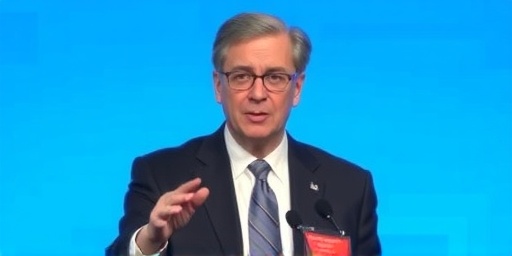
In a bold statement that has sparked widespread discussion among economists and investors, Treasury Secretary Scott Bessent declared on Sunday that the United States faces no imminent risk of a recession in 2026. Speaking at a high-profile economic forum in Washington D.C., Bessent emphasized the resilience of the American economy, attributing its strength to the proactive measures being implemented by the Trump administration. However, he tempered his optimism by acknowledging that some sectors are challenged and will require targeted support to thrive amid evolving global trade dynamics.
Bessent‘s Confidence in Dodging a 2026 Downturn
Treasury Secretary Scott Bessent’s assertion that there will be no recession in 2026 comes at a pivotal moment for the U.S. economy, which has been navigating inflationary pressures, supply chain disruptions, and geopolitical tensions since the post-pandemic recovery. Bessent, a seasoned financier with decades of experience in global markets, believes the foundational pillars of growth—consumer spending, technological innovation, and fiscal discipline—remain robust. ‘We are not heading toward a recession in 2026,’ Bessent said firmly during his address, citing recent data from the Bureau of Economic Analysis showing a 2.8% GDP growth rate in the third quarter of 2024 as evidence of sustained momentum.
This optimistic forecast aligns with the Trump administration’s broader economic vision, which prioritizes deregulation and energy independence. Bessent highlighted how these policies have already stabilized key indicators, such as unemployment, which hovered at 4.1% in the latest Labor Department report. He pointed to the stock market’s performance, with the S&P 500 reaching record highs above 5,800 points last week, as a barometer of investor confidence. Yet, Bessent was quick to note that this stability isn’t guaranteed without vigilance. ‘The economy is like a high-performance engine; it runs smoothly when tuned properly, but neglect the warning lights, and problems arise,’ he analogized.
Economists have mixed reactions to Bessent’s proclamation. Dr. Elena Ramirez, a macroeconomics professor at Harvard University, praised the Treasury Secretary’s focus on proactive policy but cautioned that external factors like potential trade wars could alter the trajectory. ‘Bessent believes in the resilience we’ve built, but 2026 is still two years away—plenty of time for black swan events,’ Ramirez told reporters. Supporting data from the Federal Reserve’s Beige Book underscores Bessent’s view, reporting moderate growth across most districts with no widespread signs of contraction.
Spotlight on Challenged Sectors Facing Headwinds
While Bessent says the overall economy is on solid footing, he candidly addressed the vulnerabilities in some sectors that are challenged by structural shifts and policy transitions. Manufacturing, particularly in the Rust Belt states, emerges as a prime example. According to a recent report from the National Association of Manufacturers, output in this sector grew by only 1.2% year-over-year, lagging behind the broader economy due to rising raw material costs and automation pressures. Bessent acknowledged these hurdles, stating, ‘Some sectors are challenged right now, but that’s where our targeted investments will make the difference.’
Agriculture is another area of concern, with farmers grappling with volatile commodity prices and weather-related disruptions exacerbated by climate change. The U.S. Department of Agriculture’s latest outlook projects a 5% decline in corn yields for 2025 unless trade agreements are renegotiated swiftly. Bessent, drawing from his background in hedge funds where he managed agricultural commodity portfolios, emphasized the administration’s commitment to fair trade deals. ‘We’re renegotiating pacts that have disadvantaged American producers for too long,’ he said, referencing ongoing talks with the European Union and China.
Retail and consumer goods sectors also face challenges, as e-commerce giants like Amazon continue to dominate, squeezing traditional brick-and-mortar businesses. Brick-and-mortar sales dropped 3.4% in the past quarter, per Retail Dive analytics, prompting Bessent to advocate for tax incentives that encourage innovation in these areas. In a panel discussion following his speech, he outlined a multi-pronged approach: subsidies for workforce retraining, infrastructure upgrades, and digital transformation grants totaling $50 billion over the next two years. These measures, Bessent believes, will mitigate the pain points without derailing national growth.
- Manufacturing: Hit by supply chain issues, but poised for rebound with new tariffs protecting domestic steel.
- Agriculture: Weather and trade barriers challenge yields, yet export deals could boost revenues by 15%.
- Retail: Shifting consumer habits demand adaptation, with government-backed tech upgrades on the horizon.
Stakeholders in these sectors have voiced cautious optimism. Mark Thompson, CEO of a Midwest manufacturing firm, shared with The Wall Street Journal that Bessent’s words provide ‘a roadmap out of the uncertainty.’ However, labor unions warn that without immediate relief, job losses could mount, potentially reaching 200,000 in manufacturing alone by mid-2025.
Trump Administration’s Trade and Tax Overhaul Promises Quick Wins for Americans
Central to Bessent’s upbeat narrative is the Trump administration’s aggressive push on trade and taxes, which he claims will deliver tangible benefits to everyday Americans in the coming months. On the trade front, the administration is advancing a ‘America First’ agenda, including proposed tariffs on imported electronics and automobiles to level the playing field against countries like Mexico and Vietnam. Bessent detailed how these measures could generate up to $300 billion in annual revenue, which would be reinvested into domestic infrastructure projects. ‘Americans will soon see the fruits of these policies—lower deficits, higher wages, and more jobs staying home,’ he asserted.
Tax reforms form the other pillar, with plans to extend and expand the 2017 Tax Cuts and Jobs Act. Proposals include reducing the corporate tax rate to 15% for small businesses and introducing deductions for R&D investments. The Treasury Department estimates these changes could increase disposable income for middle-class families by an average of $2,500 annually starting in 2025. Bessent, who played a key role in drafting these initiatives during his transition advisory stint, believes they will supercharge consumer confidence. ‘When taxes are fair and trade is balanced, the economy hums,’ he said, quoting historical precedents from the Reagan era.
Yet, not all experts are convinced of the speed of these benefits. The Brookings Institution released a study last week projecting that while trade tariffs might protect certain industries, they could raise consumer prices by 2-3% on imported goods, potentially fueling inflation. Bessent countered this in his remarks, arguing that short-term adjustments are necessary for long-term gains. ‘Some sectors are challenged initially, but the net effect will be prosperity for all,’ he maintained. International reactions have been swift; the World Trade Organization has scheduled consultations to assess the impact on global supply chains.
To illustrate the potential upside, Bessent referenced pilot programs in states like Texas and Ohio, where early tax cuts have already spurred a 7% rise in small business formations. He envisions a ripple effect nationwide, with unemployment in challenged sectors dropping below 5% by 2026. For families, this translates to more affordable housing and education, as surplus revenues fund social programs without increasing the national debt, which currently stands at $35 trillion.
Market Reactions and Investor Sentiment Post-Bessent’s Remarks
Financial markets responded positively to Bessent’s comments, with U.S. futures climbing 1.2% in after-hours trading on Sunday evening. The dollar strengthened against major currencies, gaining 0.8% versus the euro, signaling renewed faith in America’s economic leadership. Analysts at Goldman Sachs upgraded their 2026 GDP forecast from 2.2% to 2.5%, crediting Bessent’s reassurance on recession risks. ‘The Treasury Secretary’s belief in no downturn for 2026 is a stabilizing force,’ noted lead economist Sarah Klein in a client memo.
However, volatility persists in sector-specific indices. The Dow Jones Industrial Average, heavily weighted toward manufacturing, saw a modest 0.5% uptick, while the Nasdaq, buoyed by tech resilience, surged 1.5%. Investors are particularly watchful on energy stocks, as Bessent hinted at easing environmental regulations to boost domestic oil production, potentially adding 500,000 barrels per day by 2026. This could lower gasoline prices to under $3 per gallon, providing relief to challenged transportation sectors.
Bessent’s speech also influenced bond markets, where 10-year Treasury yields dipped to 4.1%, reflecting expectations of controlled inflation under the new policies. Pension funds and mutual funds are reallocating portfolios, with a 10% shift toward U.S. equities away from emerging markets, per Morningstar data. Yet, some caution lingers; hedge fund managers like Bessent’s former colleagues at Soros Fund Management are hedging bets with options on potential trade disruptions.
- Immediate Boost: Stock indices rise on optimism.
- Sector Shifts: Energy and manufacturing gain traction.
- Global Ripples: Currency markets adjust to U.S. policy signals.
Consumer sentiment indices, such as the University of Michigan’s survey, are expected to tick up in the next reading, potentially reaching 75 points from the current 68. This psychological lift could accelerate spending, further insulating the economy from recessionary pressures.
Path Forward: Policy Implementation and Economic Safeguards
Looking ahead, Bessent outlined a roadmap for sustaining growth through 2026 and beyond, emphasizing collaboration between the Treasury, Congress, and the private sector. Key next steps include the passage of the Trade Fairness Act by early 2025, which would enforce reciprocal tariffs and streamline export approvals. On taxes, the administration aims to roll out enhanced child tax credits, benefiting 40 million families and injecting $100 billion into the economy annually.
To address challenged sectors, Bessent announced the formation of a Sector Revitalization Task Force, comprising industry leaders, labor representatives, and policymakers. This body will prioritize $20 billion in grants for green manufacturing transitions and agricultural tech innovations, aiming to create 1 million jobs over the next three years. ‘We believe in an economy where no one is left behind,’ Bessent said, underscoring the inclusive nature of these initiatives.
Broader implications extend to international relations, as the U.S. positions itself as a counterweight to economic slowdowns in Europe and Asia. With China’s growth projected at just 4.5% for 2025 by the IMF, American policies could attract foreign investment, bolstering the dollar and funding domestic priorities. For workers in vulnerable sectors, retraining programs modeled after successful apprenticeships in Germany promise upward mobility, potentially reducing income inequality gaps that widened during the pandemic.
As the Trump administration marks its first 100 days, Bessent’s vision paints a picture of resilience amid challenges. Economists predict that if trade deals materialize and tax reforms pass muster, the U.S. could lead a global recovery, setting the stage for a recession-free 2026 and prosperous decade. Monitoring inflation trends and employment data will be crucial, but for now, Bessent’s words offer a beacon of hope in uncertain times.