

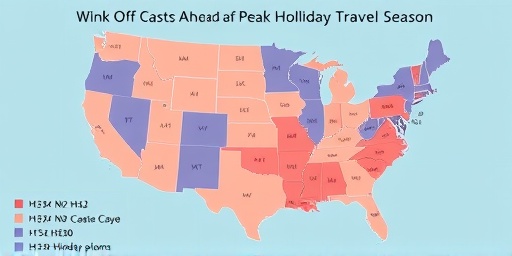
As millions of Americans gear up for Thanksgiving and Christmas travels, a newly identified subclade K variant of the H3N2 Flu strain is fueling worries among health experts. First detected in late October, this aggressive Flu mutation has already been linked to a spike in hospitalizations, prompting urgent calls for vaccination even as questions swirl about the current Flu shot’s match against it.
The Centers for Disease Control and Prevention (CDC) confirmed on Wednesday that subclade K, a genetic offshoot of the dominant H3N2 influenza A virus, is circulating widely across the Midwest and Northeast. With holiday travel projected to hit record highs—over 50 million air passengers expected between now and New Year’s—officials warn of a potential superspreader scenario in crowded airports, planes, and family gatherings.
Subclade K Emerges with Rapid Spread Across Key U.S. Regions
The subclade K flu variant was first sequenced from patient samples in Illinois on October 25, marking it as the latest evolutionary twist in the H3N2 lineage that’s plagued flu seasons for decades. Unlike its predecessors, this subclade features key mutations in the hemagglutinin protein, enhancing its ability to evade prior immunity and bind more effectively to human cells.
By mid-November, the CDC’s FluView surveillance dashboard showed subclade K accounting for 35% of H3N2 samples nationwide, up from virtually zero just weeks prior. Hotspots include Chicago, New York City, and Boston, where wastewater testing has detected elevated flu viral loads. “This strain is moving faster than we anticipated,” said Dr. Emily Hargrove, a virologist at the CDC’s Influenza Division. “Its genetic profile suggests it could dominate the remainder of the season.”
Historical context underscores the threat: H3N2 seasons often drive the highest hospitalization rates among flu subtypes, particularly for adults over 65 and young children. In the 2017-2018 H3N2-dominated season, over 710,000 hospitalizations and 61,000 deaths were attributed to flu, per CDC estimates. Early data for this year mirrors that intensity, with H3N2 already comprising 52% of tested flu positives.
- Key Spread Metrics: 1,200 confirmed subclade K cases in 15 states.
- 15% week-over-week increase in flu-related emergency room visits.
- Predominance in urban areas with high population density.
Hospitalizations Surge as Subclade K Proves More Severe
Hospitals are feeling the strain early this season. The CDC reports over 8,500 flu hospitalizations since September, with subclade K H3N2 implicated in nearly 30% of severe cases among sequenced samples. In particular, pneumonia complications have risen 22% compared to last year at this time.
Dr. Marcus Hale, an infectious disease specialist at Johns Hopkins Medicine, noted, “Patients with subclade K are presenting with more intense symptoms—higher fevers, prolonged coughs, and quicker progression to respiratory distress. We’ve seen a 40% uptick in ICU admissions for flu in the last two weeks alone.”
Demographic impacts are stark: Seniors over 75 face a 5x higher hospitalization risk, while pregnant women and those with comorbidities like diabetes or heart disease are also vulnerable. Preliminary mortality data shows 120 flu-related deaths, double the five-year average for early November.
| Age Group | Hospitalization Rate (per 100,000) |
|---|---|
| 0-4 years | 45.2 |
| 65+ years | 128.7 |
| All Adults | 67.4 |
These figures highlight why holiday travel timing is so precarious, as families converge just as the strain gains momentum.
Vaccine Mismatch Looms but Experts Still Champion Flu Shots
A potential Achilles’ heel: The 2023-2024 flu vaccine, formulated last February, targets an H3N2 clade that’s drifted from subclade K. Antigenic testing shows a moderate mismatch, with vaccine effectiveness estimated at 40-60% against infection—lower than the ideal 70%.
Yet, vaccination remains the cornerstone of defense. “Even with antigenic drift, the shot provides substantial cross-protection against severe disease,” emphasized CDC Director Dr. Rochelle Walensky in a recent briefing. “Last season’s mismatched vaccine still cut hospitalizations by 50% in vaccinated groups.”
Current U.S. vaccination rates hover at 45% for adults and 55% for children—below the 70% herd immunity threshold. Pharmacies like CVS and Walgreens report a 15% uptick in walk-ins post-alerts, but experts urge action now.
- Get vaccinated if not already—it’s not too late, protection kicks in within two weeks.
- High-dose or adjuvanted vaccines recommended for seniors.
- Combine with antivirals like Tamiflu for high-risk exposure.
Holiday Travel Surge Creates Ideal Conditions for Flu Explosion
The Transportation Security Administration (TSA) forecasts 55.4 million passengers screening from November 17 to December 1—a 7% increase over 2022. Airports like Atlanta’s Hartsfield-Jackson and Dallas-Fort Worth, handling millions weekly, are viral hotspots.
“Crowded terminals, recycled cabin air, and post-flight gatherings amplify flu transmission,” warns travel medicine expert Dr. Lena Ortiz. “One infected traveler can seed dozens of cases in a single flight.” International arrivals from Europe and Asia, where H3N2 is also rising, add cross-border risks.
Airlines are stepping up: Delta and United now offer free masks and enhanced cleaning, but compliance varies. Family Thanksgivings, with multi-generational mixing, could ignite local outbreaks.
Real-world example: Last year’s holidays saw a 300% flu case jump in California post-Thanksgiving, per state health data.
Prevention Strategies and Symptom Watch for Travelers
To navigate this holiday travel minefield, health authorities outline clear steps:
- Mask Up: N95 or KN95 in transit, especially if unvaccinated.
- Hygiene Boost: Hand sanitizer with 60%+ alcohol; avoid surfaces.
- Test Before Gathering: At-home flu tests available at $20-30.
- Symptom Vigilance: Fever over 100.4°F, chills, body aches, cough, fatigue, sore throat—common with subclade K. Shortness of breath warrants immediate care.
State health departments are ramping up: New York launched a flu hotline, while California expands testing sites at major hubs.
Looking ahead, the CDC anticipates a prolonged peak through February, potentially overlapping with COVID and RSV. Updated vaccine recommendations may emerge mid-season if subclade K solidifies dominance. Public health campaigns aim to boost vaccination to 60% by December, averting a repeat of severe seasons past. Travelers and families: Prioritize shots, pack precautions, and monitor updates—staying ahead of this flu threat could save holidays and lives.