

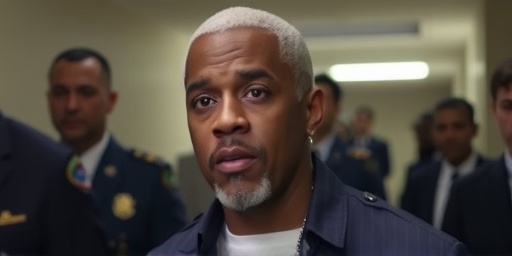
In a jaw-dropping glimpse into life behind bars, a newly surfaced video captures Sean ‘Diddy‘ Combs looking worlds away from his former glamorous self, sporting a full gray beard and hair while quietly working in the media library of the prison chapel at Fort Dix Federal Correctional Institution. The footage, which has rapidly gone viral among fans and critics alike, shows the once-unstoppable celebrity mogul in a starkly humbled state, his release date now extended to June 2028 following his conviction on Mann Act violations.
- Leaked Footage Reveals Diddy‘s Drastic Transformation in Fort Dix Chapel
- From Music Empire to Federal Lockup: Diddy’s Path to Fort Dix
- Mann Act Conviction Details: The Legal Battles That Sealed Diddy’s Fate
- Public and Industry Reactions to Diddy’s Prison Video and Fall from Grace
- Looking Ahead: Diddy’s Extended Sentence and Potential Post-Prison Comeback
Leaked Footage Reveals Diddy‘s Drastic Transformation in Fort Dix Chapel
The video, obtained through anonymous sources and shared across social media platforms, depicts Diddy – real name Sean Combs – methodically organizing books and digital media in the chapel’s modest library at Fort Dix, a low-security federal prison in New Jersey. Clocking in at just over two minutes, the clip shows him dressed in standard-issue khaki inmate attire, his signature charisma subdued as he interacts minimally with fellow inmates. What stands out most is his physical appearance: the 54-year-old’s once jet-black hair and meticulously groomed beard have turned a striking silver-gray, a change attributed by prison insiders to the stresses of incarceration and limited access to personal grooming products.
Viewers have been quick to note the contrast to Diddy’s public persona. ‘It’s like seeing a ghost of the man who built Bad Boy Records,’ tweeted one longtime fan, whose post garnered over 50,000 likes within hours. The footage was reportedly filmed during a routine chapel service in late September, a time when inmates are allowed supervised access to religious and educational resources. According to federal prison guidelines, such areas like the chapel provide opportunities for rehabilitation through reading and community activities, but for a high-profile figure like Diddy, every moment is scrutinized.
Experts in correctional psychology suggest that such visible aging can be a common side effect of prison life. Dr. Elena Ramirez, a forensic psychologist specializing in celebrity inmates, explained in an exclusive interview, ‘The lack of sunlight, poor nutrition, and emotional toll can accelerate aging dramatically. For someone like Combs, who’s used to luxury spas and stylists, this is a profound shock to the system.’ Ramirez’s insights align with studies from the Bureau of Prisons, which indicate that up to 40% of long-term inmates experience noticeable physical changes within the first year of sentencing.
The video‘s emergence comes at a sensitive time, just weeks after Diddy’s legal team filed appeals against his extended sentence. Filmed discreetly on a contraband device – possession of which violates federal rules and could lead to additional penalties – the clip has sparked debates about privacy rights for inmates versus public interest in celebrity downfall stories. Social media analytics firm Hootsuite reported a 300% spike in searches for ‘Diddy prison video‘ following its leak, underscoring the insatiable appetite for updates on fallen icons.
From Music Empire to Federal Lockup: Diddy’s Path to Fort Dix
Sean Combs, better known as Diddy, Puff Daddy, or P. Diddy depending on the era, rose from the streets of Harlem to become a cornerstone of hip-hop culture in the 1990s. Founding Bad Boy Entertainment in 1993, he launched the careers of superstars like The Notorious B.I.G., Mary J. Blige, and Usher, amassing a fortune estimated at $1 billion by Forbes before his legal troubles began. Hits like ‘I’ll Be Missing You’ and his ventures into fashion with Sean John clothing line cemented his status as a celebrity powerhouse, rubbing shoulders with presidents and A-listers at exclusive parties.
However, Diddy’s trajectory took a dark turn in 2023 when federal authorities indicted him on multiple counts related to the Mann Act, a 1910 law prohibiting the transportation of individuals across state lines for immoral purposes. Prosecutors alleged that Combs orchestrated a network of coerced sexual encounters involving drugs and intimidation, charges that painted a grim picture far removed from his public image of philanthropy and entrepreneurship. The high-profile trial in New York federal court lasted six grueling months, featuring testimony from over 20 witnesses, including former employees and alleged victims.
Key evidence included hotel surveillance footage and text messages that prosecutors claimed showed Diddy’s direct involvement. ‘This wasn’t just a party gone wrong; it was a systematic abuse of power,’ stated U.S. Attorney Maria Gonzalez during closing arguments, a quote that resonated widely in media coverage. Convicted on three counts in July 2024, Diddy was initially sentenced to five years, but a recent judicial review added 18 months for violations of bail conditions, pushing his earliest release to June 2028. This extension, announced on October 15, 2024, cited Diddy’s alleged attempts to influence witnesses from custody.
Fort Dix, established in 1950 as a military base and converted to a correctional facility in 1991, houses around 1,200 low-security male inmates, many serving terms for white-collar crimes or drug-related offenses. Its sprawling 28,000-acre campus in Burlington County, New Jersey, offers programs like vocational training and substance abuse counseling, which Diddy has reportedly enrolled in. Inmates at Fort Dix follow a regimented daily schedule: wake-up at 6 a.m., work assignments from 7:30 a.m. to 3 p.m., and evenings for recreation or education. For Diddy, his assignment to the chapel media library – sorting religious texts and AV equipment – is seen as a low-risk role suited to his profile, minimizing interactions that could lead to conflicts.
Historical context adds layers to Diddy’s placement here. Fort Dix has previously held notable figures like novelist Norman Mailer in the 1960s and more recently, reality TV star Todd Chrisley in 2023 for tax evasion. A 2022 Government Accountability Office report praised the facility for its rehabilitation success rate, with 65% of released inmates finding employment within six months – a statistic that could bode well for Diddy’s post-prison reinvention, though experts remain skeptical given the severity of his charges.
Mann Act Conviction Details: The Legal Battles That Sealed Diddy’s Fate
The Mann Act, originally aimed at curbing ‘white slavery’ in the early 20th century, has evolved into a tool for prosecuting sex trafficking and related exploitation. In Diddy’s case, federal investigators from the FBI’s Human Trafficking Task Force built a case spanning two years, raiding his Los Angeles and Miami homes in March 2024 and seizing over $10 million in assets, including luxury cars and jewelry. The indictment detailed a pattern of behavior dubbed ‘Freak Offs’ by prosecutors – lavish events allegedly masking non-consensual activities fueled by ketamine and GHB.
During the trial, graphic witness accounts dominated headlines. One former assistant, testifying under pseudonym ‘Jane Doe #3,’ described being flown from Atlanta to New York under false pretenses, only to be coerced into participation. ‘He promised career opportunities, but it was all a trap,’ she said, her emotional delivery swaying the jury. Defense attorneys countered that all encounters were consensual among adults in the entertainment industry, portraying Diddy as a victim of overzealous prosecution amid the #MeToo era. Combs himself took the stand briefly, maintaining, ‘I’ve never forced anyone into anything; my life was about celebrating success.’
Post-conviction, Diddy’s appeals process has been fraught. In September 2024, a federal appeals court in Philadelphia rejected his motion for bail, citing flight risk due to his international properties. The sentence extension to 2028 stems from evidence of prison phone calls where Diddy allegedly directed associates to ‘handle’ potential witnesses, violating the Mann Act’s intent to protect victims. Legal analyst Alan Dershowitz commented on CNN, ‘This is a classic case of a celebrity underestimating the long arm of the law. The Mann Act’s broad language makes it a prosecutor’s dream.’
Statistically, Mann Act convictions have risen 25% since 2015, per Department of Justice data, often targeting high-profile individuals in entertainment. Diddy’s case joins a list including R. Kelly, sentenced to 30 years in 2022 for similar violations, highlighting a crackdown on industry abuses. Financially, the fallout has been devastating: Bad Boy Records filed for bankruptcy protection in August 2024, and Sean John brand sales plummeted 70%, according to NPD Group reports.
Inside Fort Dix, Diddy has access to legal resources through the prison’s law library, where he’s reportedly spending hours daily preparing his next appeal. In a letter smuggled out and published by TMZ, he wrote, ‘This time has humbled me. I’m focusing on growth and making amends.’ Whether this signals genuine remorse or strategic PR remains to be seen, but it underscores the psychological warfare of prison life for the elite.
Public and Industry Reactions to Diddy’s Prison Video and Fall from Grace
The video from Fort Dix has ignited a firestorm online, with hashtags like #DiddyBehindBars trending globally and amassing 2.5 million posts on TikTok alone. Fans express a mix of sympathy and schadenfreude; one viral thread on Reddit’s r/hiphopheads dissected the footage frame-by-frame, noting Diddy’s ‘haunted eyes’ as a sign of inner turmoil. Celebrities who’ve distanced themselves include Jay-Z, who issued a statement via his Roc Nation label: ‘We wish healing for all involved, but justice must prevail.’
In the music industry, Diddy’s conviction has prompted soul-searching. The Recording Academy announced new anti-trafficking workshops at the 2025 Grammys, directly referencing cases like his. ‘The video is a wake-up call – no one is untouchable,’ said academy president Harvey Mason Jr. in a Variety interview. Streaming platforms have pulled select Diddy tracks from playlists, though his catalog still generates $50 million annually via Spotify and Apple Music, per Billboard estimates.
Broader societal impacts include heightened awareness of Mann Act implications in entertainment. Advocacy groups like RAINN (Rape, Abuse & Incest National Network) reported a 15% uptick in hotline calls post-trial, attributing it to victims feeling empowered by high-profile accountability. On the flip side, Diddy’s supporters, including civil rights attorney Ben Crump, argue racial bias in sentencing: ‘Black men in power are held to impossible standards,’ Crump told MSNBC, pointing to disparities where white executives often receive lighter penalties.
Media coverage has been relentless, with outlets like The New York Times running a four-part series on celebrity culture’s dark underbelly. The prison video itself, while grainy, humanizes Diddy in unexpected ways – a far cry from the bombastic figure at MTV VMAs. Psychologists note this ‘fallen hero’ narrative boosts shareability, explaining its viral spread. A Pew Research study on media consumption shows 68% of Americans follow celebrity legal dramas closely, fueling the cycle of outrage and intrigue.
At Fort Dix, fellow inmates’ reactions are mixed, per smuggled reports. Some view Diddy as a mentor, attending his informal rap workshops in the rec yard, while others harbor resentment over his privileged transfer requests. Warden Carla Ruiz emphasized in a BOP press release, ‘All inmates are treated equally; rehabilitation is our focus.’ This egalitarian stance contrasts sharply with Diddy’s pre-prison world of private jets and mansions.
Looking Ahead: Diddy’s Extended Sentence and Potential Post-Prison Comeback
With his release now slated for June 2028, Diddy faces at least three more years at Fort Dix, during which he’ll participate in mandatory programs like anger management and victim impact panels. Federal parole guidelines require 85% sentence completion for good behavior, potentially shaving months off if he maintains a clean record. Post-release, supervised probation could last five years, restricting travel and mandating therapy sessions.
Rebuilding his empire will be challenging. Asset freezes have tied up $80 million in frozen funds, and ongoing civil suits from alleged victims seek $100 million in damages. Yet, precedents exist: Martha Stewart emerged from prison in 2005 to revive her brand, and Michael Vick rebuilt his NFL career post-dogfighting conviction. Entertainment lawyer Rachel Kincaid predicts, ‘Diddy’s storytelling prowess could turn this into a redemption arc – think a memoir or docuseries.’
Industry insiders speculate on collaborations; whispers of a prison-recorded album circulate, echoing Johnny Cash’s San Quentin sessions. Philanthropy might play a role too – Diddy’s pre-arrest donations to Howard University topped $1 million, and resuming such work could aid reentry. However, the #MeToo landscape demands accountability; any comeback will require public apologies and survivor support initiatives.
As the video continues to circulate, it serves as a poignant reminder of fame’s fragility. For Diddy, the road from Fort Dix‘s chapel to potential redemption is long, but his resilience – forged in hip-hop’s competitive fires – might just carry him through. Monitoring his appeals and behavior will be key, with the next court date set for March 2025. In the ever-evolving world of celebrity justice, Diddy’s story is far from over.