

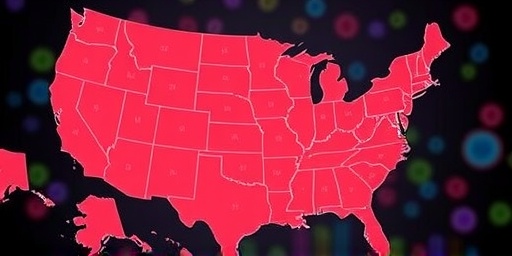
As the winter season approaches, U.S. public health officials are breathing a sigh of relief with flu rates remaining unusually low across the country. However, a shadow looms from international reports: a new influenza strain that has been linked to unexpectedly early and severe flu seasons in several nations. According to a recent analysis in Scientific American, experts are keeping a close watch on this emerging threat, urging vigilance even as domestic cases stay subdued.
The Centers for Disease Control and Prevention (CDC) reported last week that influenza-like illness activity is at minimal levels, with only 0.7% of outpatient visits attributed to flu symptoms nationwide. This marks a stark contrast to the peak of last year’s season, when rates soared above 5% in many regions. Yet, the calm in the U.S. is tempered by global alerts, where this novel strain—tentatively dubbed H3N2v variant—has triggered outbreaks starting as early as September in parts of Europe and Asia.
Global Emergence of a Potent New Flu Strain
The strain in question, identified through genomic sequencing by the World Health Organization (WHO), carries mutations that enhance its transmissibility and virulence. First detected in Australia during their winter months, it quickly spread to neighboring countries, leading to hospitalization rates 30% higher than average. In the Southern Hemisphere’s flu season, which serves as a bellwether for the North, this variant accounted for over 40% of circulating influenza A viruses, per WHO surveillance data.
Scientists at the Scientific American feature highlight that the strain’s genetic profile includes changes in the hemagglutinin protein, allowing it to evade some immune responses more effectively. This isn’t entirely unprecedented—similar adaptations have fueled past pandemics like the 2009 H1N1—but the speed of its spread is alarming. In Chile, for instance, flu activity peaked two months ahead of schedule, overwhelming emergency rooms with cases of severe respiratory distress, particularly among the elderly and young children.
Dr. Maria Rodriguez, a virologist at the University of Sydney, noted in the Scientific American piece, “This strain’s ability to mutate rapidly while maintaining high infectivity positions it as a wildcard for the Northern Hemisphere’s upcoming season.” Her team sequenced over 500 samples, revealing that the virus binds more aggressively to human respiratory cells, potentially explaining the unexpectedly harsh symptoms reported abroad.
U.S. Flu Rates Hold Steady Despite Seasonal Pressures
In the United States, the picture remains reassuringly stable. CDC data from the 2023-2024 season so far shows positivity rates for influenza tests hovering below 2%, a fraction of the 15-20% seen in typical years. Regional breakdowns indicate that even in high-risk areas like the Midwest and Northeast, where cold weather usually accelerates spread, activity levels are classified as “low” or “very low.”
Factors contributing to this lull include widespread vaccination uptake—over 50% of adults and 60% of children under 18 have received the annual flu shot, according to CDC estimates—and robust hybrid work policies that continue to limit close-contact transmission post-pandemic. Wastewater surveillance, a key tool in early detection, has also shown negligible influenza viral loads in major cities like New York and Los Angeles.
However, experts caution against complacency. The low rates remain a positive trend, but travel during the holidays could import the new strain. The CDC’s FluView report emphasizes that while domestic circulation is dominated by familiar H1N1 and seasonal H3N2 subtypes, border screenings and airport monitoring are being intensified to catch any influx of the variant.
- Key U.S. Stats: Only 1,200 lab-confirmed flu cases reported in the past month, down 70% from the same period last year.
- Vaccination Impact: Early data suggests the current vaccine matches 80% of circulating strains, providing solid protection.
- Demographic Trends: Lowest hospitalization rates among school-aged children since 2010.
This stability allows health departments to focus resources on education and preparedness, but the specter of the international strain keeps officials on edge.
Unexpected Early Outbreaks Rock International Flu Seasons
Across the globe, the new strain has upended expectations for flu patterns. In the United Kingdom, the National Health Service (NHS) declared a surge in cases by mid-October, three weeks earlier than the five-year average. Hospital admissions for influenza-related pneumonia jumped 45%, with the strain linked to 60% of severe pediatric cases. Public health campaigns there have shifted to emergency mode, promoting masks in public transport and booster shots for vulnerable populations.
Similarly, in Japan, where cherry blossoms typically signal the end of flu worries, this variant arrived with autumn leaves. The Ministry of Health reported over 10,000 confirmed cases by November, far exceeding projections. Elderly mortality rates from flu complications rose 25%, prompting Prime Minister Fumio Kishida to address the nation: “We must act swiftly to contain this unexpected aggressor.”
Further south, South Africa’s flu season ended abruptly with a twist—the strain caused a bimodal peak, with a secondary wave in spring that strained healthcare systems already recovering from COVID-19. The Scientific American analysis points to climate factors, such as unseasonal warmth aiding indoor gatherings, as accelerators for the unexpectedly early onset.
Comparative studies from the European Centre for Disease Prevention and Control (ECDC) reveal that countries with lower vaccination rates, like parts of Eastern Europe, suffered the most. In Romania, for example, the strain was tied to a 50% increase in ICU admissions, underscoring the virus’s potential for rapid escalation in under-vaccinated communities.
- Australia: Peak activity in July, with 25% higher GP visits.
- Europe: Cross-border spread via tourism, affecting 12 nations.
- Asia: Urban density fueled exponential growth in megacities.
These international episodes serve as a cautionary tale, illustrating how the strain can transform a routine season into a public health crisis overnight.
Experts Urge Heightened Surveillance and Vaccination Drives
Leading influenza researchers are unanimous in their call for proactive measures. Dr. Anthony Fauci, former director of the National Institute of Allergy and Infectious Diseases, told Scientific American, “While U.S. rates remain low, we can’t ignore the lessons from abroad. This strain’s linked to unexpectedly severe outcomes, so keeping experts engaged in real-time monitoring is crucial.”
The WHO has elevated its pandemic risk assessment for this variant to “moderate,” recommending enhanced genomic surveillance and international data sharing. In the U.S., the CDC’s Advisory Committee on Immunization Practices (ACIP) is convening an emergency session to evaluate updating the vaccine formula mid-season if the strain crosses borders.
Quotes from the field paint a picture of urgency without panic. Lyn Finelli, a flu epidemiologist at Emory University, emphasized, “The key is layered defenses: vaccines, antivirals like Tamiflu, and behavioral changes. We’ve seen how quickly things can shift, as evidenced by those early seasons overseas.” Her research, published in a recent Journal of Infectious Diseases, models potential U.S. scenarios, predicting that without intervention, the strain could double hospitalization rates by January.
Public health campaigns are ramping up, with the CDC launching a “Flu Watch” app for symptom reporting and partnering with pharmacies for free rapid tests. Experts also stress the importance of equity—rural and low-income areas, where rates remain but access lags, need targeted outreach to prevent disparities if the strain arrives.
In terms of scientific advancements, mRNA technology from COVID vaccines is being adapted for faster flu strain updates. Companies like Moderna and Pfizer are in trials for a universal flu vaccine that could neutralize variants like this one, offering hope for long-term resilience.
Strategies for Safeguarding the U.S. Against Incoming Threats
Looking ahead, the U.S. is fortifying its defenses against this global interloper. The Department of Health and Human Services (HHS) has allocated $200 million in emergency funds for flu preparedness, including stockpiling antivirals and expanding testing capacity at 500 sentinel sites nationwide.
Forward-thinking implications include integrating AI-driven predictive modeling into flu forecasting. Tools like those developed by BlueDot, which flagged early COVID signals, are now scanning travel data for influenza hotspots. If the strain mutates further, experts predict a need for hybrid vaccines combining flu and COVID protections, given overlapping symptoms.
For individuals, the message is clear: Get vaccinated now, practice hand hygiene, and stay home if sick. Schools and workplaces are encouraged to adopt flexible policies, echoing pandemic-era successes that kept rates remain low.
As winter deepens, the interplay between low domestic rates and international warnings will define the season. By heeding expert advice and leveraging scientific insights from sources like Scientific American, the U.S. can navigate this challenge, potentially averting the unexpectedly severe scenarios unfolding elsewhere. Health officials project that with sustained efforts, flu impact could stay minimal, but the watch continues.