

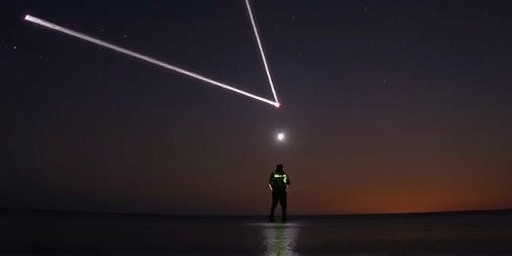
In the predawn hours of Sunday, a spectacular Meteor blazed across the northern Michigan skies, leaving residents in awe and dash cams rolling. The brilliant streak, visible from multiple counties, was captured on video by startled drivers and stargazers, marking one of the most vivid celestial displays in the region this year. NASA’s All-Sky Fireball Network quickly confirmed the event, estimating the object entered the atmosphere at around 40,000 miles per hour before disintegrating harmlessly over Lake Michigan.
Video Footage Reveals Fiery Trail Over Northern Michigan
The Meteor‘s descent began around 4:15 a.m. ET, originating from the northeast and arcing dramatically toward the southwest. Eyewitnesses from Traverse City to Mackinaw City reported a glowing orb that turned the night sky into a canvas of orange and white hues. One particularly clear video, shared widely on social media, shows the fireball lasting about 7 seconds, with fragments trailing like a cosmic sparkler.
“It was like something out of a movie,” said local resident Emily Hargrove from Petoskey, who posted her dashcam footage online. “I was driving home from a night shift, and suddenly the whole sky lit up. My heart raced—I thought it was a plane on fire at first.” Hargrove’s video, which has garnered over 50,000 views on X (formerly Twitter), highlights the Meteor‘s intensity, bright enough to cast shadows on the ground despite the darkness.
Astronomy enthusiasts in Michigan were quick to mobilize. The Michigan Astronomical Society, based in Detroit, received dozens of reports through their hotline. “This was a rare daytime fireball for early morning hours,” noted society president Dr. Alan Whitaker. “The trajectory suggests it skimmed the atmosphere at a shallow angle, which prolonged its visibility and made it so spectacular.”
According to preliminary data from the American Meteor Society, at least 45 witnesses submitted sightings, with the meteor estimated to be about the size of a basketball—roughly 1-2 feet in diameter—before it fragmented. No injuries or property damage were reported, but the event sparked a flurry of emergency calls to local authorities, who initially feared a possible aircraft malfunction.
NASA Confirms Meteor as Small Comet Fragment
Hours after the sighting, NASA scientists at the agency’s Meteoroid Environment Office in Huntsville, Alabama, analyzed sensor data from their global network. The verdict: the meteor was likely a fragment from a comet, breaking apart due to intense atmospheric friction at altitudes between 50 and 30 miles above Earth’s surface.
“Our instruments detected a peak brightness equivalent to a magnitude -10 object, brighter than the full moon,” explained NASA astrophysicist Dr. Loren Anderson in a statement. “Spectral analysis points to carbonaceous material typical of comet nuclei, suggesting this piece originated from a larger body in the solar system, possibly Comet 67P/Churyumov-Gerasimenko or a similar short-period comet.”
This confirmation aligns with ongoing astronomy research into meteoroid streams. Comets, often dubbed “dirty snowballs,” shed debris as they approach the sun, creating trails that Earth intersects during its orbit. The Perseid meteor shower, for instance, stems from Comet Swift-Tuttle, and experts believe sporadic events like this one could be outliers from such streams.
NASA‘s involvement underscores the agency’s role in monitoring near-Earth objects. The space agency operates over 20 all-sky cameras across the U.S., including one in Ann Arbor, Michigan, which captured infrasound waves from the meteor‘s sonic boom. “These detections help us refine models of space weather and potential impacts,” Anderson added. Historical data shows Michigan has seen about 20 confirmed fireballs since 2010, but none as luminous as this recent visitor.
Local Astronomy Community Buzzes with Excitement and Observations
The meteor sighting has ignited a surge of interest in astronomy across Michigan. Community observatories, such as the Headlands International Dark Sky Park in Emmet County, reported a 300% increase in visitor inquiries the day after the event. Park director Sarah Kline shared, “We’ve had families driving up from Grand Rapids just to see if they can spot more. It’s a teachable moment about our dynamic solar system.”
Amateur astronomers played a crucial role in documenting the event. Using apps like SkySafari and Stellarium, enthusiasts triangulated the meteor‘s path, estimating it passed over the Straits of Mackinac before fizzling out. One detailed report from the Grand Traverse Astronomical Society included spectrographic sketches from handheld devices, revealing sodium and magnesium emissions—hallmarks of comet composition.
“In Michigan, with our mix of urban lights and rural dark skies, events like this are gold for public engagement,” said University of Michigan astronomer Prof. Elena Vasquez. Her team at the UM Dearborn Observatory is now crowdsourcing additional videos to map the meteor‘s exact trajectory more precisely. “This could contribute to global databases, helping predict future encounters with comet debris.”
Statistics from the International Meteor Organization indicate that fireballs brighter than magnitude -4 occur only a few times a year per region in North America. This Michigan event ranks among the top 5% for brightness, drawing comparisons to the 2013 Chelyabinsk meteor in Russia, though on a much smaller scale—no airburst shockwave was detected here.
Scientific Insights into Comet Origins and Atmospheric Entry
Delving deeper into the science, the meteor‘s comet link offers a window into primordial solar system materials. Comets are remnants from the 4.6-billion-year-old formation of our planetary neighborhood, carrying water, organics, and volatiles that may have seeded life on Earth. NASA‘s recent OSIRIS-REx and Hayabusa2 missions have returned asteroid samples, but comet fragments like this one provide fresh data without the need for spacecraft.
During atmospheric entry, the meteor—technically a meteoroid until it burns up—experienced temperatures exceeding 3,000 degrees Fahrenheit. Friction with air molecules caused ablation, vaporizing most of the object and producing the observed light show. Any surviving fragments, or meteorites, would have landed in Lake Michigan, making recovery challenging due to the vast water body.
Experts estimate the energy release was equivalent to 1-2 tons of TNT, enough to produce a faint sonic boom heard by some near the impact zone. Astronomy publications like Sky & Telescope have already featured preliminary articles, praising the event’s timing during the waning gibbous moon phase, which minimized light pollution interference.
In the broader context of astronomy, such events remind us of Earth’s vulnerability and beauty. The European Space Agency’s Hera mission, launching in 2024, aims to study comet impacts, and data from this Michigan meteor could inform deflection strategies against larger threats.
Boosting Public Interest in Astronomy and Future Skywatching Tips
The meteor has catalyzed a wave of stargazing enthusiasm in Michigan, with local planetariums scheduling special viewings. The Abrams Planetarium at Michigan State University announced a free lecture series on meteors and comets, expecting record attendance. “Events like this demystify astronomy and encourage STEM participation,” said director Dr. Mark SubbaRao.
Looking ahead, residents are advised to prepare for the upcoming Geminid meteor shower in December, which could yield similar spectacles. NASA recommends using apps like the Meteor Counter for reporting sightings and joining citizen science projects like the Fireball Network.
As climate and light pollution concerns grow, dark sky preserves in Michigan—home to over 10 such sites—offer prime viewing spots. This recent event not only captivated the public but also highlighted the need for continued investment in astronomy infrastructure. Scientists anticipate analyzing full data sets will reveal more about the comet‘s parent body, potentially linking it to known orbital families and enhancing our understanding of cosmic wanderers.
With Michigan‘s clear northern skies, future meteor watches promise more wonders, fostering a deeper connection between humanity and the stars.