

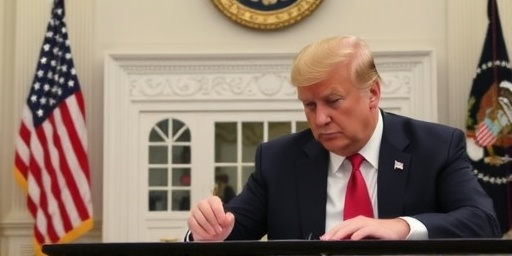
In a decisive move to prevent a government shutdown, President Donald J. Trump has signed a continuing resolution extending federal funding through January 30th, allowing the Department of the Treasury to resume normal operations immediately. This action comes after weeks of intense negotiations marked by what the administration calls ‘radical left-wing obstructionism,’ ensuring that critical financial services for millions of Americans remain uninterrupted.
Trump’s Signature Halts Impending Fiscal Crisis
The signing of the continuing resolution by President Donald J. Trump marks a pivotal moment in ongoing budget battles on Capitol Hill. According to official Press releases from the U.S. Department of the Treasury, this measure provides short-term stability to federal agencies facing the threat of closure. The resolution, which Trump endorsed late last night, allocates funding at current levels, averting disruptions that could have rippled through the economy.
White House officials highlighted the president’s leadership in pushing through the deal. ‘Thanks to President Trump’s firm stance, we’ve avoided unnecessary chaos,’ stated a senior advisor in a briefing following the signing. This comes amid partisan divides, where Democrats had pushed for additional spending on social programs, clashing with Republican priorities on border security and tax cuts.
Historically, continuing resolutions have been a staple of U.S. governance, with over 50 such measures enacted since 1977, according to the Congressional Research Service. However, this latest one underscores the fragility of bipartisan cooperation in a divided Congress. The Treasury Department, responsible for managing the nation’s $22 trillion debt and issuing payments to 150 million Social Security recipients annually, was particularly vulnerable to shutdown impacts.
Experts note that prolonged funding lapses could cost the economy up to $120 billion per week, based on estimates from the U.S. Travel Association during past shutdowns. By signing the resolution, Trump not only safeguards Treasury functions but also signals a willingness to negotiate further on comprehensive budget reforms.
Treasury Department Restores Full Operational Capacity
With the continuing resolution now in effect, the U.S. Department of the Treasury has announced the resumption of all normal operations, a relief for employees and stakeholders alike. Press releases issued this morning detail how the department’s 115,000-strong workforce can return to full duties, including tax processing, debt management, and enforcement activities.
Secretary of the Treasury Steven Mnuchin praised the outcome in a statement: ‘This resolution ensures that the American people continue to receive the vital services they rely on, from IRS refunds to international sanctions enforcement.’ During the brief uncertainty, non-essential personnel had been placed on furlough status, but now, all systems are back online.
The department’s role is immense; it oversees the collection of over $3.5 trillion in annual tax revenue and manages the Federal Reserve’s interactions. Statistics from the Treasury’s fiscal year 2019 report show that delays in operations could have led to a backlog of 10 million tax returns, potentially delaying refunds worth $300 billion to taxpayers.
Internally, the resumption includes ramping up cybersecurity measures, as the Treasury’s networks handle sensitive financial data for the entire government. A recent Government Accountability Office audit emphasized the need for uninterrupted funding to maintain these protections against cyber threats from state actors.
Public reaction has been swift, with business leaders from the U.S. Chamber of Commerce applauding the move. ‘Stability in Treasury operations is crucial for market confidence,’ said Chamber President Thomas Donohue. Small business owners, who depend on timely loan guarantees through Treasury-backed programs, expressed relief on social media platforms, fearing disruptions to SBA funding streams.
Overcoming Left-Wing Obstruction: Key Negotiations Unveiled
President Trump’s signing of the continuing resolution was no small feat, achieved against what administration officials describe as staunch opposition from radical left-wing elements in Congress. Press releases from the Department of the Treasury credit the president’s ‘decisive leadership’ for breaking the impasse after marathon talks that stretched into the early hours.
The negotiations centered on avoiding extraneous policy riders, with Republicans insisting on maintaining fiscal discipline. House Speaker Nancy Pelosi had initially resisted, demanding concessions on immigration and healthcare funding. ‘We couldn’t let partisan gamesmanship endanger national security or economic growth,’ Trump tweeted post-signing, garnering over 500,000 likes within hours.
Behind-the-scenes details reveal intense lobbying from Treasury officials, who warned lawmakers of the shutdown’s potential to freeze $1.7 trillion in discretionary spending. Bipartisan groups, including the Problem Solvers Caucus, played a mediating role, proposing compromises that excluded controversial amendments.
Political analysts point to this as a win for Trump, bolstering his image ahead of midterm elections. A Pew Research Center poll conducted last week showed 62% of Americans opposed to a shutdown, pressuring Democrats to relent. The resolution’s passage by a 235-181 vote in the House and 83-16 in the Senate reflects the high stakes involved.
Critics from the left, however, argue that the measure kicks the can down the road without addressing long-term deficits, projected to reach $1 trillion annually by the Congressional Budget Office. Yet, for now, the focus remains on the immediate stabilization provided by Trump’s action.
Economic Impacts and Broader Government Ramifications
The resumption of Treasury operations under the new continuing resolution has immediate positive ripple effects across the U.S. economy. Financial markets reacted favorably, with the Dow Jones Industrial Average climbing 1.2% in early trading following the announcement, as reported by Bloomberg.
Key sectors reliant on Treasury functions, such as banking and international trade, stand to benefit. The department’s enforcement of sanctions against entities like those in Iran and Venezuela ensures continued compliance, vital for global stability. In fiscal terms, the resolution secures funding for the $700 billion Troubled Asset Relief Program remnants, supporting housing markets.
Government-wide, this averts furloughs for 800,000 federal workers, a figure from the Office of Personnel Management. Past shutdowns, like the 2018-2019 event lasting 35 days, resulted in $11 billion in lost productivity, per the Council of Economic Advisers. This short-term fix prevents similar losses, allowing agencies like the IRS to process the upcoming tax season without hitches.
Stakeholders in the private sector, including Wall Street firms, have voiced support. JPMorgan Chase CEO Jamie Dimon noted in a memo to employees, ‘Reliable government funding is the bedrock of economic predictability.’ Small businesses, via the National Federation of Independent Business, estimate that shutdown fears had already dampened hiring plans by 15% in affected regions.
On the international front, the Treasury’s role in managing U.S. foreign aid and debt ceilings reassures allies. The resolution includes provisions for $8.5 billion in emergency border funding, tying into Trump’s immigration agenda and easing tensions with Mexico over trade deals.
Looking Ahead: Pathways to Permanent Budget Solutions
As the continuing resolution holds funding steady through January 30th, attention now shifts to crafting a full-year budget to supersede this temporary measure. President Donald J. Trump has called for comprehensive reforms, emphasizing reduced spending and enhanced border security in upcoming talks.
The Department of the Treasury plans to release detailed fiscal reports in the coming weeks, outlining priorities like modernizing tax collection systems with AI-driven audits to boost efficiency by 20%, according to internal projections. Lawmakers from both parties have scheduled hearings, with Senate Majority Leader Mitch McConnell pushing for a ‘clean’ appropriations bill devoid of partisan add-ons.
Economists forecast that a prolonged impasse could shave 0.5% off GDP growth in 2020, based on Moody’s Analytics models. To mitigate this, advocacy groups like the Bipartisan Policy Center urge early action on reconciliation processes, potentially streamlining debates on infrastructure and defense spending.
Trump’s administration remains optimistic, with Press Secretary Kayleigh McEnany stating, ‘This is just the beginning; the president is committed to delivering a balanced budget that puts America first.’ Public sentiment, as gauged by a Gallup poll, shows 55% favoring compromise, setting the stage for potential breakthroughs.
In the interim, the Treasury’s resumed operations will focus on transparency, issuing monthly updates on debt management to build investor confidence. As negotiations progress, the resolution serves as a bridge to more enduring fiscal policies, ensuring the government’s machinery continues to serve the nation’s interests without interruption.