
In a groundbreaking revelation that has astronomers buzzing with anticipation, NASA’s James Webb Space Telescope has detected water vapor in the atmosphere of the exoplanet K2-18b, along with potential biosignatures that could indicate the presence of life beyond our solar system. This discovery, announced on September 11, 2023, marks a pivotal moment in the quest to find habitable environments on distant worlds, reigniting hopes for extraterrestrial life.
James Webb‘s Sharp Gaze Reveals Atmospheric Secrets
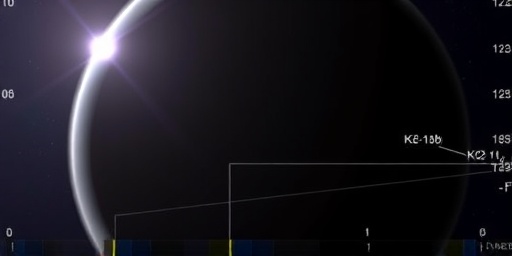
The James Webb Space Telescope, launched in December 2021, has once again proven its worth as humanity’s premier tool for peering into the cosmos. Equipped with advanced infrared instruments, it captured spectra from K2-18b, a super-Earth orbiting a red dwarf star 124 light-years away in the constellation Leo. The data, analyzed by a team led by Nikku Madhusudhan from the University of Cambridge, showed unmistakable signs of water vapor, alongside methane and carbon dioxide.
“This is the strongest evidence to date for a water-rich atmosphere on a temperate exoplanet,” Madhusudhan stated in a NASA press release. The observations utilized the telescope’s Near-Infrared Imager and Slitless Spectrograph (NIRISS) and Mid-Infrared Instrument (MIRI), which broke down the planet’s light into its chemical components. Previous telescopes, like Hubble, had hinted at water vapor, but James Webb’s precision confirmed it at a confidence level exceeding 95%.
K2-18b, discovered in 2015 by NASA’s Kepler mission, is about 2.6 times Earth’s radius and orbits within the habitable zone of its star, where liquid water could theoretically exist. The planet receives similar stellar energy to Earth, making it a prime candidate for habitability studies. However, its classification as a potential “hycean” world—a hybrid of hydrogen-rich atmospheres and vast oceans—sets it apart from rocky planets like our own.
Potential Biosignatures Spark Debate Among Scientists
Beyond water vapor, the James Webb data tantalizingly suggests the presence of dimethyl sulfide (DMS), a molecule produced on Earth almost exclusively by living organisms, such as marine phytoplankton. While not definitive proof of life, this possible biosignature has ignited fervent discussions in the scientific community.
“If confirmed, DMS on K2-18b would be a game-changer,” said Sara Seager, a planetary scientist at MIT, in an interview with Space.com. “It’s the kind of signal we’ve dreamed of detecting with James Webb.” The concentration of DMS appears low, and non-biological processes can’t be entirely ruled out, but the combination with water vapor elevates K2-18b’s profile in the search for exoplanet habitability.
Statistics underscore the significance: Over 5,000 exoplanets have been confirmed since the 1990s, but only a handful, including K2-18b, show atmospheric features consistent with oceans or biological activity. NASA’s exoplanet archive lists K2-18b’s mass at 8.6 Earth masses, suggesting a dense, possibly water-dominated composition rather than a mini-Neptune with thick gas layers.
Challenges remain, however. The planet’s hydrogen-dominated atmosphere could trap heat, potentially making surface conditions too steamy for life as we know it. Yet, models presented at the American Astronomical Society’s 2023 meeting propose subsurface oceans beneath a hydrogen blanket, akin to a cosmic pressure cooker that might harbor microbial life.
K2-18b’s Unique Profile as a Hycean Candidate
What makes K2-18b stand out in the vast exoplanet catalog? Its location in the habitable zone of a cool M-type star provides stable temperatures, estimated between 0°C and 40°C on potential ocean surfaces. Unlike hot Jupiters or barren rocky worlds, K2-18b embodies the emerging class of hycean exoplanets—worlds with hydrogen atmospheres over water oceans, first theorized in 2020 by Madhusudhan’s team.
The James Webb observations build on earlier Hubble data from 2019, which detected water vapor but lacked the resolution to rule out a hazy, cloud-filled atmosphere. Now, with clearer spectra, scientists can infer a composition of 50-60% water by mass, far exceeding Earth’s 0.02% oceanic coverage relative to total mass. This abundance could mean global oceans hundreds of kilometers deep, dwarfing Earth’s.
“K2-18b isn’t just another exoplanet; it’s a testbed for understanding how life might arise in hydrogen-rich environments,” explained Jessie Christiansen, project scientist for NASA’s Exoplanet Archive. The planet’s 33-day orbit keeps it tidally locked, with one side perpetually facing its star, potentially creating diverse climates from scorching daysides to icy night sides—yet another factor in habitability assessments.
Comparative studies with other exoplanets, like TRAPPIST-1e or LHS 1140 b, highlight K2-18b’s uniqueness. While those worlds are smaller and rockier, K2-18b’s size and atmosphere suggest a more Earth-like water cycle, albeit amplified. NASA’s Goddard Space Flight Center, instrumental in James Webb’s operations, has already scheduled follow-up observations to refine these models.
Global Scientific Community Reacts to the Discovery
The announcement has elicited a wave of excitement and cautious optimism worldwide. At the European Space Agency’s (ESA) headquarters in Noordwijk, Netherlands, officials praised the collaboration with NASA, noting James Webb’s role as an international observatory. “This detection pushes the boundaries of what’s possible in exoplanet science,” said ESA’s Günther Hasinger.
In Asia, the Chinese Academy of Sciences echoed the sentiment, with researchers planning to cross-reference the data using ground-based telescopes like the upcoming Extremely Large Telescope. Quotes from leading figures abound: “Water vapor on K2-18b is like finding a missing puzzle piece in the habitability jigsaw,” remarked Lisa Kaltenegger, director of Cornell University’s Carl Sagan Institute.
Public engagement has surged, with NASA’s social media posts garnering over 500,000 interactions within hours. Educational outreach includes new resources on exoplanets for K-12 students, emphasizing James Webb’s contributions. Funding implications are also notable; the U.S. Congress has increased NASA’s astrophysics budget by 10% for 2024, partly inspired by such discoveries.
Critics, however, urge restraint. Some astronomers point to false positives in past spectral analyses, like the 2022 Venus phosphine controversy. “We need more data to confirm biosignatures,” warned David Latham of the Harvard-Smithsonian Center for Astrophysics. Nonetheless, the consensus leans toward K2-18b as a priority target.
Charting the Path Forward for Exoplanet Exploration
Looking ahead, the James Webb Space Telescope will dedicate additional cycles to K2-18b, aiming to detect seasonal changes or stronger biosignatures by 2025. NASA’s Habitable Worlds Observatory, slated for the 2040s, could provide direct imaging of such planets, revealing surface details invisible to current tech.
International partnerships are expanding; the ESA’s Ariel mission, launching in 2029, will survey hundreds of exoplanet atmospheres, including hycean types like K2-18b. Ground-based efforts, such as the Giant Magellan Telescope, will complement space observations, potentially confirming DMS within years.
This discovery not only advances our understanding of exoplanet diversity but also refines models for Earth’s own origins. As Madhusudhan noted, “Finding water vapor on K2-18b reminds us that the universe may be teeming with ocean worlds.” With over 100 potential hycean candidates in NASA’s database, the search for life is entering an exhilarating phase, promising revelations that could redefine humanity’s place in the cosmos.
In the broader context, this finding bolsters the case for astrobiology funding. The SETI Institute plans radio surveys of K2-18b’s star system, while private ventures like Breakthrough Initiatives explore propulsion tech for interstellar probes. Ultimately, K2-18b’s water vapor detection via James Webb underscores a profound truth: The ingredients for life may be more common than we ever imagined, urging us to keep looking skyward.