
Mallie, Kentucky – In a heart-pounding moment during a routine home health visit, a quick-thinking physical therapy assistant sprang into action, performing life-saving CPR on a patient who suffered sudden Cardiac arrest. The dramatic rescue unfolded last week in this rural Knott County community, underscoring the vital role of home health professionals in delivering emergency care where seconds count.
- Routine Session in Mallie Home Spirals into Cardiac Crisis
- CPR Compressions and Rescue Breaths: The Seconds That Saved a Life
- Harlan Family’s Tearful Gratitude for Therapist’s Heroism
- Experts Stress CPR Training Boost for Kentucky’s Home Health Workforce
- Push for Policy Changes to Enhance Rural Emergency Care in Kentucky
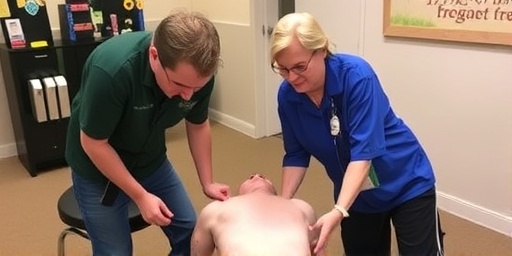
The patient, 68-year-old Margaret “Maggie” Harlan, collapsed without warning midway through her scheduled physical therapy session. Her therapist, 32-year-old PTA Emily Reynolds, immediately recognized the signs of Cardiac arrest – no pulse, no breathing – and initiated CPR, compressing the chest and providing rescue breaths until paramedics arrived eight minutes later. Harlan was rushed to Knott County Hospital and later transferred to a larger facility in Lexington, where she made a full recovery after defibrillation and further treatment.
Routine Session in Mallie Home Spirals into Cardiac Crisis
Emily Reynolds arrived at Harlan’s modest home in Mallie around 10 a.m. on Thursday, October 17, for what was billed as a standard home health rehabilitation session. Harlan, recovering from a recent hip replacement, had been making steady progress under Reynolds’ care for the past month. The session began typically: stretches, balance exercises, and light strengthening drills tailored to Harlan’s mobility needs.
“We were working on her leg lifts when she just… stopped,” Reynolds recounted in an exclusive interview with local reporters. “Her face went pale, she gasped once, and then nothing. I knew right away it was Cardiac arrest. No time to hesitate.”
Rural Mallie, with its winding roads and limited cell service in spots, amplifies the stakes of such emergency care scenarios. Reynolds, employed by Mountain Home Health Services based in Hazard, Kentucky, credits her annual CPR certification – mandated for all home health staff – for her composure. She dialed 911 while starting compressions at a rate of 100-120 per minute, following American Heart Association (AHA) guidelines.
Statistics paint a stark picture: According to the AHA, about 350,000 out-of-hospital cardiac arrests occur annually in the U.S., with survival rates hovering at just 10% without immediate bystander CPR. In Kentucky, where rural areas like Knott County face average EMS response times of 12-15 minutes, the odds worsen dramatically.
CPR Compressions and Rescue Breaths: The Seconds That Saved a Life
Reynolds’ intervention was textbook precision amid chaos. After confirming no responsiveness, she positioned Harlan on the living room floor, cleared the airway, and began chest compressions – two inches deep on the center of the breastbone. Alternating with rescue breaths every 30 compressions, she maintained rhythm by mentally counting to the beat of “Stayin’ Alive” by the Bee Gees, a technique endorsed by CPR trainers worldwide.
“I could feel her ribs giving way a bit, but you push through,” Reynolds said. “Every second without oxygen to the brain counts. I kept telling her, ‘Hang on, Maggie’s tough.'” Harlan’s daughter, Sarah Harlan, who was in the kitchen preparing lunch, rushed in and took over phone duties with dispatch, providing the address and describing symptoms.
Paramedics from Knott County EMS arrived in under eight minutes – a response hailed as exceptional for the area. They took over with an AED (automated external defibrillator), delivering one shock that restored Harlan’s rhythm. “That PTA’s CPR bought us the time we needed,” said EMS Captain Tom Whitaker. “Without it, we’d likely be writing a different story today.”
Key CPR Facts in Home Health Emergencies:
- Immediate CPR can double or triple survival chances from cardiac arrest.
- In Kentucky, only 12% of out-of-hospital victims survive to hospital discharge, per state health data.
- Home health workers encounter 20% more cardiac events due to elderly patient demographics, according to a 2023 CMS report.
Harlan Family’s Tearful Gratitude for Therapist’s Heroism
Maggie Harlan, now recuperating at home with a pacemaker implant, tearfully praised her savior. “Emily’s my guardian angel,” she told reporters from her recliner. “One minute I’m exercising, next I’m in the light. Woke up in the hospital hearing her voice in my head.”
The family launched a GoFundMe campaign that raised over $15,000 in 48 hours for Harlan’s medical bills and Reynolds’ nomination for a community heroism award. “In a small town like Mallie, we take care of our own,” Sarah Harlan said. “But Emily? She’s family now.”
Reynolds, a Mallie native and mother of two, downplayed the acclaim. “It’s what we’re trained for in home health. Every visit could turn into emergency care.” Her employer, Mountain Home Health, issued a statement: “Emily exemplifies the dedication of our 200+ staff serving eastern Kentucky. We’re immensely proud.”
Local officials echoed the sentiment. Knott County Judge-Executive Bryan Adams announced plans to present Reynolds with the county’s Civilian Lifesaver Award at next month’s commission meeting.
Experts Stress CPR Training Boost for Kentucky’s Home Health Workforce
This incident spotlights a growing crisis in Kentucky‘s home health sector, where demand surges amid an aging population. The state ranks 8th nationally for cardiac arrest incidence, with 10,000 cases yearly, per the Kentucky Department for Public Health (KDPH). Yet, only 40% of home health aides report advanced CPR skills, a gap experts like Dr. Lena Vasquez of the University of Kentucky’s Cardiology Department urge closing.
“Bystander CPR in homes can increase survival by 75% if started within the first minute,” Vasquez explained. “Emergency care protocols must evolve for rural Kentucky, incorporating AEDs in every home health kit.”
The AHA’s 2023 data reveals home health settings account for 25% of non-hospital cardiac arrests, driven by patients over 65 with comorbidities like Harlan’s hypertension and diabetes. Initiatives like Kentucky’s Heartbeat Act, mandating CPR in high schools, are expanding to vocational programs for healthcare workers.
Mountain Home Health has since mandated quarterly CPR refreshers and equipped vehicles with portable AEDs, a model other agencies are adopting. “This saves lives,” said agency director Paul Greer. “Emily’s story proves it.”
Push for Policy Changes to Enhance Rural Emergency Care in Kentucky
As Harlan rebuilds strength with Reynolds’ continued visits, the ripple effects extend statewide. KDPH announced a $2 million grant for CPR/AED training in 50 rural counties, targeting home health and first responders. “Events like this accelerate change,” said Commissioner Dr. Steven Stack.
Legislators, including Rep. Johnny Ray Turner (R-Hazard), plan to introduce HB 247 next session, requiring AEDs in all home health provider fleets and subsidies for family training. Nationally, the CDC reports a 20% uptick in bystander CPR rates post-2020 awareness campaigns, but Kentucky lags at 35%.
For Reynolds, the focus remains on prevention. “We’re seeing more high-risk patients at home,” she noted. “Empowering every therapist with top-tier emergency care skills is non-negotiable.” Harlan, eyeing Thanksgiving with her grandkids, agreed: “Thanks to CPR, I’ll be there.”
Stories like this not only celebrate heroism but propel systemic improvements, ensuring more Kentucky families dodge the shadow of cardiac arrest. With expanded training on the horizon, rural home health stands poised to turn potential tragedies into triumphs.