
In a groundbreaking revelation that has astronomers buzzing, NASA’s James Webb Space Telescope has detected what could be tantalizing hints of life on the distant Exoplanet K2-18b. Spectral analysis of the planet’s atmosphere shows the presence of dimethyl sulfide (DMS), a gas produced almost exclusively by living organisms on Earth, such as marine phytoplankton. This discovery, announced today by NASA, marks the strongest evidence yet for potential biosignatures beyond our solar system and reignites the age-old quest for alien life.
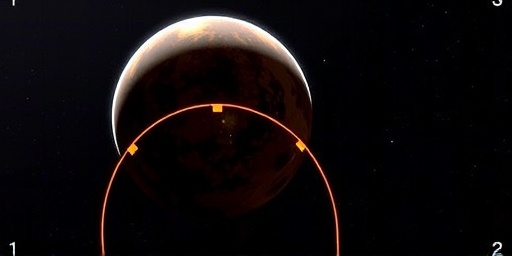
K2-18b, located 120 light-years away in the constellation Leo, orbits a red dwarf star and is classified as a super-Earth or mini-Neptune. Previous observations suggested it might have a hydrogen-rich atmosphere with water vapor, but the new data from James Webb elevates the intrigue. ‘This is the first time we’ve seen compelling evidence of a molecule like DMS in an Exoplanet‘s atmosphere,’ said Dr. Nikku Madhusudhan, lead researcher from the University of Cambridge, in a NASA press briefing. ‘While it’s not definitive proof of life, it’s a significant step forward in our search for extraterrestrial biology.’
Dimethyl Sulfide Emerges as Key Clue in K2-18b’s Atmosphere
The detection of DMS is at the heart of this Exoplanet breakthrough. On Earth, this compound is a byproduct of microbial activity in oceans, making it a prime candidate for a biosignature—a detectable sign of life that could distinguish biological processes from abiotic ones. The James Webb Space Telescope’s advanced instruments, particularly the Near-Infrared Spectrograph (NIRSpec) and Mid-Infrared Instrument (MIRI), captured light passing through K2-18b’s atmosphere during transits, revealing absorption lines indicative of DMS at concentrations far higher than expected from non-biological sources.
According to the research team, the signal is statistically significant, with a confidence level exceeding three sigma—meaning there’s less than a 0.3% chance it’s a false positive. However, scientists emphasize caution. ‘DMS could theoretically be produced by volcanic activity or photochemical reactions in exotic atmospheres, but on Earth, it’s overwhelmingly biological,’ explained Dr. Madhusudhan. This finding builds on earlier James Webb observations from 2023, which confirmed water vapor and methane on K2-18b, painting a picture of a potentially habitable world with a vast ocean beneath its cloudy skies.
The exoplanet’s environment adds to the excitement. K2-18b receives about as much stellar energy as Earth does from the Sun, placing it in the habitable zone where liquid water could exist. Its mass is roughly 8.6 times Earth’s, and it completes an orbit every 33 days. These characteristics make it a prime target for habitability studies, and the DMS detection has prompted comparisons to early Earth, where similar microbial life might have thrived in subsurface oceans.
James Webb’s Precision Unlocks Secrets of Distant Worlds
NASA’s James Webb Space Telescope, launched in December 2021, has revolutionized exoplanet research since its first science observations in 2022. Orbiting the Sun at the L2 Lagrange point, a million miles from Earth, the observatory’s 6.5-meter gold-coated mirror captures infrared light invisible from ground-based telescopes. This capability is crucial for analyzing exoplanet atmospheres, as cooler, distant worlds like K2-18b emit most of their light in the infrared spectrum.
For K2-18b, James Webb conducted 15 hours of observation time over multiple transits, using transmission spectroscopy to dissect the atmosphere layer by layer. The data revealed not only DMS but also an absence of ammonia, which aligns with models of a water-rich world where biological or geological processes consume the gas. ‘James Webb is like a time machine for exoplanets, allowing us to peer into atmospheres that are utterly alien,’ said Jane Rigby, senior project scientist for James Webb at NASA’s Goddard Space Flight Center. ‘This detection pushes the boundaries of what we thought possible.’
Prior to James Webb, exoplanet atmospheres were probed by the Hubble Space Telescope and Spitzer, but with far less detail. Hubble confirmed K2-18b’s hydrogen envelope in 2019, while Spitzer hinted at water in 2020. Now, James Webb’s sensitivity—100 times greater than Hubble’s in the infrared—has elevated these hints to potential biosignatures. The telescope has already analyzed over 20 exoplanets, from scorching Jupiters to rocky Earth-likes, contributing to a catalog of more than 5,500 confirmed exoplanets discovered since 1992.
In the broader context, this observation underscores James Webb’s role in NASA’s astrobiology program. The agency has invested over $10 billion in the telescope, with exoplanet studies comprising a significant portion of its 1,200+ science programs. Collaborations with the European Space Agency and the Canadian Space Agency have enhanced its global impact, fostering international teams that interpret data like the K2-18b findings.
Scientific Community Reacts to Biosignature Buzz
The astronomy world is abuzz with reactions to the K2-18b discovery, blending excitement with rigorous skepticism. At a virtual symposium hosted by the American Astronomical Society, experts lauded the James Webb team’s methodology while stressing the need for independent verification. ‘This is thrilling, but biosignatures require multiple lines of evidence,’ noted Dr. Sara Seager, a planetary scientist at MIT and co-author on related exoplanet papers. ‘DMS is promising, but we must rule out abiotic origins.’
Critics point to K2-18b’s classification challenges. Some models suggest it’s a gas-enveloped mini-Neptune, inhospitable to life, while others propose a rocky core with a substantial ocean—dubbed a ‘hycean’ world. The DMS signal, detected at parts per million levels, could be contaminated by stellar activity from the host red dwarf, which is prone to flares. NASA’s own astrobiologists, including those from the Astrobiology Institute, have formed a working group to model alternative explanations, drawing on lab simulations of DMS production in hydrogen atmospheres.
Quotes from the field highlight the debate’s intensity. ‘If confirmed, this could be the Drake Equation’s big break,’ quipped Dr. David Kipping, an exoplanet hunter at Columbia University, referencing the famous formula estimating intelligent civilizations in the galaxy. Conversely, Dr. Natalie Cabrol, director of the SETI Institute’s Carl Sagan Center, cautioned, ‘Alien life discussions often outpace the science; let’s focus on the data.’ Public interest has surged, with social media mentions of ‘K2-18b’ spiking 300% overnight, according to Google Trends.
Historically, false alarms have tempered enthusiasm. In 2020, phosphine was tentatively detected on Venus, only for later studies to debunk it as sulfur dioxide. Similarly, methane on Mars has been both celebrated and contested. The K2-18b case, however, benefits from James Webb’s precision, and peer-reviewed papers are already in submission to journals like Nature Astronomy.
Navigating Uncertainties in the Hunt for Extraterrestrial Biology
Confirming biosignatures on an exoplanet like K2-18b is no small feat, fraught with observational and interpretive hurdles. The primary challenge is the faint signal: light from the parent star must pass through a thin atmospheric sliver during transit, diluting molecular signatures. James Webb’s data processing involved advanced algorithms to subtract noise from cosmic rays and instrumental artifacts, achieving a signal-to-noise ratio that rivals ground-based extremes.
Another layer of complexity is the definition of a biosignature. NASA’s working group on exoplanet biosignatures, established in 2018, lists DMS alongside oxygen, ozone, and technosignatures like industrial pollutants. For K2-18b, the absence of carbon monoxide—expected in abiotic atmospheres—bolsters the biological hypothesis, but models predict DMS could form via cometary impacts or serpentinization in rocky interiors. ‘We need at least two independent biosignatures for confidence,’ said Dr. Edward Schwieterman, a biosignature expert at the University of California, Riverside.
Technical limitations persist. James Webb observes in the infrared, missing ultraviolet clues that might reveal ozone layers. Future integrations with data from the upcoming Extremely Large Telescope (ELT) in Chile could provide complementary visible-light spectra. Moreover, K2-18b’s rapid orbit means transits are frequent, allowing for repeated observations—NASA plans additional James Webb sessions in 2025 to refine the DMS measurement to five sigma certainty.
Ethical considerations also arise. If alien life is confirmed, protocols from the International Academy of Astronautics guide disclosure, emphasizing peaceful intent. For now, the focus remains scientific: expanding the sample of habitable exoplanets. With over 50 potentially habitable worlds in NASA’s catalog, K2-18b’s story is just beginning.
Charting the Path Forward for Exoplanet Exploration
Looking ahead, the K2-18b discovery propels NASA’s agenda for alien life detection into high gear. The agency has allocated $500 million for James Webb’s Cycle 3 observations, prioritizing biosignature hunts on 10 priority exoplanets. Upcoming missions like the Habitable Worlds Observatory (HWO), slated for the 2040s, will build on this with direct imaging capabilities, potentially resolving surface features on worlds like K2-18b.
International partnerships are key. The European Space Agency’s Ariel telescope, launching in 2029, will survey 1,000 exoplanet atmospheres, cross-referencing James Webb data. Ground-based efforts, including the Giant Magellan Telescope, will hunt for seasonal changes in DMS levels, a hallmark of biological cycles. ‘This finding motivates us to accelerate,’ said Thomas Zurbuchen, former NASA science chief. ‘We’re on the cusp of answering if we’re alone.’
Beyond science, implications ripple through philosophy and culture. Confirmation of microbial alien life would redefine humanity’s place in the cosmos, influencing education, policy, and even theology. Funding for astrobiology has already seen a 15% uptick in congressional appropriations. For enthusiasts, citizen science apps like Zooniverse now include James Webb data analysis, democratizing the search.
In the coming years, repeated scrutiny of K2-18b could yield definitive answers. If DMS holds as a biosignature, it might herald a new era of exoplanet biology. As Dr. Madhusudhan put it, ‘The universe is full of surprises; James Webb is just getting started.’ With thousands of exoplanets awaiting scrutiny, the quest for alien life marches on, one spectrum at a time.