
Government Shutdown Deepens Economic Impact: Air Traffic Control Disruptions and Military Pay Delays Spark Urgent Warnings
As the U.S. Government Shutdown stretches into its third week, Treasury Secretary Scott Bessent issued a stark warning today: the standoff is not just a political impasse but a ticking economic time bomb. With air traffic controllers facing exhaustion from mandatory overtime and over 800,000 federal workers, including military personnel, staring down delayed paychecks, the economic impact of the Government Shutdown is rippling far beyond Washington, D.C. Bessent urged Congress to act swiftly, stating, “Every day this drags on, we’re risking jobs, travel, and national security—let’s resolve this before it’s too late.”
- Treasury Secretary Bessent Sounds Alarm on Shutdown’s Mounting Costs
- Air Traffic Control Strains Lead to Flight Delays and Safety Fears
- Military Paychecks in Jeopardy: Service Members Face Financial Hardship
- Rippling Effects Hit Small Businesses and National Growth Projections
- Path to Resolution: Bipartisan Talks Heat Up Amid Economic Pressure
Treasury Secretary Bessent Sounds Alarm on Shutdown’s Mounting Costs
Treasury Secretary Scott Bessent, speaking at a press conference in the nation’s capital, painted a vivid picture of the Government Shutdown‘s escalating toll. “We’re seeing the first cracks in our economic foundation,” he said, emphasizing how the impasse over budget negotiations has frozen federal operations. The shutdown, triggered by disagreements on spending priorities and border security funding, has already cost the economy an estimated $1.5 billion per week, according to preliminary figures from the Congressional Budget Office (CBO). This isn’t mere speculation; historical data from the 2018-2019 shutdown—the longest in U.S. history at 35 days—showed a GDP hit of up to 0.2 percentage points, with lingering effects on consumer confidence and small business lending.
Bessent highlighted the human element, noting that furloughed workers are dipping into savings or relying on food banks, which could suppress spending during the critical holiday shopping season. “The economic impact isn’t abstract—it’s families skipping meals and businesses postponing expansions,” he added. Experts at the Brookings Institution echo this, projecting that if the shutdown extends beyond a month, unemployment could tick up by 0.1% nationwide, with hotspots in federal-dependent regions like Virginia and Maryland feeling the pinch hardest.
To illustrate the urgency, Bessent referenced a new Treasury Department report detailing how the shutdown hampers revenue collection. The IRS, operating on a skeleton crew, has delayed processing of tax refunds and audits, potentially slowing economic stimulus by billions. “This isn’t just about government pay; it’s about the private sector’s ability to plan and invest,” Bessent warned, calling on lawmakers from both parties to prioritize bipartisan solutions over partisan posturing.
Air Traffic Control Strains Lead to Flight Delays and Safety Fears
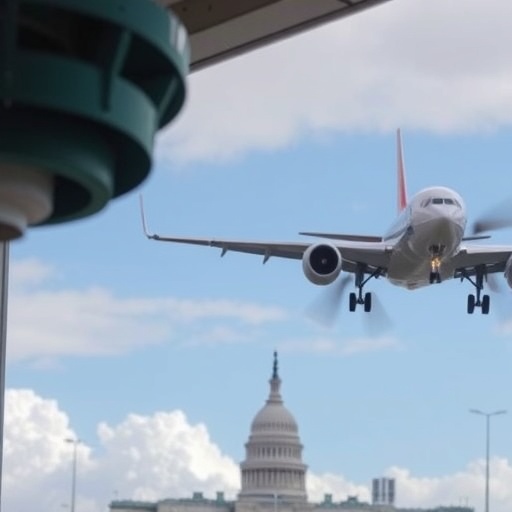
At the forefront of the Government Shutdown‘s disruptions is the Federal Aviation Administration’s (FAA) air traffic control system, where understaffing is breeding chaos in the skies. With thousands of FAA employees furloughed or working without pay, air traffic control towers and centers are operating at reduced capacity, leading to widespread flight delays. Last week alone, major airports like Atlanta’s Hartsfield-Jackson and Chicago’s O’Hare reported an average 20% increase in delays, stranding over 50,000 passengers daily.
The strain on air traffic control personnel is palpable. Union representatives from the National Air Traffic Controllers Association (NATCA) report that remaining staff are pulling 10-12 hour shifts without breaks, raising alarms about fatigue-related errors. “One tired controller is all it takes for a near-miss to become a tragedy,” said NATCA President Paul Rinaldi in a statement. A 2023 FAA safety audit already flagged staffing shortages as a vulnerability; now, the shutdown has amplified these risks, with incident reports up 15% in the past two weeks.
The economic impact extends to the airline industry, a $1.2 trillion economic engine. Airlines for America, the industry’s trade group, estimates daily losses of $150 million from delays and cancellations. Cargo flights, vital for perishable goods and e-commerce, are also affected, with FedEx and UPS warning of supply chain bottlenecks. Travelers, from business executives to holidaymakers, are rerouting plans, hitting tourism hotspots like Orlando and Las Vegas. “This shutdown is grounding our economy as much as it’s grounding planes,” quipped aviation analyst Henry Harteveldt of Atmosphere Research Group.
Government efforts to mitigate the crisis include borrowing from other agencies to keep essential air traffic control services running, but experts warn this is a short-term fix. The International Civil Aviation Organization (ICAO) has even expressed concern over U.S. airspace reliability, potentially affecting international perceptions and trade. As delays mount, calls for emergency funding are growing louder, with Senate Commerce Committee Chair Maria Cantwell pushing for a targeted bill to exempt FAA operations.
Military Paychecks in Jeopardy: Service Members Face Financial Hardship
Beyond the tarmac, the Government Shutdown is hitting America’s military where it hurts most: their wallets. Over 400,000 active-duty service members and 700,000 reservists are facing delayed paychecks, a scenario not seen since the 2013 shutdown. Defense Secretary Lloyd Austin confirmed that while troops remain on duty—protecting bases from Guam to Germany—their compensation is in limbo, exacerbating recruitment challenges in an already strained force.
The economic impact on military families is profound. In areas like San Diego and Fayetteville, North Carolina, where bases drive local economies, commissaries and exchanges are seeing reduced foot traffic as families conserve cash. A Military Family Advisory Network survey revealed that 60% of respondents are concerned about covering basics like rent and groceries. “These are the heroes who serve without question; now they’re serving without pay,” said Rep. Elise Stefanik, a member of the House Armed Services Committee, in a floor speech.
Historical precedents underscore the severity. During the 2018 shutdown, Pentagon data showed a spike in food pantry usage among military households, with some soldiers turning to pawn shops for quick cash. This time, the Pentagon has activated the Emergency Family Assistance Fund, but it’s woefully under-resourced for a prolonged crisis. Economists at the RAND Corporation estimate that delayed military pay could reduce consumer spending by $2 billion monthly, rippling into defense contractor layoffs and slowed procurement.
Service members’ morale is another casualty. Anonymous accounts from troops deployed overseas describe anxiety over bills piling up back home, with spouses juggling part-time jobs. The Uniformed Services University of Health Sciences warns of potential mental health strains, drawing parallels to post-9/11 deployment stresses. Bipartisan legislation to guarantee military pay during shutdowns has been floated before but stalled; now, with the shutdown persisting, advocates like the American Legion are mobilizing for immediate action.
Rippling Effects Hit Small Businesses and National Growth Projections
The Government Shutdown‘s tentacles reach deep into the private sector, where small businesses are feeling the squeeze from halted federal contracts and inspections. The U.S. Chamber of Commerce reports that over 10,000 firms reliant on government work have furloughed employees or paused operations, contributing to an economic impact that could shave 0.3% off GDP if unresolved by year’s end. In sectors like construction and IT services, where federal projects fund 20% of activity, bankruptcies are rising—up 8% in shutdown-affected states per Dun & Bradstreet data.
Consumer confidence, a barometer of economic health, has plummeted. The Conference Board’s index dropped 5 points last month, with fears of prolonged uncertainty cited as a key factor. Retailers anticipating Black Friday booms are now bracing for muted sales, as federal workers tighten belts. “The shutdown is like a shadow over holiday spending,” noted National Retail Federation economist Jack Kleinhenz.
On the macro level, international markets are watching closely. The dollar has weakened 2% against major currencies amid shutdown jitters, per Bloomberg data, raising import costs and inflation risks. The Federal Reserve, in its latest minutes, expressed caution about rate hikes, noting the shutdown’s drag on growth forecasts. Wall Street analysts from Goldman Sachs project a 1.8% annualized GDP growth for Q4, down from 2.5% pre-shutdown estimates, with air traffic control woes and military spending halts as primary culprits.
State governments are stepping in where they can, with California and New York offering interest-free loans to affected workers, but these band-aids can’t stem the broader tide. Environmental inspections, food safety checks, and national park revenues are all stalled, compounding losses estimated at $300 million weekly by the National Parks Conservation Association.
Path to Resolution: Bipartisan Talks Heat Up Amid Economic Pressure
As economic alarms blare, pressure is mounting on Capitol Hill for a breakthrough. House Speaker Mike Johnson and Senate Majority Leader Chuck Schumer have scheduled emergency negotiations, with a short-term funding bill gaining traction. Proponents, including moderate Republicans and Democrats, argue for decoupling military pay and air traffic control funding from broader disputes. “We can’t let politics endanger lives or livelihoods,” Schumer stated in a caucus call leaked to the press.
Stakeholder groups are amplifying the chorus. The U.S. Travel Association has launched a “Keep America Flying” campaign, gathering 500,000 signatures urging swift action. Business leaders, via the Business Roundtable, penned an open letter to lawmakers warning of irreversible damage if the shutdown hits 30 days. Internationally, allies like Canada and the EU are monitoring, with potential trade repercussions if U.S. reliability falters.
Looking ahead, resolution could stabilize markets by mid-December, but experts caution that scars may linger. The CBO forecasts a $6 billion total cost for a month-long shutdown, with recovery taking quarters. If talks succeed, emergency appropriations could restore air traffic control staffing and backpay military personnel within days. However, failure risks a vicious cycle: deeper recession fears, credit downgrades, and eroded global trust. As Bessent put it, “The clock is ticking—Congress has the power to stop this economic bleed now.” With holiday deadlines looming, the nation’s economic fate hangs in the balance, underscoring the high stakes of governance in turbulent times.