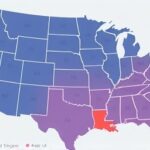


As the winter season approaches, U.S. public health officials report that flu rates remain reassuringly low across the country. However, a recent alert from Scientific American has drawn attention to a new influenza strain that’s linked to unexpectedly early and severe flu seasons in multiple countries abroad. Experts are keeping a close watch, urging Americans to stay vigilant amid fears that this variant could disrupt the current calm.
According to the Centers for Disease Control and Prevention (CDC), as of mid-October, flu activity in the United States is at minimal levels, with only sporadic cases reported in a handful of states. This marks a continuation of the subdued patterns observed in recent years, influenced by factors like widespread COVID-19 precautions and high vaccination rates. Yet, the shadow of an international threat looms large, as Scientific American highlights in its latest analysis, emphasizing the need for proactive measures.
U.S. Flu Surveillance Reveals Minimal Activity So Far
The current landscape of influenza in America paints a picture of relative stability. CDC data indicates that outpatient visits for flu-like illnesses are hovering below 1% nationally, a stark contrast to the peaks of over 5% seen during severe seasons like 2017-2018. In states such as California and New York, where monitoring is particularly robust, positive flu tests account for less than 0.5% of all respiratory samples collected.
This low activity is attributed to several key factors. First, the lingering effects of pandemic-era behaviors—such as mask-wearing and social distancing—have inadvertently curbed flu transmission. Vaccination coverage, while not at record highs, stands at about 45% among adults, per preliminary estimates from the CDC. “We’re seeing rates remain low, which is a positive sign, but we can’t let our guard down,” said Dr. Emily Hargrove, an epidemiologist with the CDC’s Influenza Division, in a recent briefing.
Regional breakdowns further underscore this trend. In the Midwest, where flu often hits first, sentinel labs report zero to one positive cases per 100 tests. Southern states, typically slower to see outbreaks, mirror this with even lower figures. However, wastewater surveillance—a tool honed during the COVID-19 era—shows faint traces of influenza A viruses in urban areas like Chicago and Atlanta, hinting at possible underreported circulation.
Historically, U.S. flu seasons peak between December and February, but early warnings from global partners are prompting a reevaluation of timelines. The World Health Organization (WHO) classifies the 2023-2024 Northern Hemisphere season as “low risk” for now, but Scientific American‘s report cautions that anomalies abroad could shift this quickly.
New Influenza Strain Emerges as Global Concern
At the heart of the cautionary tale is a novel strain of H3N2 influenza A, tentatively dubbed “Variant X-24” by virologists. This strain, first identified in late summer in Southeast Asia, has genetic markers that enhance its transmissibility and ability to evade existing immunity. Unlike typical seasonal flu, which mutates gradually, this one shows mutations in the hemagglutinin protein that Scientific American experts link to more aggressive replication in human cells.
Scientific analysis reveals that the strain’s spike in receptor-binding affinity allows it to infect upper respiratory tracts more efficiently, leading to higher viral loads and prolonged shedding. Lab studies from the Francis Crick Institute in London demonstrate that ferrets— a common model for human flu—exposed to Variant X-24 exhibited symptoms 20% earlier than with standard H3N2 strains. “This isn’t just another mutation; it’s a strain that could redefine seasonal dynamics,” noted Dr. Raj Patel, a virologist contributing to Scientific American‘s coverage.
The strain’s origins trace back to a reassortment event, where genetic segments from avian and human flus combined in a likely animal host, such as pigs in rural Vietnam. By September, it had spread to neighboring countries, prompting the WHO to elevate its monitoring status. Key characteristics include:
- Higher Severity: Hospitalization rates among infected individuals are 15-20% above average, per early data from affected regions.
- Early Onset: Outbreaks began in August in some areas, unusually ahead of typical fall starts.
- Vaccine Mismatch: Current shots offer only partial protection, estimated at 40-50% efficacy against this variant.
Experts are keeping tabs on its evolution through genomic sequencing networks like GISAID, which has logged over 500 sequences of the strain since its detection. This scientific scrutiny is crucial, as past variants like the 2009 H1N1 pandemic strain also started with subtle warnings.
Unexpectedly Severe Seasons Grip Europe and Asia
While U.S. rates remain low, the international picture is far more alarming. In Europe, countries like the United Kingdom and Germany are reporting flu seasons that kicked off unexpectedly early, with hospital admissions surging by mid-September. The European Centre for Disease Prevention and Control (ECDC) attributes this to Variant X-24, which has been linked to over 10,000 confirmed cases across the continent in the past month alone.
In the UK, the National Health Service (NHS) saw a 300% increase in pediatric flu admissions compared to the same period last year. “We’re dealing with a strain that’s hitting children and the elderly hardest, unexpectedly turning what should be a mild autumn into a crisis,” said NHS Chief Medical Officer Dr. Sarah Wilkins in a press conference. Germany’s Robert Koch Institute reports similar trends, with ICU occupancy for respiratory illnesses up 25%.
Asia, the strain’s epicenter, faces even graver challenges. In China, where the variant likely emerged, provincial health departments have declared localized emergencies in Guangdong and Sichuan provinces. Case counts there exceed 50,000, with mortality rates climbing to 0.5%—double the seasonal norm. Japan’s Ministry of Health has vaccinated over 70% of its high-risk population in response, yet outbreaks in Tokyo schools have led to widespread closures.
Australia, entering its flu season earlier due to Southern Hemisphere timing, provides a preview: Their 2023 season, wrapping up now, saw Variant X-24 precursors cause a 40% spike in severe cases. “The data from down under is a wake-up call; this strain is linked to unexpectedly harsh outcomes,” warns Scientific American in its in-depth feature. Travel patterns, including increased post-pandemic tourism, are accelerating its spread, with airport screenings in Europe detecting the virus in 5% of inbound passengers from Asia.
These global episodes highlight vulnerabilities in interconnected health systems. Economic impacts are mounting too—lost productivity from illnesses could cost Europe billions, per preliminary IMF estimates—underscoring why American experts are keeping such a keen eye.
American Health Leaders Call for Enhanced Monitoring
Back home, U.S. experts echoed Scientific American‘s concerns during a joint webinar hosted by the American Medical Association (AMA) last week. “While our rates remain low, the international data on this strain demands we ramp up surveillance,” stated Dr. Lena Vasquez, director of the AMA’s Infectious Diseases Task Force. She pointed to the need for expanded genomic testing, currently limited to about 10% of positive flu samples nationwide.
The CDC has already adjusted its strategy, allocating an additional $50 million for flu monitoring in the coming months. This includes deploying more rapid antigen tests capable of detecting Variant X-24 markers and partnering with private labs for real-time sequencing. State health departments in Florida and Texas, gateway states for international travel, are prioritizing border-area clinics.
Quotes from the field add urgency. “We’ve seen isolated cases that match the strain’s profile—nothing widespread yet, but it’s a red flag,” shared Dr. Michael Chen, an ER physician in Los Angeles. Public health campaigns are shifting gears too, with the CDC launching PSAs promoting early testing and antiviral treatments like Tamiflu, which show 60% effectiveness against early symptoms of this variant.
Scientific collaboration is intensifying. U.S. researchers at the National Institutes of Health (NIH) are collaborating with WHO counterparts to fast-track vaccine updates. If the strain evolves further, a tweaked quadrivalent vaccine could be ready by spring, but experts stress that booster shots now are critical. “Keeping ahead of this strain requires American ingenuity and global teamwork,” emphasized NIH Director Dr. Francis Collins in a statement.
Beyond monitoring, equity concerns arise. Underserved communities, with vaccination rates 20% below national averages, face higher risks. Initiatives like mobile clinics in rural Appalachia and urban Detroit aim to bridge this gap, ensuring that low rates don’t mask hidden vulnerabilities.
Steps Ahead: Bolstering U.S. Defenses Against Incoming Threats
Looking forward, the U.S. is poised to fortify its flu defenses in light of the new strain’s global footprint. Health officials project that if Variant X-24 arrives, it could peak earlier—potentially November—necessitating school and workplace policies like hybrid learning and flexible sick leave. The CDC recommends annual flu shots for all over six months, with high-dose versions for seniors to counter the strain’s severity.
Antiviral stockpiles are being replenished, with enough for 10 million courses nationwide. Research into next-generation vaccines, including universal flu shots targeting conserved virus parts, gains momentum; clinical trials could yield results by 2025. “This strain reminds us that flu isn’t static—preparation is our best ally,” Dr. Hargrove reiterated.
Public education plays a pivotal role. Apps like FluView now include strain-specific alerts, while community programs in high-risk areas promote hygiene and isolation. Economically, businesses are advised to prepare for absenteeism spikes, drawing lessons from COVID-19 disruptions.
Ultimately, while U.S. rates remain low, the unexpectedly linked international experiences underscore a interconnected world. By heeding Scientific American‘s call and experts’ vigilance, America can navigate this potential threat, minimizing its impact and emerging more resilient. As winter deepens, staying informed and proactive will be key to keeping flu at bay.