
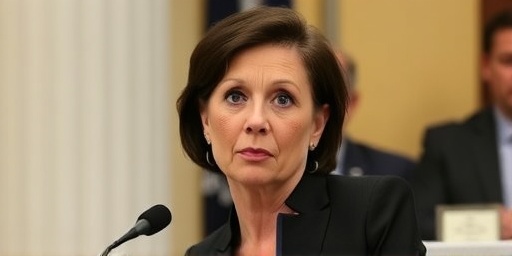
In a stark assessment of the U.S. economy, Federal Reserve Governor Lisa D. Cook has warned that inflation will remain stubbornly elevated at around 2.8% for the coming year, primarily driven by the lingering effects of tariffs on imported goods. Speaking at a recent economic forum, Cook emphasized that while the Federal Reserve‘s target of 2% inflation is within sight, the path forward is complicated by trade policies that continue to inflate prices across key sectors. This projection comes at a critical juncture for monetary policy, as the central bank navigates a delicate balance between curbing inflation and supporting growth amid geopolitical tensions.
- Cook Pinpoints Tariffs as Primary Culprit in Sticky Inflation
- Federal Reserve Grapples with Tariff Shadows in Shaping Monetary Policy
- Economic Outlook: Inflation’s Year-Long Hold Before Tariff Fade-Out
- Market Reactions and Expert Views on Fed’s Inflation-Tariff Balancing Act
- Path Forward: Navigating Tariffs Toward Sustainable Economic Growth
Cook Pinpoints Tariffs as Primary Culprit in Sticky Inflation
Federal Reserve Governor Lisa D. Cook’s remarks underscore a pivotal shift in understanding the drivers of U.S. inflation. According to her analysis, tariffs imposed on a wide array of imported products—ranging from steel and aluminum to consumer electronics and apparel—have significantly contributed to the current 2.8% inflation rate, which exceeds the Fed’s long-standing 2% target. These duties, many of which were enacted during previous administrations to protect domestic industries, have ripple effects that extend far beyond initial import costs.
“Tariff-affected goods are at the heart of why inflation has proven so resilient,” Cook stated during her address. She highlighted data from the Bureau of Labor Statistics showing that price increases in tariff-impacted categories, such as durable goods, have outpaced overall inflation by nearly 1.5 percentage points in the past quarter. For instance, the cost of imported vehicles and parts has surged by over 10% year-over-year, directly influencing automotive prices for American consumers.
This isn’t merely a short-term blip. Cook explained that supply chain disruptions exacerbated by tariffs have led to higher production costs for U.S. manufacturers who rely on foreign components. A report from the Peterson Institute for International Economics corroborates this, estimating that tariffs have added approximately 0.4% to the Consumer Price Index (CPI) since their implementation. As global trade tensions persist, particularly with major partners like China and the European Union, these pressures are unlikely to dissipate quickly.
To illustrate the breadth of impact, consider the housing sector. While not directly tariffed, building materials like lumber and steel—subject to duties—have seen price hikes that contribute to elevated shelter costs, which account for about one-third of the CPI basket. Cook noted that without policy adjustments, these dynamics could prolong inflationary pressures, testing the resolve of households already strained by higher living expenses.
Federal Reserve Grapples with Tariff Shadows in Shaping Monetary Policy
The Federal Reserve’s monetary policy framework is under intense scrutiny as Governor Cook’s outlook highlights the challenges posed by tariffs. With interest rates held steady at 5.25-5.50% following the last Federal Open Market Committee (FOMC) meeting, the central bank is treading carefully to avoid over-tightening in response to what may be transient inflation drivers. Cook’s comments suggest that policymakers are viewing tariffs as a temporary but potent force, one that could influence the timing of potential rate cuts.
“Our monetary policy must remain data-dependent, but we cannot ignore the exogenous shocks from trade policies,” Cook remarked. She referenced the Fed’s dual mandate of price stability and maximum employment, pointing out that while unemployment remains low at 4.1%, wage growth is accelerating in tariff-hit industries, potentially fueling a wage-price spiral if left unchecked.
Historical context adds depth to this dilemma. During the 2018-2019 trade war, similar tariffs led to a 0.2-0.5% uptick in core inflation, according to Fed research. Today, with broader tariffs in play—including proposed expansions under recent political discussions—the economic outlook appears more uncertain. Economists at Goldman Sachs have modeled scenarios where a 10% universal tariff could push inflation to 3.5% by mid-2025, complicating the Fed’s path to normalization.
Inside the Federal Reserve, there’s a growing debate on how aggressively to respond. Some board members advocate for preemptive hikes to anchor inflation expectations, while others, like Cook, favor patience, arguing that tariff effects are self-limiting as businesses adapt through diversification or domestic sourcing. This internal tension will likely dominate upcoming FOMC deliberations, with the next meeting in January poised to provide clearer signals on the trajectory of rates.
Economic Outlook: Inflation’s Year-Long Hold Before Tariff Fade-Out
Looking ahead, Governor Cook’s economic outlook paints a picture of sustained inflation through much of 2024 and into 2025, with moderation expected only as tariff impacts begin to wane. She projects that core Personal Consumption Expenditures (PCE) inflation—the Fed’s preferred gauge—will hover between 2.6% and 2.9% over the next 12 months, gradually easing toward the 2% target by late 2025 as supply chains realign and global trade stabilizes.
This forecast aligns with broader consensus from institutions like the International Monetary Fund (IMF), which recently revised its U.S. inflation projection upward by 0.3% due to trade frictions. Key factors supporting Cook’s view include anticipated declines in energy prices and a softening labor market, which could dampen demand-pull inflation. However, she cautioned that any escalation in tariffs—such as those floated in election-year rhetoric—could derail this timeline, potentially adding another 0.5% to inflation readings.
Consumer sentiment surveys reinforce this cautious tone. The University of Michigan’s latest index shows inflation expectations at 3.1%, the highest in six months, driven by fears over import costs. Businesses are responding too: A National Association of Manufacturers survey indicates that 60% of firms plan to pass on tariff-related costs to customers, further embedding inflation into the economic fabric.
Regionally, the impacts vary. Midwest states reliant on manufacturing face steeper price pressures from steel tariffs, while coastal economies grapple with electronics and apparel hikes. Cook emphasized the need for targeted fiscal measures, such as subsidies for affected sectors, to mitigate these disparities without undermining monetary policy effectiveness.
Market Reactions and Expert Views on Fed’s Inflation-Tariff Balancing Act
Financial markets reacted swiftly to Cook’s statements, with the 10-year Treasury yield climbing 5 basis points to 4.2% as investors priced in delayed rate cuts. Stock indices like the S&P 500 dipped modestly, reflecting concerns over prolonged higher-for-longer interest rates. Currency markets saw the U.S. dollar strengthen against major peers, bolstering the economic outlook for exports but pressuring importers further.
Experts weighed in with a mix of agreement and nuance. Harvard economist Kenneth Rogoff praised Cook’s realism, stating, “Tariffs are the wildcard in inflation’s deck; the Fed’s challenge is distinguishing signal from noise.” Conversely, critics like former Fed Chair Janet Yellen have urged a more holistic approach, incorporating trade negotiations into monetary policy considerations.
From a global perspective, the IMF warns that U.S. tariffs could shave 0.1% off global GDP growth, indirectly affecting inflation through slower worldwide demand. Analysts at JPMorgan predict that if tariffs persist, the Federal Reserve might need to maintain restrictive policy until Q3 2025, potentially cooling the housing market and consumer spending.
Stakeholders in trade-dependent industries are calling for clarity. The U.S. Chamber of Commerce issued a statement advocating for tariff reviews to align with inflation goals, while labor unions highlight opportunities for domestic job creation amid the shifts.
Path Forward: Navigating Tariffs Toward Sustainable Economic Growth
As the Federal Reserve charts its course, Governor Cook’s insights signal a pivotal moment for U.S. economic policy. With inflation’s tariff-fueled persistence threatening to erode consumer confidence and business investment, the central bank is poised to refine its monetary policy toolkit. Upcoming data releases, including the November CPI report expected to show a 2.7% year-over-year increase, will be crucial in calibrating responses.
Looking to the horizon, Cook envisions a scenario where easing tariff burdens—through diplomatic resolutions or policy recalibrations—allows inflation to recede naturally. This could pave the way for rate reductions as early as mid-2025, fostering a more robust economic outlook. However, the interplay of domestic politics and international relations remains a wildcard, underscoring the Fed’s need for agility.
For American households and businesses, the message is one of resilience: Inflation may linger, but strategic adaptations in supply chains and fiscal support could accelerate recovery. As the debate over tariffs intensifies, the Federal Reserve’s vigilance will be key to steering the economy toward stability and growth.