

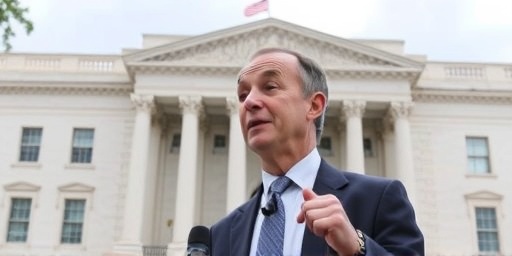
In a surprising twist that caught markets off guard, Federal Reserve Chair Jerome Powell held a news conference this week following the central bank’s recent rate cut announcement. Powell delivered a clear message: another interest rate reduction later this year is far from guaranteed, defying widespread investor expectations for more easing. “I always say that it’s a fact that we don’t make decisions in advance. But I’m saying something in addition here: that it’s not to be seen as a foregone conclusion—in fact far from it,” Powell stated, underscoring the Fed’s data-dependent approach amid evolving economic signals.
- Powell’s Press Conference Shifts Focus from Easing to Caution
- Fed Leaders Voice Inflation Fears Despite Labor Market Softness
- Global Trade Tensions and Corporate Earnings Dominate Economic Headlines
- Market Reactions Highlight Investor Jitters Over Fed Path
- Implications for Consumers and Businesses in the Months Ahead
This week’s economics landscape is buzzing with developments, from the Fed’s cautious outlook to global trade tensions and robust corporate earnings. Meanwhile, as investors digest Powell’s remarks, attention turns to What this means for borrowing costs, consumer spending, and the broader trajectory of the U.S. economy. With inflation ticking up in recent reports and labor market indicators showing cracks, the stage is set for a pivotal moment in monetary policy.
Powell’s Press Conference Shifts Focus from Easing to Caution
Federal Reserve Chair Jerome Powell’s appearance at the post-meeting news conference on Wednesday marked a key highlight in this week’s economics calendar. Just days after the Fed implemented a 50-basis-point rate cut—bringing the federal funds rate to a range of 4.75% to 5%—Powell tempered enthusiasm for further cuts. Markets had priced in at least two more reductions by year-end, based on futures trading and economist surveys, but Powell’s comments introduced fresh uncertainty.
During the 45-minute session, Powell emphasized the Fed’s commitment to its dual mandate of maximum employment and price stability. He highlighted recent data showing persistent inflationary pressures, with the Consumer Price Index (CPI) rising 2.5% year-over-year in August, above the Fed’s 2% target. “We’re not seeing the disinflationary trends we hoped for at the pace we anticipated,” Powell noted, pointing to sticky service-sector prices and supply chain remnants from global disruptions.
This stance comes as the U.S. economy demonstrates unexpected resilience. GDP growth for the second quarter was revised upward to 3.0% annualized, surpassing initial estimates of 2.8%. Corporate profits also surged, with S&P 500 companies reporting a 12% earnings increase in the latest quarter. Powell acknowledged this strength but warned against complacency, especially with geopolitical risks like the ongoing Middle East tensions potentially driving up energy costs.
Analysts on Wall Street were quick to react. “Powell’s dovish hike in rhetoric—wait, no, his hawkish pivot—could lead to a reassessment of soft-landing probabilities,” said economist Elena Ramirez of Goldman Sachs. Her team now assigns only a 40% chance of another cut in December, down from 70% pre-conference.
Fed Leaders Voice Inflation Fears Despite Labor Market Softness
Meanwhile, divisions within the Federal Open Market Committee (FOMC) are coming to light, with several Fed leaders expressing concerns about inflation that could derail further monetary easing. Boston Fed President Susan Collins, in a separate speech on Tuesday, argued that the economy’s vigor—evidenced by unemployment holding steady at 4.2%—suggests policymakers should pause before cutting rates again. “The data points to a stronger-than-realized recovery, and we can’t ignore the upside risks to inflation,” Collins said.
Powell himself balanced this view by drawing attention to a significant labor market slowdown. Nonfarm payrolls added just 142,000 jobs in August, below the 160,000 expected, with revisions shaving 50,000 from prior months’ figures. The job openings rate dipped to 5.8% from 6.2%, signaling cooling demand for workers. “While the economy is solid, the labor sector is showing clear signs of moderation, which aligns with our goal of sustainable growth,” Powell remarked during the news conference.
This mixed picture is emblematic of this week’s economics narrative. On one hand, manufacturing PMI climbed to 51.2 in September, indicating expansion for the first time in seven months, bolstered by resilient consumer spending. Retail sales rose 0.4% last month, driven by back-to-school purchases and summer travel rebounds. On the other, wage growth slowed to 3.8% annually, easing some inflation fears but raising questions about household finances amid high interest rates.
Other Fed voices echoed caution. Dallas Fed President Lorie Logan, a voting member, highlighted in an interview that commodity prices, including oil at $75 per barrel, could reignite inflationary spirals if supply issues persist. These internal debates underscore the Fed’s delicate balancing act, as it navigates between avoiding recession and curbing price pressures.
Global Trade Tensions and Corporate Earnings Dominate Economic Headlines
Beyond the Fed’s spotlight, this week’s economics scene featured notable global developments. U.S.-China trade relations took center stage when the Biden administration announced new tariffs on $18 billion worth of Chinese imports, targeting electric vehicles and semiconductors. This move, part of a broader strategy to protect domestic industries, elicited sharp rebukes from Beijing, which vowed retaliatory measures. Economists estimate these tariffs could add 0.2% to U.S. inflation while slowing GDP growth by 0.1% next year.
In Europe, the European Central Bank (ECB) held rates steady at 3.5%, citing similar inflation worries. ECB President Christine Lagarde noted that eurozone inflation eased to 1.8% but warned of energy vulnerabilities amid the Russia-Ukraine conflict. Meanwhile, emerging markets grappled with currency volatility; the Brazilian real fell 2% against the dollar after lackluster growth data.
Back in the U.S., corporate America shone brightly. Tech giants like Apple and Microsoft reported blockbuster earnings, with Apple’s iPhone sales up 6% and Microsoft’s cloud revenue surging 20%. The earnings season, now in full swing, has seen 78% of S&P 500 companies beating estimates, the highest beat rate since 2021. This performance has propelled the stock market higher, with the Dow Jones Industrial Average gaining 1.5% this week to close above 40,000 for the first time.
However, not all sectors thrived. Housing starts plummeted 5.8% in August due to elevated mortgage rates hovering near 7%, dampening buyer enthusiasm. The National Association of Realtors reported existing home sales at a 14-year low, highlighting how the Fed’s prior rate hikes continue to ripple through the economy.
Market Reactions Highlight Investor Jitters Over Fed Path
Powell’s comments sent immediate shockwaves through financial markets. The 10-year Treasury yield climbed 15 basis points to 4.3%, reflecting bets on fewer rate cuts. Equities dipped initially, with the Nasdaq Composite falling 0.8% on Wednesday, as growth stocks sensitive to interest rates bore the brunt. By week’s end, however, bargain hunting led to a partial rebound, with the S&P 500 ending flat.
Forex markets saw the U.S. dollar strengthen against major currencies, gaining 1.2% versus the euro. Commodity traders, meanwhile, eyed gold prices, which rose to $2,050 per ounce as a safe-haven amid policy uncertainty. Cryptocurrencies also reacted, with Bitcoin slipping below $60,000 on fears of tighter liquidity.
Investor sentiment, as gauged by the AAII survey, turned neutral from bullish, with 45% expecting market gains in the next six months—down from 52% last week. “The Fed’s pivot to caution is a reminder that we’re not out of the woods yet,” said portfolio manager David Chen of BlackRock. His firm advises clients to diversify into value stocks and short-duration bonds in response.
This week’s volatility underscores broader themes in economics: the interplay between central bank actions and real-world data. With upcoming releases like the September jobs report and PCE inflation gauge on the horizon, markets remain on edge.
Implications for Consumers and Businesses in the Months Ahead
As this week’s economics events unfold, the ripple effects of Powell’s stance extend to everyday Americans and global businesses. For consumers, sustained higher rates mean pricier loans for homes, cars, and credit cards, potentially curbing spending that has fueled recent growth. Credit card delinquency rates hit 3.2% in the second quarter, the highest since 2011, per Fed data, signaling strain among lower-income households.
Businesses face a similar bind. Investment in equipment and structures slowed to 1.5% growth in Q2, as firms hesitate amid uncertain borrowing costs. Small businesses, in particular, report optimism tempered by inflation; the NFIB index rose to 91.3 but cited labor shortages and rising input costs as top concerns.
Looking forward, the Fed’s next meeting in November will be crucial. If inflation moderates—perhaps with CPI data showing sub-2.5% readings—markets could revive cut expectations. Conversely, hotter-than-expected figures might solidify a hawkish tilt, prolonging the high-rate environment. Internationally, coordinated actions with the ECB and Bank of England could stabilize global growth, projected at 3.2% for 2024 by the IMF.
In essence, this week’s happenings in economics paint a picture of resilience meets restraint. Powell’s news conference serves as a pivot point, urging policymakers, investors, and households to stay vigilant. As autumn progresses, the data will dictate the path, but one thing is clear: the era of predictable easing has given way to nuanced decision-making.