

In an age where false health information spreads faster than wildfire online, a compelling new MedicalNewsToday ‘In Conversation’ episode uncovers why we fall so easily for misleading Medical claims and offers science-backed strategies to update mistaken beliefs. Featuring cognitive scientist Prof. Stephan Lewandowsky and physician Dr. Jenny Yu, the discussion dives deep into the psychology of health misinformation, while two separate Medical Myths features debunk pervasive myths about irritable bowel syndrome (IBS) and endometriosis.
This timely content from MedicalNewsToday arrives amid surging concerns over false info in health and Medical spheres. Studies show health-related misinformation proliferates six times quicker than accurate facts on social media, contributing to vaccine hesitancy, fad diets, and delayed treatments. With billions searching for health information daily, these revelations couldn’t be more urgent.
Psychologists Decode Why We Fall Prey to False Medical Claims
Prof. Stephan Lewandowsky, a renowned expert in misinformation from the University of Bristol, explains in the episode that our brains are wired for rapid pattern recognition—a survival trait from evolutionary times that backfires in the digital era. “We fall easily for false health info because it often taps into emotional triggers like fear or hope,” Lewandowsky states. He cites research from his lab showing that repeated exposure to myths, even after correction, leaves lingering ‘illusory truth’ effects, where people rate falsehoods as more believable.
Dr. Jenny Yu, a clinician specializing in public health information dissemination, adds a practical layer: confirmation bias plays a starring role. “People gravitate toward medical claims aligning with their preconceptions, ignoring contradictory evidence,” she notes. For instance, during the COVID-19 pandemic, false narratives about ivermectin as a miracle cure gained traction despite clinical trials proving otherwise, affecting millions worldwide.
Lewandowsky references a 2023 meta-analysis in Psychological Science in the Public Interest, revealing that 60-70% of debunked health myths retain partial belief post-correction if not handled carefully. This vulnerability peaks in medical domains due to high stakes—wrong info can lead to self-harm, like ingesting bleach as a supposed COVID remedy, which poisoned thousands per CDC reports.
The episode highlights real-world examples: the anti-vax movement’s persistence despite overwhelming data, or detox teas promoted as cancer cures on TikTok, racking up billions of views. “Our cognitive shortcuts make us susceptible, but awareness is the first defense,” Yu emphasizes.
Science-Backed Strategies to Update and Correct Mistaken Health Beliefs
Armed with insights, the experts provide actionable steps to combat false info and update mistaken beliefs effectively. Lewandowsky advocates the ‘prebunking’ technique: preemptively exposing people to debunked tropes. “Inoculation works like a vaccine for the mind,” he says, pointing to trials where brief warnings reduced myth acceptance by 20-30%.
Dr. Yu stresses fact-checking hierarchies: prioritize sources like MedicalNewsToday, NIH, or WHO over unverified social posts. She outlines a four-step process:
- Pause and reflect: Ask if the claim promises quick fixes or lacks sources.
- Cross-verify: Consult multiple reputable outlets.
- Seek expert input: Look for endorsements from bodies like the AMA.
- Update actively: Replace old beliefs with evidence via spaced repetition.
Supporting stats underscore urgency: A 2024 Pew Research survey found 64% of U.S. adults encountered false health info online recently, with 25% acting on it. Yu shares a patient story: a woman who delayed endometriosis diagnosis chasing online ‘cures,’ worsening her pain. “Proactive update of beliefs saves lives,” she asserts.
Lewandowsky introduces ‘continued influence effect’ mitigation, recommending narrative corrections—storytelling over dry facts. MedicalNewsToday‘s approach exemplifies this, blending expert quotes with relatable scenarios to rewire understandings.
Two Doctors Dismantle 12 Persistent Irritable Bowel Syndrome Myths
In a parallel Medical Myths feature, gastroenterologists Dr. Sarah Thompson and Dr. Raj Patel scrutinize 12 IBS claims plaguing 10-15% of the global population—roughly 700 million sufferers. IBS, characterized by abdominal pain, bloating, and altered bowels, often gets misrepresented online.
Myth 1: IBS is just stress-induced. Reality: Stress exacerbates but doesn’t cause it; genetic and gut microbiome factors dominate, per 2023 Gut journal studies.
Myth 2: Gluten-free diets cure everyone. False—only 10-20% have coeliac overlap; unnecessary restrictions harm nutrition, experts warn.
Other debunkings include:
- Probiotics fix all cases (evidence mixed; strain-specific only).
- It’s always food poisoning aftermath (most idiopathic).
- Women only get it (men account for 30-40%).
- Laxatives are harmless long-term (risk dependency).
- It’s psychosomatic (ignores physiological inflammation).
- Fiber solves everything (excess worsens some subtypes).
- Antibiotics heal it (disrupts microbiome further).
- It’s curable (manageable, not eradicated).
- Caffeine always triggers (individual variance).
- Ignoring symptoms is fine (raises colorectal cancer risk if undiagnosed).
“These myths delay proper care like low-FODMAP diets or neuromodulators,” Thompson says. Patel adds, “MedicalNewsToday empowers with truth amid false info floods.” Prevalence stats: U.S. healthcare costs $20B yearly from mismanagement.
Endometriosis Myths Exposed: 10 Facts vs. Fiction from Medical Experts
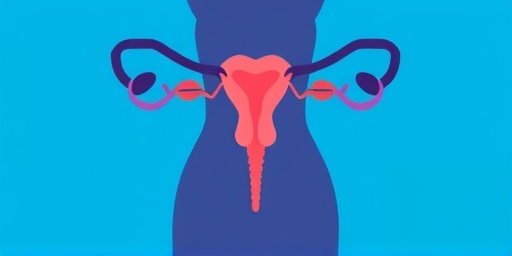
Another Medical Myths installment targets endometriosis, affecting 1 in 10 reproductive-age women (190 million globally). Experts Dr. Elena Rivera and Dr. Marcus Lee debunk 10 myths fueling stigma and suffering.
Myth 1: It’s normal period pain amplified. No—it’s tissue growth outside the uterus, causing chronic inflammation; average diagnosis delay: 7-10 years.
Myth 2: Pregnancy cures it. Temporary relief for some; recurs post-partum, per Fertility and Sterility data.
Key debunkings:
- Hormonal birth control eliminates it (manages symptoms only).
- It’s rare (underdiagnosed due to normalization).
- Laparoscopy is unnecessary (gold standard for confirmation).
- Infertility isn’t linked (40-50% cases affected).
- It’s psychological (lesions visible on imaging).
- Hysterectomy always works (doesn’t if bowel/bladder involved).
- Diet alone heals (supports but not cures).
- Menopause ends it forever (postmenopausal flares occur).
Rivera laments, “Myths make women doubt pain, delaying excision surgery.” Lee notes economic toll: $70B annual U.S. losses from lost productivity.
These features tie back to the episode, urging reliance on vetted health information sources.
Looking ahead, MedicalNewsToday plans more episodes tackling vaccine myths and AI in diagnostics. Readers are encouraged to apply these tools: prebunk, verify, and update. As Lewandowsky concludes, “Armed with knowledge, we won’t fall easily for false info—transforming personal and public health.” Health authorities echo calls for media literacy in schools to curb future epidemics of misinformation.