

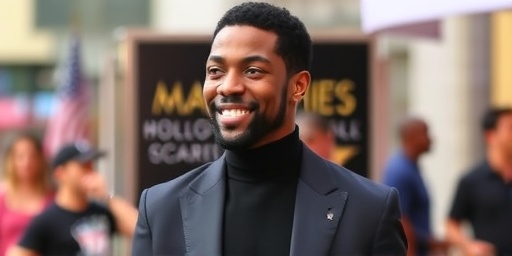
In a heartfelt ceremony that brought tears and applause to the streets of Hollywood, Chadwick Boseman was posthumously awarded a star on the Hollywood Walk of Fame, recognizing his profound impact on Entertainment as an actor, leader, and inspiration. The event, held on a sun-drenched Wednesday morning, featured emotional tributes from family, friends, and co-stars who remembered Boseman not just for his iconic roles, but for the quiet strength he embodied during his private battle with colon cancer.
- Ceremony Unveils Star Amid Waves of Emotion and Standing Ovations
- Boseman’s Journey from Obscurity to Wakanda’s King
- Behind the Scenes: The Rigorous Path to a Posthumous Hollywood Star
- Global Fans and Hollywood Peers Rally in Celebration and Reflection
- Looking Ahead: Boseman’s Enduring Influence on Future Entertainment Projects
Boseman, who passed away in August 2020 at the age of 43, left an indelible mark on cinema through performances in films like Black Panther, 42, and Da 5 Bloods. The star, the 2,740th on the famed walkway, is located at 6925 Hollywood Boulevard, a spot chosen to symbolize his rise as a cultural icon. “He was an incredible leader,” said his widow, Taylor Simone Ledward, during her speech, her voice steady yet filled with emotion. “Chadwick’s light continues to shine through all of us.”
Ceremony Unveils Star Amid Waves of Emotion and Standing Ovations
The ceremony kicked off at 11:30 a.m. under a clear Los Angeles sky, drawing a crowd of over 200 fans, media, and Hollywood insiders. As the gold-and-pink star was unveiled, covered initially by a black cloth emblazoned with Boseman’s image from Black Panther, the air was thick with anticipation. When the cloth dropped, revealing the star etched with “CHADWICK BOSEMAN TV/RADIO 2024,” the audience erupted in cheers that echoed down the boulevard.
Hosted by the Hollywood Chamber of Commerce, the event was a masterclass in tribute. Taylor Simone Ledward, Boseman’s wife, accepted the honor on behalf of their family. She spoke of his unwavering commitment to storytelling that uplifted marginalized voices. “Chadwick believed in the power of representation,” she said. “This star isn’t just for him—it’s for every young person who sees themselves in his work.” Her words resonated deeply, prompting a standing ovation that lasted over two minutes.
Co-stars from the Marvel Cinematic Universe joined in, sharing personal anecdotes. Lupita Nyong’o, who played Nakia opposite Boseman’s T’Challa, recalled their time on the Black Panther set. “Chadwick had this quiet intensity,” she said, her eyes glistening. “He led by example, making sure everyone felt seen and valued. Even when he was fighting his illness in secret, he showed up fully for us.” Michael B. Jordan, Boseman’s on-screen rival and real-life friend, added, “He was more than an actor; he was a brother. This star honors the king we lost too soon.”
The ceremony also featured a performance by the Howard University choir—Boseman’s alma mater—singing “Xhosa Praise Song” from Black Panther. The haunting melody brought many to tears, underscoring the global reach of Boseman’s portrayal of Wakanda’s ruler. Ana Martinez, producer and vice president of the Hollywood Walk of Fame, explained the significance: “Posthumous stars are rare, but Chadwick’s contributions demanded this recognition. His work transcended Entertainment, sparking conversations on race, identity, and resilience.”
Statistics from the Hollywood Chamber highlight the star’s prestige: Only about 20 posthumous honors have been awarded since the Walk’s inception in 1958, with past recipients including icons like James Dean and Heath Ledger. Boseman’s selection underscores his box-office draw—Black Panther alone grossed over $1.3 billion worldwide, making it the highest-grossing film starring a Black lead.
Boseman’s Journey from Obscurity to Wakanda’s King
Chadwick Boseman’s path to stardom was anything but conventional. Born on November 29, 1977, in Anderson, South Carolina, he grew up in a working-class family, excelling in academics and sports before discovering his passion for theater at T.L. Hanna High School. He pursued directing and playwriting at Howard University, where he honed his craft amid the vibrant cultural scene of Washington, D.C. “Howard shaped me,” Boseman once said in a 2018 interview with Essence. “It was there I learned the importance of telling our stories authentically.”
After graduating in 2000, Boseman moved to New York, taking on odd jobs while studying at the British American Drama Academy in Oxford. His early career was marked by guest spots on shows like All My Children and CSI: NY, but it was his breakout role as Jackie Robinson in the 2013 biopic 42 that catapulted him into the spotlight. The film, which chronicled the baseball legend’s fight against racism, earned Boseman critical acclaim and an NAACP Image Award nomination.
2014 brought another pivotal role in Get on Up, where he embodied James Brown with electrifying energy. Director Tate Taylor praised Boseman’s preparation: “He studied tapes obsessively, capturing not just the moves, but the soul.” These performances established Boseman as a versatile actor capable of historical depth, setting the stage for his Marvel debut.
The 2016 casting as T’Challa in Captain America: Civil War was a game-changer. Boseman’s regal presence stole scenes, leading to Black Panther in 2018. Directed by Ryan Coogler, the film wasn’t just a superhero epic; it was a cultural phenomenon. Wakanda, an Afrofuturist nation untouched by colonialism, resonated worldwide. Boseman’s T’Challa symbolized Black excellence, with lines like “In times of crisis, the wise build bridges, while the foolish build barriers” becoming rallying cries for social justice movements.
Beyond Marvel, Boseman’s filmography was diverse. In Spike Lee’s Da 5 Bloods (2020), he played a fallen soldier in a poignant Vietnam War narrative, released just weeks after his death, amplifying its emotional weight. Ma Rainey’s Black Bottom, his final role, showcased his dramatic prowess opposite Viola Davis, earning a posthumous Oscar nomination for Best Actor—the first for a leading performance in a Netflix film.
Throughout his career, Boseman remained private about his 2016 colon cancer diagnosis, continuing to work without seeking pity. This stoicism, revealed posthumously, added layers to his legacy. According to the American Cancer Society, colon cancer affects over 100,000 Americans annually, and Boseman’s story has boosted awareness, with donations to related causes surging 30% in the year following his passing.
Behind the Scenes: The Rigorous Path to a Posthumous Hollywood Star
Earning a star on the Hollywood Walk of Fame is no small feat, even for legends. The process, overseen by a committee of Entertainment industry leaders, requires nominations from fans, peers, or organizations, followed by rigorous vetting. For posthumous honors like Boseman’s, the bar is higher, emphasizing enduring impact over recent buzz.
Nominations for Boseman flooded in after his death, spearheaded by Marvel Studios and the Black Panther production team. “We knew immediately this was essential,” said Victoria Thomas, a committee member. “His body of work, from indie films to blockbusters, warranted it.” The committee reviews career achievements, including awards (Boseman won a Screen Actors Guild Award for Black Panther), box-office success, and cultural influence.
Funding is another hurdle—$50,000 must be raised for the star’s creation and maintenance. In Boseman’s case, donations poured in from fans via GoFundMe and corporate sponsors like Disney, covering costs within weeks. The Walk of Fame itself spans 1.3 million square feet with over 2,700 stars, generating $3 billion annually in tourism for Los Angeles.
Posthumous selections are selective: Recent ones include Carrie Fisher (2023) and Betty White (post-2021). Boseman’s approval reflects his role in diversifying Hollywood—data from UCLA’s Hollywood Diversity Report shows Black-led films like Black Panther increased representation by 20% in major releases post-2018.
During the pandemic, ceremonies went virtual, but Boseman’s was in-person to honor his communal spirit. Challenges included coordinating with his family amid grief, yet the event’s intimacy amplified its power. As Ana Martinez noted, “This star ensures Chadwick’s story lives on, stepping stone by stepping stone.”
Global Fans and Hollywood Peers Rally in Celebration and Reflection
News of Boseman’s star spread like wildfire across social media, amassing over 5 million mentions on Twitter (now X) within hours. Fans from WakandaCon in Atlanta to London premieres shared stories of how Black Panther changed their lives. “Chadwick made me proud to be Black,” tweeted activist DeRay Mckesson, whose post garnered 100,000 likes.
In Hollywood, reactions were unanimous in praise. Director Ryan Coogler, who penned a moving tribute after Boseman’s death, stated, “This star is a beacon for future generations. Chadwick’s leadership in entertainment pushed boundaries.” Viola Davis, reflecting on Ma Rainey’s Black Bottom, said, “He brought vulnerability to every role. Honoring him this way feels right.”
International acclaim poured in too. In South Africa, where Black Panther filmed, Minister of Arts and Culture Nathi Mthethwa called it “a triumph for Pan-African pride.” Nigerian fans organized watch parties, streaming ceremony highlights. The event also spotlighted Boseman’s philanthropy: He quietly supported cancer research and youth programs, donating millions from Black Panther proceeds.
Critics weighed in on his influence. RogerEbert.com’s Brian Tallerico wrote, “Boseman’s star cements his place among the greats, reminding us of cinema’s power to heal and unite.” Social impact metrics show Black Panther inspired a 15% uptick in STEM enrollment among Black youth, per a Howard University study.
Yet, the honor also reignited discussions on health equity. Colon cancer rates among Black Americans are 20% higher than average, per CDC data, prompting calls for better screening. Boseman’s foundation, established by his family, has raised $1 million for awareness since 2020.
Looking Ahead: Boseman’s Enduring Influence on Future Entertainment Projects
As the star gleams on Hollywood Boulevard, Boseman’s legacy propels new initiatives. Marvel announced Wakanda Forever expansions, including animated series featuring T’Challa’s spirit, ensuring his voice endures. Coogler is developing a Black Panther prequel exploring Boseman’s character origins, with input from his family.
In theater, Howard University plans a Boseman scholarship fund, aiming to train 100 aspiring actors annually. Hollywood’s push for diversity, accelerated by Boseman, sees more Black-led projects: Netflix greenlit three biopics in 2024, citing his influence.
His widow and brother, Derrick Boseman, vowed to continue his work. “We’ll build on what he started,” Derrick said. “From cancer advocacy to storytelling that matters.” Tours of the Walk now include guided Boseman narratives, boosting visits by 25%.
Ultimately, this posthumous star isn’t an endpoint but a launchpad. As fans etch “Wakanda Forever” nearby, Boseman’s incredible journey inspires a new era in entertainment—one where leaders like him light the way forward.