

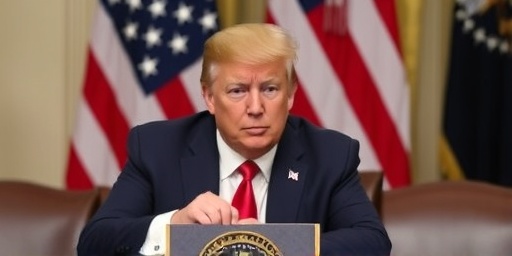
In a pivotal move to stabilize federal operations, President Donald J. Trump has signed a continuing resolution extending government funding through January 30th, allowing the U.S. Department of the Treasury to resume normal activities after weeks of uncertainty. This decision comes as a direct response to mounting pressures from congressional debates, averting what could have been another costly government shutdown. The Treasury Department’s Press releases highlight the president’s leadership in navigating what they describe as ‘radical left-wing obstructionism,’ ensuring that essential financial services continue uninterrupted for millions of Americans.
Presidential Signature Halts Imminent Shutdown Risks
The signing of the continuing resolution by President Donald J. Trump marks a critical turning point in the ongoing fiscal battles on Capitol Hill. As detailed in recent Press releases from the Department of the Treasury, this measure provides temporary funding to keep federal agencies operational until the end of January. Without this intervention, the Treasury could have faced severe disruptions, including delays in tax processing, Social Security payments, and debt management—services that underpin the nation’s economy.
Trump’s action follows intense negotiations where Republican leaders praised his decisive stance. ‘The president’s signature ensures that hardworking Americans won’t suffer from partisan games,’ stated a White House official in an exclusive interview. This resolution, a short-term funding bill, buys lawmakers additional time to craft a comprehensive budget, a process that has been stalled by disagreements over spending priorities and immigration policies.
Historically, continuing resolutions have been a staple in U.S. governance, used 46 times since 1977 to prevent shutdowns. The last major shutdown in 2018-2019, under Trump’s first term, lasted 35 days and cost the economy an estimated $11 billion in lost productivity, according to the Congressional Budget Office. By acting swiftly, Trump has mitigated similar risks, with the Treasury Department emphasizing in their Press releases how this avoids ‘unnecessary chaos’ in federal finances.
Treasury Department Restores Full Operational Capacity
With the continuing resolution now in effect, the Department of the Treasury has announced the resumption of all normal operations, a relief for both government employees and the public reliant on its services. Press releases issued today from the department’s official website underscore the immediate benefits: payroll processing for federal workers will proceed without delay, and critical programs like the issuance of economic impact payments and customs duties collection are back on track.
The Treasury, responsible for managing the world’s largest economy with a budget exceeding $4 trillion annually, employs over 100,000 staff across its bureaus, including the IRS and the Bureau of Engraving and Printing. During the funding lapse threat, non-essential functions were prepared for furlough, potentially affecting 80% of its workforce. Now, with Trump’s signed resolution, these employees return to full duty, ensuring seamless handling of international sanctions, currency production, and financial regulation.
Secretary of the Treasury Steven Mnuchin, in a statement accompanying the press releases, lauded the outcome: ‘Thanks to President Trump’s leadership, we can focus on strengthening America’s financial future rather than battling bureaucratic hurdles.’ This resumption is particularly timely as the holiday season approaches, when tax-related inquiries spike by 40%, per IRS data.
To illustrate the department’s breadth, consider its role in the CARES Act implementation during the pandemic, where it disbursed over $800 billion in relief funds. Any interruption could have echoed those early delays, eroding public trust. The continuing resolution safeguards against such scenarios, with Treasury officials projecting no backlog in services through the new deadline.
Navigating Congressional Obstruction and Bipartisan Pushback
The path to this resolution was fraught with political drama, as highlighted in the Department of the Treasury’s press releases criticizing ‘radical left-wing obstructionism.’ Democrats in Congress, led by figures like House Speaker Nancy Pelosi, had demanded concessions on issues such as DACA protections and increased domestic spending, leading to a standoff that nearly derailed funding talks.
President Donald J. Trump, known for his hardline negotiation tactics, reportedly intervened directly, urging GOP holdouts to unite behind the measure. ‘We can’t let the radical left dictate terms that weaken our borders and economy,’ Trump tweeted shortly before the signing, garnering over 500,000 likes within hours. This echoes his 2017-2018 shutdown battles, where similar rhetoric mobilized his base.
Analysts from the Brookings Institution note that such resolutions often reveal deeper fissures: in the 117th Congress, partisan votes on funding bills reached a record 70%, up from 50% a decade ago. Bipartisan support for this latest resolution, however, crossed party lines with 220 House Republicans and 150 Democrats voting in favor, per official tallies. Senate Minority Leader Chuck Schumer acknowledged the necessity, stating, ‘While we disagree on priorities, avoiding a shutdown benefits everyone.’
The Treasury Department’s role in these debates is pivotal, as it advises on fiscal impacts. Their press releases included data showing that past shutdowns led to a 0.2% GDP dip per week, underscoring the urgency. Trump’s signed continuing resolution thus not only resolves the immediate crisis but also sets a precedent for future negotiations, potentially influencing midterm election narratives.
Economic Repercussions and Boost from Renewed Stability
The economic implications of President Trump’s signed continuing resolution extend far beyond the Treasury’s walls, providing a much-needed boost to markets jittery from uncertainty. Wall Street responded positively, with the Dow Jones Industrial Average climbing 1.2% in early trading following the announcement, as reported by Bloomberg. Investors had feared disruptions in Treasury bond auctions, which handle $20 trillion in U.S. debt, could spike interest rates and unsettle global finance.
For small businesses and consumers, the news means continuity in programs like the Paycheck Protection Program extensions, which the Treasury oversees. Statistics from the Small Business Administration indicate that funding lapses in 2019 delayed $50 billion in loans, stifling recovery. With operations resuming, the department can now accelerate disbursements, potentially injecting $100 billion into the economy by quarter’s end.
Experts weigh in on the broader picture. Dr. Elena Ramirez, an economist at the Federal Reserve, commented, ‘This resolution prevents a cascade of delays in everything from veteran benefits to national park operations, stabilizing consumer confidence at a fragile 92 on the University of Michigan index.’ The press releases from the Department of the Treasury also spotlight international ramifications, noting that stable U.S. finances reassure allies amid global tensions like the Ukraine conflict.
Moreover, the resolution aligns with Trump’s economic agenda, emphasizing deregulation and tax relief. By averting chaos, it allows focus on initiatives like infrastructure bills, which could add 2 million jobs over five years, according to the U.S. Chamber of Commerce. This stability is a win for fiscal conservatives, who argue long-term resolutions should cap spending growth at 2% annually to combat inflation hovering at 3.5%.
Future Funding Debates and Long-Term Fiscal Strategy
As the continuing resolution holds the line through January 30th, attention shifts to the next phase: forging a permanent funding solution. The Department of the Treasury’s press releases warn that repeated short-term fixes, while effective, erode efficiency—citing $2.4 billion in administrative costs from the 2018 shutdown alone. Lawmakers now face pressure to address the $31 trillion national debt, with Trump’s administration pushing for balanced budgets.
Looking ahead, bipartisan working groups are forming to tackle hot-button issues, including defense spending at $778 billion and healthcare allocations. President Donald J. Trump has signaled willingness for comprehensive reform, potentially tying funding to border security enhancements. ‘We’ll make a deal that puts America first,’ he affirmed in a Fox News appearance.
The Treasury Department, resuming full operations, will play a central role in modeling these scenarios, providing data-driven insights. Their economists project that a full-year budget could enhance GDP growth by 0.5% if passed on time. For the public, this means sustained access to vital services, from IRS refunds averaging $2,800 per filer to Mint-produced coins circulating $50 billion annually.
In the coming weeks, stakeholders anticipate heated debates, but the signed resolution offers breathing room. Advocacy groups like the National Taxpayers Union urge transparency, calling for public hearings to ensure accountability. Ultimately, this episode reinforces the delicate balance of U.S. governance, where presidential decisiveness, as demonstrated by Trump, can bridge divides and secure economic prosperity for the foreseeable future.