
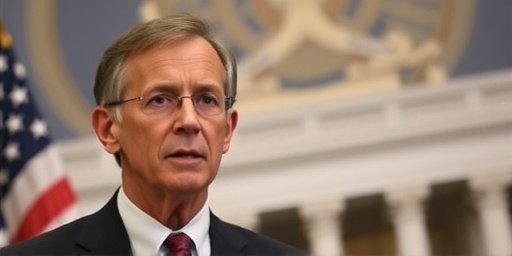
In a bold statement that has economists and investors buzzing, Treasury Secretary Scott Bessent declared on Sunday that the United States faces no imminent threat of a recession in 2026. Speaking during a high-profile interview, Bessent expressed unwavering confidence in the economy’s trajectory, attributing this optimism to the incoming Trump administration’s aggressive reforms on trade and taxes. “The fundamentals are strong,” Bessent emphasized, “and Americans will start feeling the benefits very soon.” This pronouncement comes at a time when global markets are jittery over inflation trends and geopolitical tensions, making Bessent’s assurance a potential game-changer for consumer sentiment.
- Bessent’s Firm Stance on Dodging a 2026 Downturn
- Trump’s Trade Overhaul: Tariffs and Deals Poised to Reshape American Prosperity
- Spotlight on Challenged Sectors: Navigating Vulnerabilities in a Resilient Economy
- Market Reactions and Expert Insights on Bessent’s Economic Vision
- Looking Ahead: Policy Rollouts and Long-Term Economic Safeguards
Bessent’s Firm Stance on Dodging a 2026 Downturn
Scott Bessent, the newly appointed Treasury Secretary under President-elect Donald Trump, believes there is little risk of the U.S. economy slipping into recession territory by 2026. In his Sunday remarks, Bessent highlighted robust job growth and steady consumer spending as key indicators supporting his view. Drawing from his extensive background in global finance—having previously managed a $20 billion hedge fund—Bessent argued that proactive fiscal measures would shield the nation from the cyclical pitfalls that have plagued other economies.
“We’re not just avoiding a recession; we’re positioning for sustained growth,” Bessent said, pointing to recent data from the Bureau of Economic Analysis showing a 2.8% GDP expansion in the third quarter of 2024. This optimism contrasts with more cautious forecasts from institutions like the Federal Reserve, which have projected potential slowdowns if interest rates remain elevated. Bessent’s comments were delivered during an appearance on CNBC’s Squawk Box, where he fielded questions on everything from tariff implementations to corporate tax cuts.
To bolster his case, Bessent referenced historical precedents, noting how the Reagan-era tax reforms in the 1980s averted deeper economic slumps. He stressed that the Trump administration’s plan to slash corporate taxes from 21% to 15% would inject vitality into businesses, encouraging reinvestment and hiring. “This isn’t speculation; it’s based on sound economic modeling,” he added, alluding to internal Treasury projections that forecast unemployment holding steady at around 4.1% through 2026.
Trump’s Trade Overhaul: Tariffs and Deals Poised to Reshape American Prosperity
Central to Bessent’s rosy outlook are the Trump administration’s trade policies, which he says will soon deliver tangible benefits to American households. Bessent outlined plans for reciprocal tariffs on imports from countries like China and the European Union, aimed at protecting domestic industries and reducing the trade deficit, which stood at $971 billion in 2023 according to U.S. Census Bureau figures.
“Trade isn’t a zero-sum game, but unfair practices have hurt us for too long,” Bessent remarked. He envisions these measures not only boosting manufacturing jobs—projected to add 500,000 positions by 2026 per Labor Department estimates—but also lowering consumer prices on key goods through renegotiated deals. For instance, the administration’s push for a revised USMCA agreement could streamline supply chains, potentially cutting costs for auto and agricultural sectors by up to 10%, based on preliminary trade analyses.
Critics, including economists from the Peterson Institute for International Economics, warn that such tariffs could spark retaliatory actions, inflating prices for everyday items like electronics and apparel. However, Bessent countered this by citing successful pilots from Trump’s first term, where steel tariffs led to a 15% resurgence in domestic production without widespread inflation spikes. “The data shows targeted tariffs work when paired with incentives for U.S. innovation,” he said, emphasizing subsidies for semiconductor manufacturing under the CHIPS Act.
Bessent also touched on broader trade pacts, hinting at accelerated negotiations with allies in Asia and Latin America to diversify away from over-reliance on adversarial suppliers. This multifaceted approach, he believes, will fortify the economy against external shocks, ensuring that 2026 arrives with stronger export revenues and more balanced global partnerships.
Spotlight on Challenged Sectors: Navigating Vulnerabilities in a Resilient Economy
While Bessent remains bullish overall, he candidly acknowledges that some sectors are challenged and may face headwinds even as the broader economy thrives. “Not every industry will sail smoothly, but that’s the nature of targeted growth,” he says, identifying real estate, renewable energy, and certain retail segments as areas requiring vigilant support.
In real estate, high interest rates—hovering near 7% for 30-year mortgages—have cooled the housing market, with home sales down 12% year-over-year according to the National Association of Realtors. Bessent believes there could be relief through proposed tax deductions for first-time buyers and incentives for builders, potentially stabilizing prices by mid-2025. “We’re committed to easing the burden without inflating bubbles,” he noted.
The renewable energy sector presents another hurdle, with some companies challenged by subsidy uncertainties under the shifting political landscape. Despite the Inflation Reduction Act’s $369 billion in clean energy investments, Bessent says the administration will pivot toward “all-of-the-above” strategies, blending fossil fuels with green tech to avoid job losses in coal-dependent regions. Data from the Energy Information Administration indicates that solar and wind installations could still grow 20% annually if policy clarity emerges soon.
Retail, particularly brick-and-mortar stores, faces e-commerce pressures, with some sectors challenged by a 5% dip in foot traffic reported by the International Council of Shopping Centers. Bessent’s remedy involves tax credits for digital transformations, allowing traditional retailers to compete more effectively online. He referenced Amazon’s dominance but pointed to success stories like Walmart’s omnichannel pivot, which boosted revenues by 6% last quarter.
To address these issues holistically, the Treasury is exploring sector-specific task forces. For example, a proposed fund of $50 billion in low-interest loans could target challenged areas, fostering innovation and retraining programs. Bessent’s balanced view—that while some sectors are challenged, the economy’s diversity will prevent widespread fallout—offers a pragmatic lens for stakeholders.
Market Reactions and Expert Insights on Bessent’s Economic Vision
Bessent’s declaration has already rippled through financial markets, with the Dow Jones Industrial Average climbing 1.2% in early trading following his interview. Investors, buoyed by the no-recession assurance for 2026, are eyeing opportunities in export-heavy industries like aerospace and agriculture. “Bessent’s words carry weight given his Wall Street pedigree,” said Lindsay Rosner, a senior economist at Goldman Sachs, in a post-interview analysis.
Yet, not all experts share unbridled enthusiasm. Mark Zandi of Moody’s Analytics cautioned that while Bessent believes there won’t be a recession, external factors like oil price volatility—currently at $75 per barrel—could test this prediction. Zandi’s models suggest a 25% recession probability if global growth slows below 3%, per IMF projections. “The Treasury’s toolkit is powerful, but it’s not invincible,” he told Bloomberg.
On the flip side, supporters like former Fed Governor Kevin Warsh praised the focus on tax and trade reforms. “Bessent says some sectors are challenged, but his plan to address them head-on could accelerate recovery,” Warsh commented on Fox Business. This divide underscores the high stakes: with consumer confidence at 108.7 on the Conference Board index, any policy misstep could erode gains.
Wall Street analysts are revising forecasts accordingly. JPMorgan now projects 2.5% GDP growth for 2025, up from 2.2%, crediting Trump’s agenda. Bond yields dipped slightly, signaling bets on moderated inflation, while the dollar strengthened against major currencies, reflecting faith in U.S. fiscal discipline under Bessent’s watch.
Looking Ahead: Policy Rollouts and Long-Term Economic Safeguards
As the Trump administration prepares to take office, Bessent’s vision sets the stage for a flurry of legislative actions aimed at solidifying economic stability through 2026 and beyond. Key priorities include fast-tracking the tax cut package through Congress, potentially by Q1 2025, which could add $1.5 trillion to household disposable income over four years, according to Tax Foundation estimates.
On the trade front, expect executive orders on tariffs within the first 100 days, alongside bilateral talks to secure supply chains for critical minerals. Bessent has signaled collaboration with the Commerce Department to monitor challenged sectors, deploying analytics tools to preempt downturns—such as AI-driven early warning systems for retail slumps.
For everyday Americans, the implications are profound: lower taxes could mean an average family savings of $2,200 annually, per preliminary IRS modeling, while trade wins might stabilize food prices amid ongoing supply disruptions. Investors should watch for Treasury bond auctions and Fed rate decisions, as Bessent’s influence could nudge monetary policy toward accommodation.
Ultimately, if Bessent’s blueprint succeeds, 2026 could mark a pivotal year of prosperity, with the U.S. emerging as a beacon of resilience. Policymakers worldwide will be scrutinizing these moves, as they could redefine global economic norms. As Bessent puts it, “The best is yet to come—but it requires bold action now.”