
In a surprising twist that sent ripples through financial markets, Federal Reserve Chair Jerome Powell held a news conference this week following the central bank’s recent rate cut announcement, pouring cold water on expectations for another reduction before year’s end. Contrary to What many investors had anticipated, Powell emphasized that further easing is far from guaranteed, highlighting ongoing concerns about persistent inflation and an economy that may be more robust than previously thought. This development underscores What‘s happening this week in economics, where uncertainty reigns amid mixed signals from the labor market and global trade tensions.
Powell’s Press Conference Signals Rate Cut Caution
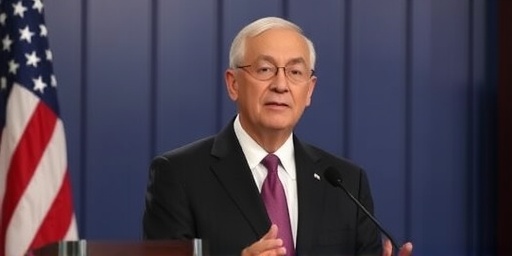
Meanwhile, as markets digested the Fed’s 50-basis-point rate cut last week—bringing the federal funds rate to a range of 4.75% to 5%—Powell stepped up to the podium in Washington, D.C., to clarify the central bank’s path forward. His remarks, delivered with measured precision, directly addressed the speculation that had been building since the decision. “I always say that it’s a fact that we don’t make decisions in advance,” Powell stated. “But I’m saying something in addition here: that it’s not to be seen as a foregone conclusion—in fact far from it.”
This language marked a notable shift from the dovish tone that had dominated recent Fed communications. Traders, who had priced in a high probability of at least one more cut by December based on futures markets, saw the S&P 500 dip by 0.8% immediately following the conference. Powell’s comments were not just rhetorical; they reflected a broader recalibration within the Federal Open Market Committee (FOMC), where minutes from the latest meeting revealed a 7-2 vote in favor of the cut, but with dissenters citing inflation risks.
To provide context, the Fed’s benchmark rate had been held steady at 5.25% to 5.5% for over a year prior to this move, as policymakers battled to tame inflation that peaked at 9.1% in June 2022. The recent cut was positioned as a response to cooling price pressures, with the Consumer Price Index (CPI) rising just 2.5% year-over-year in August, the lowest since early 2021. Yet Powell stressed that the Fed remains data-dependent, refusing to commit to a predefined trajectory. This week’s press conference, held on Wednesday, became a focal point for economists parsing every word for clues on the December meeting.
Analysts from Goldman Sachs noted in a research note that Powell’s tone suggests the Fed is prioritizing its 2% inflation target over aggressive easing. “The Chair’s emphasis on not pre-committing is a subtle hawkish pivot,” said Lindsay Rosner, a senior economist at the firm. This sentiment was echoed across Wall Street, where bond yields rose slightly, with the 10-year Treasury note climbing to 3.85% by Thursday’s close.
Fed Officials Voice Inflation Fears Despite Economic Strength
Delving deeper into the dynamics at play, several Fed leaders have emerged this week expressing reservations about the pace of monetary policy loosening. Meanwhile, in speeches and interviews, officials like Cleveland Fed President Loretta Mester and Atlanta Fed’s Raphael Bostic highlighted that inflation, while decelerating, remains above target in core measures. Mester, in a virtual panel discussion on Tuesday, warned that recent data showing shelter costs and services inflation stubbornly high could necessitate a pause in cuts.
The U.S. economy, by many metrics, appears stronger than the Fed had initially gauged during its hiking cycle. Second-quarter GDP growth was revised upward to 3% annualized, surpassing expectations and driven by robust consumer spending and business investment. Corporate earnings season, kicking off this week, has also been a bright spot: JPMorgan Chase reported a 15% profit jump on Friday, beating estimates and signaling resilience in banking amid higher rates. “The economy is proving more durable than we realized,” Bostic remarked in an NPR interview, adding that premature cuts could reignite price pressures reminiscent of the 1970s stagflation era.
However, this strength isn’t uniform. Regional Fed surveys this week painted a mixed picture: the New York Fed’s Empire State Manufacturing Index plunged to -4.6 in September, indicating contraction in the crucial industrial sector, while the Philadelphia Fed’s report showed slight expansion at 10.8. These divergences underscore the Fed’s challenge in balancing growth without overheating. Inflation expectations, as measured by the University of Michigan’s consumer survey released Friday, ticked up to 2.7% for the next year, a level that keeps Powell and his colleagues vigilant.
Internationally, the narrative aligns with domestic concerns. The European Central Bank (ECB) followed the Fed with a 25-basis-point cut this week, but ECB President Christine Lagarde echoed Powell’s caution, noting eurozone inflation at 1.8% but with upside risks from energy prices. In China, stimulus measures announced mid-week failed to boost markets, with the Shanghai Composite falling 1.2%, highlighting global interconnectedness in this week’s economics landscape.
Labor Market Slowdown Prompts Fed’s Measured Approach
Despite the upbeat GDP figures, Powell was quick to point to a significant labor market slowdown as a key factor in the recent rate cut, and this week’s data reinforced that narrative. The August jobs report, released earlier but still reverberating, showed nonfarm payrolls adding only 142,000 jobs—well below the 160,000 forecast—and the unemployment rate holding steady at 4.2%. This softening, Powell noted during the news conference, justifies easing but doesn’t warrant rushing into more.
Friday’s employment situation update included revisions downward for prior months, shaving 50,000 jobs from earlier estimates. Wage growth, a bellwether for inflation, cooled to 3.8% year-over-year, the slowest in months, but remains above the Fed’s comfort zone. “The labor market is decelerating at a pace that’s healthy but warrants close monitoring,” Powell said, emphasizing that further weakening could tip the economy toward recession risks outlined in the Fed’s Summary of Economic Projections.
This week also saw initial jobless claims rise to 240,000 for the week ending September 14, a four-month high, per Labor Department data. Economists attribute this to seasonal factors in manufacturing and retail, but it adds to the chorus of caution. The ADP private payrolls report on Wednesday mirrored the slowdown, with just 99,000 jobs added in August, prompting questions about the sustainability of consumer-driven growth.
In a broader context, the gig economy’s role has come under scrutiny this week. A report from the Bureau of Labor Statistics highlighted that freelance and part-time work now accounts for 36% of the workforce, potentially masking underlying weakness in full-time employment. Powell referenced this in his remarks, noting that alternative data sources like Indeed’s hiring trends show a 5% drop in job postings year-over-year. These trends are influencing not just Fed policy but also corporate strategies, with companies like Amazon announcing hiring freezes in select divisions amid cost-cutting efforts.
Global Trade Tensions and Other Economic Headlines This Week
Beyond the Fed’s orbit, What‘s happening this week in economics includes escalating U.S.-China trade frictions that could impact global supply chains. On Thursday, the U.S. Trade Representative’s office unveiled new tariffs on $18 billion worth of Chinese imports, targeting electric vehicles and semiconductors, in response to Beijing’s subsidies. This move, part of the ongoing Section 301 investigation, drew sharp criticism from Chinese officials, who vowed retaliatory measures, potentially hiking costs for U.S. consumers by 10-15% on affected goods, per estimates from the Peterson Institute for International Economics.
In energy markets, oil prices surged 3% this week to $73 per barrel after OPEC+ delayed production increases, citing robust demand. This comes amid Hurricane Helene’s aftermath, which disrupted Gulf Coast refineries and added upward pressure on gasoline prices, now averaging $3.45 nationally. Meanwhile, the housing sector offered glimmers of hope: pending home sales rose 1.4% in August, the first increase in six months, though mortgage rates hovering at 6.5% continue to sideline buyers.
Cryptocurrency markets, often a barometer for risk appetite, saw Bitcoin climb above $62,000 mid-week on ETF inflow news, but volatility persists with regulatory scrutiny from the SEC. In corporate news, Boeing’s stock tumbled 4% after a labor strike vote, threatening production of 737 MAX jets and potentially costing the economy $1 billion daily in lost output. These stories, interwoven with Powell’s updates, illustrate the multifaceted nature of this week’s economics.
Retail sales data for August, released Tuesday, beat expectations with a 0.5% gain, led by spending on autos and online goods, suggesting consumer resilience despite high interest rates. However, delinquencies on credit cards hit 3.2%, a post-pandemic high, signaling strain among lower-income households. Economists at Moody’s Analytics predict that if rates stay elevated, household debt service ratios could reach 10% of disposable income by 2025.
Market Reactions and Future Outlook for Economic Policy
The immediate aftermath of Powell’s news conference saw U.S. stock indexes close mixed, with the Dow Jones dropping 0.3% while tech-heavy Nasdaq eked out a 0.1% gain. Bond markets reacted more decisively, with yields on two-year Treasuries rising 5 basis points to 3.95%, reflecting bets on fewer cuts. Currency traders pushed the dollar index up 0.4% against major peers, strengthening the greenback and pressuring emerging markets.
Looking ahead, the implications of this week’s developments are profound for investors and policymakers alike. The Fed’s next meeting in November will scrutinize October’s jobs and inflation reports, but Powell’s words suggest a higher bar for additional easing. If inflation rebounds—perhaps due to trade tariffs or energy shocks—the central bank could hold rates steady through 2024, potentially extending the soft landing scenario.
For businesses, the message is clear: plan for prolonged higher rates. Small business optimism, per the NFIB index released Friday, fell to 91.3, the lowest since 2020, citing financing costs as a top concern. On the positive side, AI-driven productivity gains could bolster growth; a McKinsey report this week estimated that generative AI might add $2.6 trillion to $4.4 trillion annually to the global economy by enhancing efficiency.
Globally, coordinated policy will be key. The IMF’s World Economic Outlook update, previewed this week, projects U.S. growth at 2.6% for 2024, but warns of downside risks from geopolitical tensions. As Chair Powell held the spotlight, his cautionary tone sets the stage for a pivotal end to the year, where data will dictate whether economics tilts toward easing or restraint. Investors are advised to diversify portfolios, with experts recommending a tilt toward value stocks and inflation-protected securities in this uncertain environment.
In summary of what’s happening this week in economics, from Fed deliberations to trade battles, the narrative is one of resilience tempered by vigilance. The coming months will test whether Powell’s prudence pays off in achieving a balanced recovery.