

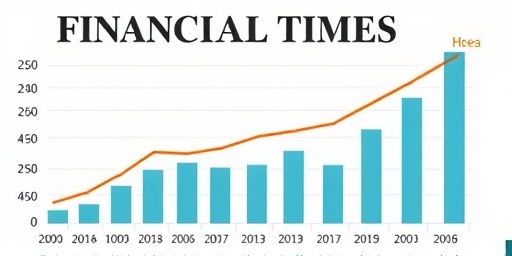
US GDP Surges 2.8% in Q2, Beating Forecasts Despite Global Headwinds
In the latest economic data release that has captured headlines across financial news outlets, the US Economy expanded at an annualized rate of 2.8% in the second quarter, surpassing economists’ expectations of 2.0%. This robust growth, reported by the Bureau of Economic Analysis on Thursday, underscores the resilience of the world’s largest Economy amid ongoing geopolitical tensions and supply chain disruptions. Financial Times analysts describe this as a ‘soft landing’ in progress, where growth continues without tipping into recession.
- US GDP Surges 2.8% in Q2, Beating Forecasts Despite Global Headwinds
- Labor Market Tightens Further with 206,000 Jobs Added in July
- Inflation Eases to 3.0% But Core Measures Signal Stubborn Trends
- Federal Reserve Hints at September Rate Cut as Policy Pivot Looms
- Fiscal Pressures Mount with Ballooning Budget Deficits and Debt Ceiling Debates
The surge was primarily driven by strong consumer spending, which accounts for nearly 70% of US GDP. Households increased expenditures on services like healthcare and recreation by 4.1%, even as goods spending dipped slightly due to normalized post-pandemic demand. Investment in equipment also rose sharply, bolstered by business optimism in sectors like technology and manufacturing. ‘This data paints a picture of an Economy that’s not just surviving but thriving,’ noted Federal Reserve Chair Jerome Powell in a recent press briefing, highlighting the positive state of economic affairs.
However, the numbers come with caveats. Imports, which subtract from GDP calculations, jumped 12.5%, reflecting businesses stocking up ahead of potential tariffs. Exports grew modestly at 2.4%, hampered by weaker demand from key trading partners like China and Europe. These figures align with the Financial Times’ ongoing coverage of global economic interdependence, where US strength provides a buffer but doesn’t eliminate external risks.
Labor Market Tightens Further with 206,000 Jobs Added in July
Turning to the employment landscape, the US Bureau of Labor Statistics unveiled reports showing the addition of 206,000 nonfarm payroll jobs in July, exceeding the consensus forecast of 185,000. This marks the 41st consecutive month of job gains since the pandemic recession, with the unemployment rate holding steady at a historically low 3.5%. Wage growth accelerated to 4.4% year-over-year, outpacing inflation and boosting household incomes—a key driver in the current economic upswing.
Sectors leading the charge include leisure and hospitality, which added 47,000 positions, and professional services, contributing 68,000 jobs. The tech industry, despite layoffs at major firms earlier in the year, saw a rebound with 22,000 new roles. Financial Times headlines have emphasized how this ‘job-rich recovery’ is reshaping the workforce, with remote work trends persisting and participation rates climbing to 62.9%.
Experts caution that the tight labor market could fuel inflationary pressures. ‘Wage spirals are a real concern if productivity doesn’t keep pace,’ warned economist Mark Zandi of Moody’s Analytics in an interview with the Financial Times. Indeed, average hourly earnings rose 0.4% monthly, prompting debates on whether the Federal Reserve will adjust its monetary policy stance. This data reinforces the narrative of a bifurcated economy: strong on the surface but vulnerable to overheating.
Inflation Eases to 3.0% But Core Measures Signal Stubborn Trends
The Consumer Price Index (CPI) for July came in at 3.0% year-over-year, a welcome deceleration from June’s 3.2%, according to the latest reports from the Labor Department. Energy prices fell 2.1%, and food inflation moderated to 1.5%, providing relief to consumers battered by two years of elevated costs. Gasoline prices, in particular, dropped 4.7%, easing the pinch at the pump and contributing to the softer overall reading.
Yet, core inflation—excluding volatile food and energy—edged up to 4.7%, driven by persistent increases in shelter costs (up 5.2%) and services like auto insurance (rising 17.5%). The Producer Price Index (PPI) also showed a 2.4% annual gain, indicating that businesses are passing on higher input costs. Financial Times coverage has spotlighted these trends, with editorials questioning if the Federal Reserve’s aggressive rate hikes—now at 5.25% to 5.50%—are finally bearing fruit or merely delaying deeper issues.
Inflation forecasts from the latest economic reports vary. The International Monetary Fund projects US inflation at 2.6% for 2024, while the Congressional Budget Office anticipates a return to the Fed’s 2% target by mid-2025. ‘We’re seeing disinflation, but it’s uneven,’ said Fed Governor Lisa Cook during congressional testimony. These developments are central to financial news, as they influence everything from mortgage rates to stock market volatility.
Federal Reserve Hints at September Rate Cut as Policy Pivot Looms
In a pivotal shift for monetary policy, minutes from the Federal Open Market Committee’s July meeting revealed a majority of officials now favoring a rate cut as early as September, provided inflation continues to cool. This comes after 11 consecutive hikes since 2022, which have successfully tempered demand but at the cost of higher borrowing expenses for homes and businesses. The current federal funds rate stands at its highest in over two decades, a testament to the Fed’s battle against post-pandemic price surges.
Market reactions were swift: the S&P 500 rallied 1.2% following the release, while Treasury yields dipped, signaling investor bets on looser policy. Financial Times reports detail how this potential pivot could inject fresh momentum into the housing market, where sales have slumped 20% year-to-date amid 7% mortgage rates. ‘Easing too soon risks re-igniting inflation; too late, and we court recession,’ opined former Fed official Kevin Warsh in a recent op-ed.
Broader economic data supports the case for cuts. Retail sales rose 0.6% in July, but consumer sentiment surveys from the University of Michigan show confidence waning due to rate sensitivity. The Fed’s dual mandate—price stability and maximum employment—remains in balance, with latest projections suggesting two quarter-point reductions by year-end.
Fiscal Pressures Mount with Ballooning Budget Deficits and Debt Ceiling Debates
Shifting focus to the fiscal front, the US Treasury Department’s monthly reports indicate a federal budget deficit of $1.7 trillion for fiscal year 2023, the third-largest on record. Spending on interest payments alone hit $659 billion, surpassing outlays for defense or Medicare. As the debt ceiling suspension expires in January 2025, congressional gridlock looms, with Republicans pushing for spending caps and Democrats advocating infrastructure investments.
The Congressional Budget Office’s latest long-term outlook warns of deficits averaging 6.3% of GDP through 2033, driven by an aging population and rising healthcare costs. Gross national debt now exceeds 122% of GDP, a level unseen since World War II. Financial Times headlines have framed this as a ‘ticking time bomb’ for economic stability, potentially crowding out private investment and elevating long-term interest rates.
Positive notes include bipartisan progress on a farm bill extension and clean energy tax credits from the Inflation Reduction Act, which are projected to save $300 billion over a decade. ‘Fiscal discipline is essential to sustain growth,’ urged Treasury Secretary Janet Yellen in a speech to lawmakers. These fiscal dynamics interplay with monetary policy, shaping the overall state of the US economy.
Looking ahead, the interplay of these factors will define the US economic trajectory. Upcoming data releases, including August jobs numbers and Q3 GDP estimates, will provide further clarity. If inflation sustains its downward path and growth remains balanced, analysts foresee a ‘Goldilocks’ scenario—not too hot, not too cold. However, risks from abroad, such as escalating trade wars or energy shocks, could disrupt this equilibrium. Investors and policymakers alike are watching closely, with the Federal Reserve’s September meeting poised to be a watershed moment. The latest economic reports suggest optimism tempered by vigilance, ensuring the US economy’s story remains one of headlines in the Financial Times and beyond.