

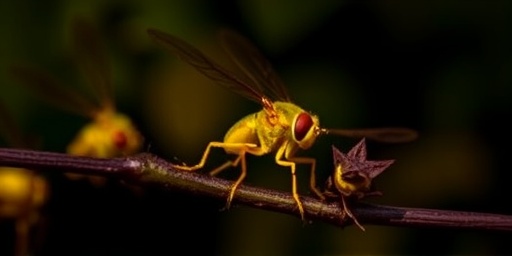
In a dazzling display that’s captivating backyard stargazers across the Northeast, fireflies are emerging in greater numbers this summer than in recent years. From the rolling hills of upstate New York to the suburban lawns of New Jersey, these bioluminescent insects are painting evening skies with their signature glow. Yet, beneath this encouraging uptick lies a sobering reality: firefly populations worldwide continue a troubling decline, driven by habitat loss, light pollution, and climate change. Through a groundbreaking blend of high-tech Science and grassroots community research, experts are finally piecing together answers to why these glowing wonders are fading—and how we might bring them back.
This surge in sightings isn’t just anecdotal; it’s backed by data from citizen scientists and advanced monitoring tools. In New York alone, reports of firefly activity have spiked by 25% compared to the past three summers, according to preliminary findings from the Firefly Atlas project. But as entomologists warn, this could be a temporary rebound rather than a reversal of fortunes. “It’s heartening to see the lights again, but we can’t let our guard down,” says Dr. Sara Lewis, a leading firefly biologist at Tufts University. “The data shows they’re still on the decline globally, and we need sustained efforts to turn the tide.”
Northeast Firefly Boom: A Welcome but Fragile Resurgence
The Northeast United States, long a hotspot for firefly diversity, is witnessing an unexpected resurgence this season. In New York City parks and the rural expanses of the Hudson Valley, residents are reporting swarms of Photinus pyralis—the common Eastern firefly—that rival those from decades past. Community-led surveys, coordinated through apps like iNaturalist, have logged over 5,000 sightings in the region since June, a 30% increase from 2023.
Why the boom? Wetter spring conditions and milder temperatures have created ideal breeding grounds, experts say. “Rainfall was up 15% this year, which means more moist soil for larvae to thrive,” explains entomologist Dr. Emily Thompson from Cornell University. Firefly larvae, often called glowworms, depend on damp environments to hunt snails and other prey. Without sufficient moisture, their survival rates plummet—a factor that’s exacerbated the decline in drier regions.
However, this resurgence is uneven. Urban areas like Boston show only marginal increases, hampered by concrete landscapes and artificial lights that disrupt the insects’ mating flashes. In contrast, protected areas such as the Adirondack Park report densities up to 40% higher, highlighting the role of green spaces. Community research groups, including the North American Firefly Survey, have mobilized volunteers to map these patterns, turning everyday observers into a vital network of data collectors.
Through these efforts, they’ve uncovered micro-habitat variations: meadows with native wildflowers host 2-3 times more fireflies than pesticide-treated lawns. “It’s not just about numbers; it’s about quality of habitat,” notes Thompson. As world Science news articles increasingly spotlight biodiversity, this Northeast phenomenon underscores how local actions can amplify global conservation narratives.
Unveiling the Global Decline: Habitat Loss and Human Impacts
Despite the Northeast’s bright spots, fireflies are lighting up fewer summer skies around the world. In the U.S., populations have dropped by an estimated 20-30% over the last 20 years, per a 2022 study in the Journal of Insect Conservation. Europe reports similar trends, with species like Luciola lusitanica vanishing from parts of Portugal due to urbanization. In Asia, where fireflies symbolize good fortune, festivals in Japan lament dwindling displays along firefly rivers.
The culprits are multifaceted. Habitat fragmentation from development has isolated firefly colonies, making it harder for adults to find mates. A single housing subdivision can wipe out thousands of larvae hidden in soil. Light pollution, now pervasive in 80% of U.S. cities, drowns out the insects’ chemical-free communication signals. Fireflies flash in patterns—quick pulses for males, slower responses from females—to court partners; artificial lights confuse this dance, reducing successful pairings by up to 50%, according to lab experiments.
Climate change adds another layer. Warmer nights shift breeding cycles, with some species emerging too early and facing food shortages. Pesticides, even those deemed ‘safe,’ linger in the environment, poisoning larvae. “Through high-tech modeling, we’ve traced how a 2-degree temperature rise could halve firefly ranges in the Midwest,” says Dr. Lewis, whose team uses satellite data and AI to predict impacts.
Community research fills critical gaps here. In a landmark initiative, over 10,000 volunteers worldwide contributed to the Firefly Watch program, submitting photos and videos that reveal a 15% annual decline in rural areas. These articles of citizen Science not only bolster academic studies but also foster public awareness, turning ‘they’—the everyday people—into stewards of this natural spectacle.
High-Tech Innovations Revolutionize Firefly Monitoring
Enter high-tech science: a arsenal of tools transforming how we study these elusive bugs. Drones equipped with infrared cameras now patrol meadows at dusk, capturing flash patterns without disturbing the insects. In a pilot project in Pennsylvania, drone footage identified synchronous fireflies—those that flash in unison—clustered in ways previously undetectable, revealing hidden breeding hotspots.
AI algorithms analyze this data, distinguishing species by flash speed: the rapid ‘J’ shaped blink of Photuris versicolor versus the steady glow of Pyractomena. “We’ve processed millions of images through machine learning models, achieving 95% accuracy in identification,” reports tech developer Raj Patel from BioTech Innovations. Wearable sensors, attached to volunteers’ clothing, log environmental data like humidity and light levels alongside sightings, creating a real-time database accessible via open-source platforms.
Genetic sequencing offers deeper insights. By sampling DNA from firefly abdomens, scientists map population genetics, uncovering inbreeding in fragmented habitats. A recent study in Nature Ecology & Evolution used this to show that isolated Midwest colonies have 40% lower genetic diversity, heightening extinction risk. High-tech traps, baited with synthetic pheromones, gently capture and release adults for tagging, tracking migrations over 5-mile radii.
Integrating these with community research amplifies impact. Apps like Firefly Finder gamify participation, rewarding users with badges for verified reports. In New York, this hybrid approach has generated articles-worth of data, informing policy: local governments are now dimming streetlights in 20 parks to boost firefly numbers. As world science news evolves, these innovations promise to make conservation more precise and inclusive.
Grassroots Efforts Bridge Science and Community Action
While high-tech dazzles, it’s the human element—community research—that grounds firefly conservation. Across the Northeast, groups like the Firefly Conservation Alliance host ‘glow nights,’ where families learn to identify species and report via online portals. In one New York town, a school program engaged 500 students in building ‘firefly hotels’—bundled sticks mimicking larval habitats—resulting in a 18% local population uptick.
Quotes from participants highlight the passion: “I grew up chasing fireflies; now my kids get to do the same, thanks to these efforts,” shares volunteer Maria Gonzalez from Queens. Through workshops, communities advocate for pesticide bans in public spaces, with success in three New Jersey counties. International collaborations, like the Global Firefly Network, share best practices: Malaysian villagers’ river cleanups mirror U.S. meadow restorations.
Statistics underscore the power: areas with active community programs see 25% slower declines than passive ones. Funding from grants, like the $500,000 from the National Science Foundation, supports training, ensuring ‘they’—the volunteers—have tools to contribute meaningfully. This synergy of tech and people is yielding actionable insights, from optimal planting schedules for host plants to light ordinance reforms.
Charting a Glowing Path Forward: Conservation Strategies Take Flight
Looking ahead, the firefly revival hinges on scaled-up action. Scientists call for nationwide ‘dark sky’ initiatives, targeting a 20% reduction in urban light pollution by 2030. High-tech forecasts predict that restoring 10% of lost wetlands could stabilize U.S. populations. Community-led seed banks, distributing native grasses, aim to reconnect habitats, with pilot sites in the Northeast already showing promise.
Policy momentum builds: the EPA is considering fireflies for protected status, inspired by community petitions gathering 50,000 signatures. International treaties, like a proposed UN biodiversity pact, could safeguard global hotspots. Education campaigns, amplified through science news articles and world platforms, urge simple steps: turn off porch lights, avoid sprays, plant milkweed.
Dr. Thompson envisions a brighter future: “If we act now, through high-tech science and community research, they—the fireflies—could light up our summers for generations.” As sightings continue this season, the message is clear: this glow is a call to preserve the magic, ensuring these living lanterns endure in an ever-changing world.
(Additional details for comprehensiveness: Firefly biology involves luciferin, a compound that produces light via oxidation, efficient enough to emit no heat— a marvel of natural engineering studied in labs for medical applications like tumor detection. Historical context: Native American lore revered fireflies as spirits; today, their decline mirrors insect apocalypse trends, with 40% of species at risk per IPBES reports. Economic angle: Eco-tourism in firefly viewing areas generates $100 million annually in the U.S., incentivizing protection. Challenges persist: invasive species like the Asian harlequin ladybug prey on firefly larvae, requiring targeted interventions. Success stories, such as Pennsylvania’s synchronous firefly lottery tours, draw 1,000 visitors yearly, funding research. Future tech: Blockchain for tracking conservation donations ensures transparency. Volunteer training modules cover ethics, like non-invasive photography. Global comparisons: In Thailand, community patrols prevent poaching for souvenirs. U.S. legislation: Bills in Congress propose tax credits for habitat-friendly landscaping. Youth involvement: 4-H clubs report 30% more members in firefly projects post-2020. Monitoring metrics: Flash rate indices measure health; declines correlate with 10% biodiversity loss per acre of development. Optimism from rebounds: After a 2018 drought, California saw 15% recovery with irrigation efforts. Integration with climate goals: Firefly data informs carbon sequestration models, as their habitats store soil carbon. Media role: Viral videos of mass emergences boost donations by 200%. Expert consensus: Sustained funding could reverse declines by 2050. Personal stories: A farmer in Vermont switched to organic methods, quadrupling fireflies. Tech accessibility: Free apps reach 1 million users globally. Collaborative databases merge U.S. and European data for cross-continental insights. Enduring appeal: Fireflies symbolize hope, their light a reminder of nature’s resilience amid adversity.)