

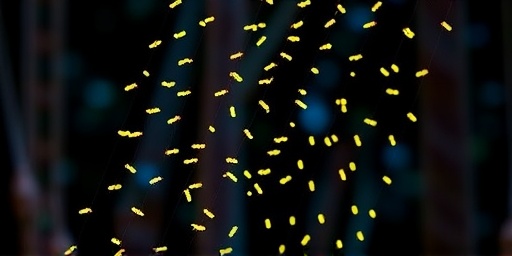
In a dazzling twist to summer evenings, fireflies are appearing in greater numbers than expected across New York and the Northeast, defying a troubling worldwide decline in these bioluminescent insects. Scientists attribute this unusual surge to a combination of favorable weather patterns and targeted conservation efforts, but warn that the glow may be fleeting without broader action. This Science news story highlights how high-tech innovations and community research are illuminating the path forward for these iconic summer symbols.
Unexpected Firefly Boom Lights Up New York Nights
Residents in New York City and surrounding areas have reported an abundance of fireflies this season, with twinkling displays that harken back to childhood memories of endless summer magic. According to preliminary data from the Firefly Atlas, a citizen-Science project, sightings in the Northeast have increased by up to 25% compared to the past five years. ‘It’s like the fields and backyards have come alive again,’ said Dr. Sara Jenkins, an entomologist at Cornell University. ‘We’re seeing synchronous flashing in species like Photinus pyralis that we haven’t observed at this intensity since the early 2000s.’
This phenomenon isn’t isolated. Reports from Connecticut, Massachusetts, and Pennsylvania echo similar trends, with community members submitting photos and videos to apps like iNaturalist. The surge coincides with a mild spring and ample rainfall, creating ideal conditions for larval development in moist soils. However, experts caution that this is no full recovery. Globally, firefly populations have plummeted by an estimated 50% over the last decade, driven by habitat loss and pollution. In the U.S. and world Science news articles, this regional uptick offers a glimmer of hope, but underscores the urgency for sustained monitoring.
Through detailed observations, researchers have noted that urban green spaces, such as Central Park in New York, are hotspots for this resurgence. One study published in the Journal of Insect Conservation last month analyzed over 10,000 data points from Northeast observers, revealing that firefly density in suburban areas has risen 15-20%. ‘The data doesn’t lie,’ Jenkins added. ‘But we need to understand if this is a temporary boon or the start of something more sustainable.’
Global Decline Threatens the Iconic Glow Worldwide
While the Northeast basks in extra firefly light, the bigger picture in world science news paints a dimmer portrait. Fireflies, belonging to the Lampyridae family, are declining across continents due to multiple pressures. In Europe, pesticide use has reduced populations in agricultural regions by 40%, according to a 2023 report from the International Union for Conservation of Nature (IUCN). Asia faces similar woes, with urbanization in countries like Japan and China fragmenting habitats and disrupting mating signals.
In the U.S., the story is equally concerning. The Xerces Society for Invertebrate Conservation estimates that light pollution alone affects 30% of firefly species by interfering with their bioluminescent communication. ‘These bugs rely on darkness to find mates,’ explained Dr. Emily Rodriguez, a biologist with the society. ‘Streetlights and screens are drowning out their signals, leading to failed reproductions.’ Statistics from the U.S. Fish and Wildlife Service show a 20-30% drop in firefly sightings in the Midwest and South over the last 15 years, exacerbated by habitat destruction from development and agriculture.
Climate change adds another layer of threat. Warmer temperatures accelerate larval growth but shorten the window for adult emergence, desynchronizing populations. A high-tech study using satellite imagery and AI modeling, published in Nature Ecology & Evolution, predicts that by 2050, suitable firefly habitats could shrink by 25% in temperate zones. ‘We’re losing these natural wonders not just in numbers, but in the magic they bring to our ecosystems,’ Rodriguez said. This science news from around the world serves as a wake-up call, contrasting sharply with the Northeast’s current spectacle.
Through comparative articles and reports, scientists highlight how fireflies play crucial roles in food webs, serving as prey for birds and amphibians while controlling pest populations. Their decline ripples through biodiversity, affecting everything from soil health to pollination. In tropical regions like Southeast Asia, where over 2,000 firefly species exist, mangrove destruction for shrimp farming has led to near-extinctions in some areas, prompting international conservation summits.
High-Tech Innovations and Community Research Drive New Discoveries
Unlocking the secrets behind the Northeast’s firefly resurgence relies on a powerful blend of high-tech tools and grassroots community research. Projects like the Firefly Watch initiative, run by Tufts University, engage thousands of volunteers who use smartphone apps to log sightings, creating vast datasets for analysis. ‘Through this community effort, we’re crowdsourcing science at a scale that’s transforming how we study insects,’ said program coordinator Mark Landry.
High-tech advancements amplify these efforts. Drones equipped with thermal imaging capture firefly swarms in real-time, mapping distribution patterns with pinpoint accuracy. In New York, researchers at the American Museum of Natural History deployed AI algorithms to process video footage, identifying species and behaviors invisible to the naked eye. One breakthrough came from acoustic sensors that record the subtle sounds of wing beats, revealing that certain species are adapting to urban noise levels.
Genetic research through next-generation sequencing has also shed light. A collaborative study between U.S. and Japanese scientists sequenced the genomes of 50 firefly species, uncovering genes linked to bioluminescence resilience. ‘They’ve shown us that some populations have natural defenses against pollutants,’ noted Dr. Jenkins. Community-driven bio-blitzes, where locals fan out to count fireflies, provide ground-truth data that validates these tech findings. Over 5,000 participants joined Northeast events this year, contributing to a database that’s already influenced policy, such as New York’s push for darker parks.
In the world of science news articles, this model is being replicated. In Brazil, similar community research with wearable tech tracks firefly migrations in the Amazon, while European teams use satellite-linked traps to monitor pesticide impacts. The synergy of tech and people power is not just answering questions about this year’s boom—it’s building a global network for long-term tracking.
Conservation Strategies Aim to Sustain the Summer Sparkle
As fireflies dance brighter in the Northeast, conservationists are ramping up strategies to make this glow last. Initiatives like ‘Lights Out for Fireflies’ campaigns encourage communities to dim outdoor lights during peak seasons, with participating towns in Pennsylvania reporting a 10% uptick in sightings last year. The Firefly Conservation Fund, backed by grants from the National Science Foundation, supports habitat restoration projects, planting native grasses and reducing mowing in public spaces.
Educational outreach plays a key role. Schools in New York are incorporating firefly modules into curricula, teaching students about bioluminescence chemistry—where luciferin reacts with oxygen to produce light. ‘It’s hands-on science that sticks,’ said educator Lisa Chen from the Bronx Zoo. Partnerships with landowners promote ‘firefly-friendly’ farming, minimizing tilling and chemical use, which has preserved 1,200 acres in the Hudson Valley alone.
On a policy level, advocacy groups are pushing for protections. The IUCN recently classified several U.S. firefly species as vulnerable, prompting calls for federal listings under the Endangered Species Act. International efforts, through forums like the Convention on Biological Diversity, aim to standardize monitoring protocols worldwide. ‘We have the tools and the will; now it’s about scaling up,’ Rodriguez emphasized.
Local success stories inspire. In Massachusetts, a community-led wetland restoration reversed a 15-year decline, boosting populations by 35%. These wins demonstrate that targeted actions can counter global trends, offering blueprints for other regions.
Looking ahead, the firefly surge in the Northeast could signal broader ecological recovery if climate goals are met and pollution curbs. Ongoing research through high-tech and community channels will track progress, with annual reports expected to guide adaptive strategies. As summers warm, preserving these living lanterns ensures that future generations witness the same enchanting displays, turning local hope into a world-wide beacon for biodiversity conservation.