

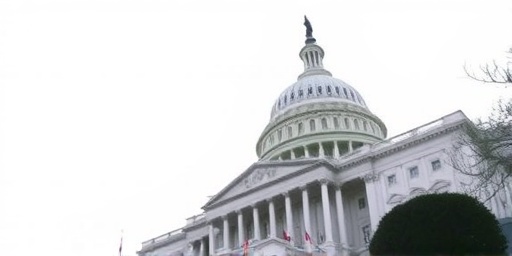
In a move that’s igniting fierce backlash from environmental advocates and scientists, the U.S. Senate has introduced a fiscal 2026 spending bill that slashes funding for clean energy research and broader science programs by up to 25 percent. The proposal, released late Wednesday, reallocates resources toward bolstering the nation’s nuclear weapons stockpile and infrastructure projects under the Army Corps of Engineers, raising urgent questions about America’s commitment to combating climate change amid escalating global threats.
The bill, formally known as the Senate‘s version of the Energy and Water Development Appropriations Act, marks a stark departure from recent bipartisan efforts to supercharge clean energy innovation. With the fiscal year starting October 1, 2025, this legislation could reshape federal priorities, potentially stalling advancements in renewable technologies at a time when the U.S. aims to lead the world in sustainable energy transitions.
Deep Cuts Target DOE’s Clean Energy and Science Initiatives
The heart of the controversy lies in the proposed reductions to the Department of Energy’s (DOE) Office of Science, which oversees fundamental research in areas like advanced batteries, solar photovoltaics, and carbon capture technologies. Under the Senate‘s spending bill, funding for this office would drop from $8.2 billion in fiscal 2025 to approximately $6.6 billion—a 20 percent cut that experts warn could cripple ongoing projects essential for net-zero emissions goals.
Specifically, the Advanced Research Projects Agency-Energy (ARPA-E), a flagship program for high-risk, high-reward clean energy breakthroughs, faces a 25 percent reduction to $350 million. This comes at a pivotal moment: ARPA-E has backed innovations like next-generation geothermal systems and efficient hydrogen production, which have attracted over $3 billion in private investment since inception. “These cuts are shortsighted and dangerous,” said Dr. Maria Rodriguez, director of the Clean Energy Innovation Hub at MIT. “We’re talking about dismantling the very tools that could make America energy independent without relying on fossil fuels.”
Beyond clean energy, the bill trims broader science funding across agencies. The National Science Foundation’s environmental research arm sees a 15 percent dip, affecting studies on climate modeling and biodiversity. Historical data underscores the stakes: In fiscal 2024, DOE science programs supported 30,000 jobs and generated $15 billion in economic output, according to a recent Brookings Institution report. Critics argue that such slashes not only hinder innovation but also cede ground to competitors like China, which invested $500 billion in clean tech last year alone.
The Senate Appropriations Committee’s rationale, outlined in accompanying documents, cites fiscal constraints and the need to address immediate national security needs. However, environmental groups like the Sierra Club have decried the move as a betrayal of the Inflation Reduction Act’s legacy, which pumped $370 billion into clean energy incentives. “This spending bill undermines Congress’s own commitments to a greener future,” Sierra Club executive director Michael Brune stated in a press release.
Nuclear Weapons and Army Corps Gain Substantial Funding Boosts
While clean energy takes a hit, the bill pours resources into defense-related priorities. The National Nuclear Security Administration (NNSA), responsible for maintaining the U.S. nuclear arsenal, is slated for a 15 percent increase to $25.4 billion. This funding will accelerate modernization of warheads and facilities at sites like Los Alamos and Sandia National Laboratories, aligning with the Biden administration’s push to deter adversaries amid tensions with Russia and China.
Sen. Jim Risch (R-ID), a key committee member, defended the shift during a briefing: “In an era of nuclear saber-rattling, we can’t afford to let our deterrence capabilities atrophy. Clean energy is important, but survival comes first.” The boost includes $2.5 billion for stockpile stewardship programs, which simulate nuclear tests without actual detonations, ensuring the reliability of aging weapons from the Cold War era.
Equally prioritized is the U.S. Army Corps of Engineers, receiving a 12 percent hike to $8.9 billion. This infusion targets flood control, navigation improvements, and coastal resilience projects—efforts that, ironically, intersect with climate adaptation. For instance, $1.2 billion is earmarked for Everglades restoration in Florida and levee reinforcements along the Mississippi River, addressing vulnerabilities exacerbated by rising sea levels. Yet, advocates note that these gains pale in comparison to the holistic benefits of sustained clean energy R&D, which could prevent billions in future disaster costs.
The reallocations reflect broader congressional dynamics, where Republican-led committees emphasize military readiness over what they term “non-essential” green initiatives. In fiscal 2025, similar tensions led to a temporary funding freeze, resolved only through omnibus negotiations. This year’s bill, however, arrives as the Senate grapples with a $2 trillion federal deficit, forcing tough choices in the annual appropriations process.
Congressional Divide Deepens Over Research Priorities
The spending bill has already fractured Congress along partisan lines, with Democrats vowing to fight the cuts in upcoming debates. Senate Majority Leader Chuck Schumer (D-NY) called the proposal “a step backward for American leadership,” pledging to rally support for amendments that restore science funding. On the flip side, GOP senators like Lindsey Graham (R-SC) praised the focus on “hard power,” arguing that nuclear investments safeguard the clean energy pursuits they enable by ensuring global stability.
Bipartisan voices, however, highlight the interconnectedness of these domains. Sen. Lisa Murkowski (R-AK), a moderate with energy expertise, expressed reservations: “We need both swords and plowshares—strong defense and innovative science—to thrive in the 21st century.” Her comments echo a 2023 Government Accountability Office report, which warned that underfunding clean energy could cost the U.S. 1.5 million jobs by 2030, while nuclear programs, though vital, offer limited economic multipliers compared to renewables.
Lobbying efforts are ramping up. The American Association for the Advancement of Science (AAAS) has mobilized over 100,000 signatures in an online petition urging Congress to reject the cuts, citing precedents like the Apollo program’s spillover benefits to civilian tech. Meanwhile, defense contractors such as Lockheed Martin stand to gain from NNSA expansions, potentially influencing the bill’s trajectory through campaign contributions—totaling $50 million to Senate races in the last cycle, per OpenSecrets.org.
In the House, where a companion bill is under consideration, Speaker Mike Johnson (R-LA) has signaled alignment with the Senate’s priorities, but progressive Democrats like Rep. Alexandria Ocasio-Cortez (D-NY) are pushing back. “This is Congress choosing bombs over batteries,” she tweeted, amassing 500,000 engagements. The clash sets the stage for intense negotiations, as the two chambers must reconcile differences by September to avoid a government shutdown.
Long-Term Ramifications for U.S. Innovation and Climate Goals
Looking ahead, the Senate’s spending bill could have profound ripple effects on the U.S. innovation ecosystem. Clean energy startups, many reliant on federal grants, fear a funding drought that stifles venture capital flows. A study by the Rhodium Group estimates that every $1 billion in DOE R&D yields $5 billion in private sector follow-on investments; reversing this momentum might delay key milestones, like widespread electric vehicle adoption or offshore wind scaling, by years.
Globally, the cuts undermine U.S. credibility at forums like COP30, where President Biden has pledged $11 billion annually in climate finance. Domestically, states like California and Texas—hubs for solar and wind—brace for economic fallout. Texas, for example, added 10 gigawatts of clean energy capacity in 2024, supported by federal science funding; reductions could jeopardize 50,000 jobs in the sector.
Yet, opportunities for reversal exist. With midterm elections looming, public pressure could sway moderates. Advocacy groups plan town halls and Capitol Hill visits, while industry coalitions like the Clean Energy Buyers Association lobby for balanced appropriations. The bill now heads to full Senate markup, expected in early June, followed by conference committee reconciliation with the House.
Ultimately, this spending bill tests Congress’s vision: Will it double down on legacy defense postures, or invest in the clean energy revolution that promises enduring security and prosperity? As debates intensify, stakeholders from Silicon Valley labs to Wall Street analysts watch closely, knowing the decisions made today will echo through decades of environmental and technological evolution.
In related developments, the Congressional Budget Office projects that without restored science funding, U.S. GDP growth from green tech could lag 0.5 percent annually by 2035. Meanwhile, Army Corps projects under the bill aim to mitigate $100 billion in annual flood damages, underscoring the multifaceted challenges lawmakers face. For now, the Senate’s proposal hangs in the balance, a flashpoint in the ongoing battle over America’s fiscal and strategic future.