

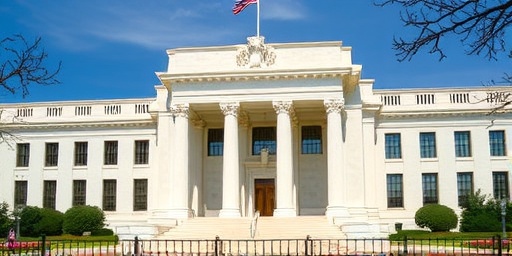
In a dramatic pivot that has electrified financial markets, the odds of a Federal Reserve rate cut in December have skyrocketed to 70% following comments from New York Federal Reserve President John Williams. Speaking at an economic forum in New York on Wednesday, Williams suggested that current monetary policy is sufficiently restrictive, opening the door to potential easing measures. This shift in rhetoric comes just weeks after hawkish tones from other Fed officials had dampened expectations, reigniting investor optimism and sparking a broad rally across equities, gold, and cryptocurrencies.
The market sentiment turnaround is stark. Just days ago, the probability of a rate cut hovered around 50%, according to CME FedWatch Tool data. Williams’ remarks, delivered during a discussion on inflation and employment trends, emphasized that the Fed’s aggressive hiking cycle since 2022 has achieved its intended dampening effect on inflation without derailing economic growth. “We are in a position where policy is restrictive enough to bring inflation back to our 2% target,” Williams stated, according to transcripts from the event. This dovish signal has traders and analysts scrambling to reassess their forecasts, with many now betting on a 25-basis-point reduction at the upcoming Federal Open Market Committee (FOMC) meeting.
John Williams’ Remarks Spark Immediate Policy Shift Speculation
John Williams, a key influencer in Federal Reserve deliberations as the president of the New York Fed, has long been viewed as a centrist voice on monetary policy. His comments on Wednesday marked a subtle but significant departure from the more cautious stance adopted by colleagues like Fed Governor Christopher Waller earlier in the month. Williams highlighted recent data showing inflation cooling to 3.2% year-over-year in October, per the latest Consumer Price Index (CPI) report, while the unemployment rate remains steady at 4.1%. “The balance of risks has shifted, and we must be prepared to adjust if the data continues to support it,” he added, fueling speculation that the Fed is inching toward normalization.
This isn’t the first time Williams has steered market expectations. In mid-2023, his early advocacy for rate hikes helped propel the Fed’s tightening campaign. Now, with the benchmark federal funds rate at 5.25-5.50%, his easing hints suggest the central bank may be nearing the end of its hiking era. Economists at firms like Goldman Sachs quickly updated their models post-speech, raising the likelihood of a December rate cut from 55% to 72%. Williams’ influence extends beyond rhetoric; as vice chair of the FOMC, his views often foreshadow consensus decisions.
Delving deeper into his speech, Williams addressed the labor market’s resilience, noting robust nonfarm payroll gains of 261,000 jobs in October—far exceeding forecasts. Yet, he cautioned that persistent wage pressures could complicate the inflation fight. “Monetary policy must remain data-dependent,” he emphasized, underscoring the Fed’s commitment to avoiding premature easing that might reignite price pressures. This nuanced approach has analysts praising the clarity it brings to an otherwise foggy outlook.
Markets Rebound Sharply on Renewed Rate Cut Hopes
The financial markets wasted no time reacting to John Williams’ dovish pivot. Wall Street’s major indices surged in afternoon trading, with the S&P 500 climbing 1.8% to close at a record high of 5,892 points. The Dow Jones Industrial Average added 450 points, or 1.3%, while the Nasdaq Composite, buoyed by tech stocks, jumped 2.4%. This rally erased much of the losses incurred after last week’s hotter-than-expected Producer Price Index (PPI) data, which had briefly soured market sentiment.
Beyond equities, safe-haven assets like gold saw a sharp uptick, rising 2.1% to $2,450 per ounce as lower interest rates typically weaken the dollar and boost precious metals. Cryptocurrencies, often sensitive to Fed moves, experienced a mini-boom: Bitcoin surged 5% to $68,000, and Ethereum climbed 4.2%, reflecting renewed risk appetite among digital asset investors. Bond yields dipped accordingly, with the 10-year Treasury yield falling 12 basis points to 4.15%, signaling bets on looser monetary policy ahead.
Market sentiment has flipped from cautious to bullish almost overnight. According to a Bloomberg survey of 150 traders conducted Thursday morning, 68% now expect at least one rate cut by year-end, up from 42% pre-Williams. Volatility indices like the VIX dropped 15%, indicating reduced fear. Sector-wise, rate-sensitive areas such as real estate and utilities led gains, with the REIT index up 3.2%. Meanwhile, banks faced mild pressure, as net interest margins could compress with lower rates.
This surge in optimism isn’t isolated. Global markets echoed the positivity, with European benchmarks like the FTSE 100 rising 1.1% and Asian indices such as the Nikkei 225 gaining 1.5% in early Thursday trading. The U.S. dollar index fell 0.8%, further supporting commodity prices and emerging market currencies.
Economic Data Underpins Fed’s Potential Easing Path
Behind John Williams’ comments lies a tapestry of improving economic indicators that bolster the case for a Federal Reserve rate cut. The latest GDP figures show the U.S. economy expanded at a 2.8% annualized rate in the third quarter, defying recession fears. Core PCE inflation, the Fed’s preferred gauge, eased to 2.7% in September, inching closer to the 2% target. These trends suggest that the stringent monetary policy implemented over the past 18 months—marked by 11 rate hikes totaling 525 basis points—has successfully tamed inflation without triggering widespread job losses.
However, challenges persist. Retail sales rose a modest 0.3% in October, indicating consumer spending is holding up but slowing amid high borrowing costs. Manufacturing PMI data from the Institute for Supply Management (ISM) slipped to 48.5, signaling contraction for the fourth straight month. Williams addressed these mixed signals, noting that while the economy is “resilient,” external factors like geopolitical tensions in the Middle East could introduce inflationary upside risks.
Looking at historical parallels, the Fed’s current stance mirrors the 2019 cycle, when policy easing followed a similar restrictive phase. Back then, three cuts totaling 75 basis points helped avert a slowdown. Analysts at JPMorgan Chase predict a comparable trajectory, with potential for 100 basis points of cuts through 2024 if disinflation continues. Yet, dissenting voices warn of complacency; Atlanta Fed President Raphael Bostic, in a separate interview, reiterated the need for sustained evidence before any rate cut.
The interplay between monetary policy and fiscal measures adds another layer. With Congress debating a $100 billion infrastructure supplemental amid election-year spending, Williams subtly urged fiscal restraint to avoid complicating the Fed’s mandate. This holistic view underscores how interconnected economic levers are in shaping the path forward.
Expert Voices and Investor Strategies in a Shifting Landscape
Wall Street heavyweights are recalibrating strategies in response to the evolving Federal Reserve narrative. Mohamed El-Erian, chief economic advisor at Allianz, called Williams’ remarks “a welcome clarification that avoids the pitfalls of over-tightening.” In a CNBC interview, he predicted the rate cut odds could climb to 80% if November’s jobs report—due next week—shows softening labor conditions. El-Erian advised investors to favor growth stocks and diversify into inflation-hedges like commodities.
Lisa Shalett, chief investment officer at Morgan Stanley Wealth Management, echoed this sentiment, stating, “The market sentiment shift validates our overweight positioning in equities, but we remain vigilant on inflation data.” Her team recommends tilting portfolios toward small-cap stocks, which could benefit disproportionately from lower rates, citing the Russell 2000’s 2.5% gain on Wednesday.
On the bearish side, some experts caution against euphoria. David Rosenberg of Rosenberg Research argued in a client note that Williams’ comments might be premature, pointing to sticky services inflation at 4.5%. “Monetary policy easing too soon risks a 1970s-style wage-price spiral,” he warned. Rosenberg suggests hedging with long-dated Treasuries and defensive sectors like healthcare.
Institutional investors are acting swiftly. Pension funds and ETFs tracking the S&P 500 saw inflows of $12 billion on Wednesday, per EPFR Global data—the highest in three months. Hedge funds, meanwhile, are unwinding short positions on the dollar, with futures open interest shifting bullish. Cryptocurrency exchanges reported a 20% volume spike, as traders eye Bitcoin’s correlation with risk assets amid rate cut anticipation.
For retail investors, platforms like Robinhood noted a 30% uptick in trades for rate-sensitive ETFs, such as the iShares 20+ Year Treasury Bond ETF (TLT), which rose 1.9%. Financial advisors are counseling patience, emphasizing diversified portfolios to navigate volatility around FOMC announcements.
Implications for December FOMC and Beyond
As the Federal Reserve gears up for its December 17-18 FOMC meeting, John Williams’ signals have set the stage for heightened anticipation. Chair Jerome Powell’s press conference could provide further clarity, potentially confirming the dovish tilt if incoming data aligns with recent trends. Markets are pricing in a 25-basis-point cut, but a surprise 50-basis-point move isn’t off the table if employment softens unexpectedly.
Looking further ahead, a rate cut trajectory could usher in a softer landing for the U.S. economy, boosting corporate earnings and consumer confidence into 2025. However, global headwinds—such as China’s economic slowdown and Europe’s tepid growth—may temper the Fed’s aggressiveness. If inflation rebounds, as some models predict with oil prices hovering near $80 per barrel, the central bank might pause, prolonging the restrictive monetary policy era.
For investors, this evolving landscape demands agility. The surge in rate cut odds has restored market sentiment, but sustainability hinges on data. As Williams himself noted, “Policy will follow the evidence.” With equities at lofty valuations and yields adjusting, opportunities abound for those positioned correctly, while risks loom for the over-leveraged. The Fed’s next moves will undoubtedly shape not just Wall Street, but Main Street’s financial health in the months to come.