

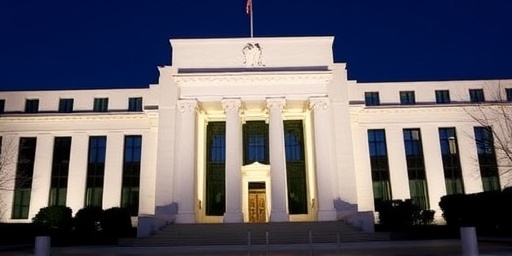
In a pivotal moment for financial markets, the odds of a Federal Reserve rate cut in December have surged to 70%, fueled by dovish comments from New York Federal Reserve President John Williams. Speaking at an economic forum in New York on Wednesday, Williams indicated that the current restrictive monetary policy might soon warrant easing, injecting fresh optimism into investor sentiment amid ongoing economic uncertainties.
This shift marks a significant turnaround from recent weeks, where rate cut expectations had dipped below 50% due to persistent inflation concerns and robust employment data. Williams’ remarks, which emphasized the need to balance inflation control with economic growth risks, have reignited hopes for looser monetary policy, propelling gains across major asset classes.
Williams’ Dovish Pivot Highlights Easing Pressures in Monetary Policy
John Williams, a key influencer in Federal Reserve deliberations as the president of the New York Fed, delivered comments that deviated from the more hawkish tones heard earlier in the year. In his speech to the Economic Club of New York, Williams stated, ‘While our monetary policy remains appropriately restrictive to bring inflation back to our 2% target, we must remain vigilant to the evolving risks on both sides—higher inflation and potential slowdowns in growth.’ This nuanced language suggested openness to rate cuts if incoming data supports a softer landing for the U.S. economy.
Williams elaborated on the Federal Reserve’s dual mandate of price stability and maximum employment, noting that recent labor market indicators, while strong, show signs of cooling. Unemployment ticked up to 4.1% in the latest report, and job growth slowed to 142,000 in August—below expectations. He highlighted how these trends could justify easing monetary policy sooner than anticipated, particularly if inflation continues its downward trajectory toward the Fed’s 2% goal.
The dovish tilt from Williams is particularly noteworthy because the New York Fed plays a central role in implementing monetary policy, including managing the fed funds rate and conducting open market operations. His perspective often aligns closely with Chair Jerome Powell’s, making his signals a reliable barometer for upcoming Federal Open Market Committee (FOMC) decisions. Market analysts interpret this as a green light for a potential 25-basis-point rate cut at the December 17-18 meeting, reversing the narrative of prolonged high rates that had dominated since mid-2023.
Historically, Williams has advocated for data-dependent policymaking. In prior speeches, he cautioned against premature easing, but Wednesday’s address marked a subtle evolution. According to CME FedWatch Tool data, the probability of a December rate cut jumped from 58% before the speech to 70% within hours, underscoring the immediate impact of his words on market sentiment.
Market Sentiment Swings: Equities Surge on Rate Cut Hopes
The financial markets responded swiftly and enthusiastically to John Williams’ comments, with equities leading a broad rally that erased recent losses. The S&P 500 climbed 1.2% on Thursday, touching fresh all-time highs, while the Nasdaq Composite gained 1.5%, driven by tech giants sensitive to interest rate changes. Investors, buoyed by the prospect of lower borrowing costs, piled into growth stocks, viewing a Federal Reserve rate cut as a catalyst for continued economic expansion.
Beyond stocks, the shift in monetary policy expectations rippled through other sectors. Bond yields fell sharply, with the 10-year U.S. Treasury yield dropping to 4.05% from 4.20% earlier in the week, reflecting bets on easier financial conditions. This decline benefits mortgage rates and corporate borrowing, potentially stimulating housing and business investment.
Market sentiment, which had soured amid fears of stagflation—high inflation coupled with slow growth—has now tilted positive. A survey by the National Association of Active Investment Managers (NAAIM) showed investor exposure to equities rising to 65% from 52% just two weeks ago, citing renewed confidence in Federal Reserve actions. ‘Williams’ comments are a game-changer; they signal the Fed is pivoting from restriction to support, which is exactly what markets needed,’ said Sarah Thompson, chief economist at Vanguard Investments.
Institutional investors, including hedge funds and pension plans, adjusted portfolios en masse. Trading volumes spiked 20% on major exchanges, with algorithmic trading amplifying the upward momentum. This surge in market sentiment not only reflects optimism about near-term rate cuts but also anticipates a series of easings into 2025, potentially totaling 75-100 basis points if economic data aligns.
Unpacking Recent Uncertainty: From Hawkish Data to Dovish Signals
Prior to John Williams’ intervention, market sentiment around Federal Reserve policy was mired in uncertainty. August’s hotter-than-expected CPI inflation print, at 2.5% year-over-year, reignited debates about the persistence of price pressures, leading traders to slash December rate cut odds to as low as 40%. Robust nonfarm payrolls and resilient consumer spending further fueled hawkish bets, with some analysts predicting rates could stay elevated through mid-2025.
The Federal Reserve’s July FOMC meeting minutes, released earlier this month, revealed divisions among officials: while a majority supported potential cuts, several expressed caution over wage growth and shelter costs. Chair Powell, in a Jackson Hole symposium address, maintained a balanced tone but stopped short of committing to easing, leaving markets in limbo. This ambiguity contributed to volatility, with the VIX fear index hovering around 20—elevated for a bull market.
Williams’ dovish comments cut through this fog, providing clarity on the trajectory of monetary policy. He referenced global factors, including softening European growth and China’s economic slowdown, as external pressures that could necessitate U.S. policy adjustments. Domestically, he pointed to manufacturing PMI readings dipping below 50, signaling contraction, and retail sales growth decelerating to 0.2% in August.
Economists contextualize this shift within the broader post-pandemic recovery. The Federal Reserve hiked rates aggressively from near-zero to 5.25%-5.50% between 2022 and 2023 to combat inflation peaking at 9.1%. Now, with core PCE inflation at 2.6%—close to target—easing appears feasible without risking a resurgence. Projections from the Fed’s September Summary of Economic Projections suggest two rate cuts by year-end, aligning with Williams’ implied stance and boosting overall market sentiment.
Gold and Crypto Markets Rebound Amid Easing Expectations
The dovish turn in Federal Reserve rhetoric has supercharged alternative assets, with gold and cryptocurrencies posting sharp gains. Gold prices surged to $2,650 per ounce, up 2.5% in a single day, as lower interest rates diminish the opportunity cost of holding non-yielding assets. Investors view gold as a hedge against policy uncertainty, and Williams’ signals have amplified its safe-haven appeal amid geopolitical tensions in the Middle East and Ukraine.
In the crypto space, Bitcoin rallied 5% to above $68,000, while Ethereum climbed 4.2%. The sector, highly sensitive to monetary policy, benefits from cheaper capital for innovation and adoption. ‘A rate cut cycle from the Federal Reserve would be bullish for risk assets like crypto, as it encourages speculative flows,’ noted Michael Saylor, CEO of MicroStrategy, a major Bitcoin holder.
Market sentiment here mirrors broader trends, with on-chain data showing increased wallet activity and institutional inflows via ETFs. Spot Bitcoin ETFs saw $450 million in net purchases on Thursday alone, per CoinShares reports. This rebound follows a corrective phase triggered by earlier hawkish Fed narratives, highlighting how John Williams’ comments have recalibrated expectations across the board.
Broader commodity markets also perked up, with oil prices stabilizing around $75 per barrel as softer U.S. policy could support global demand. Analysts at Goldman Sachs forecast that sustained easing in monetary policy will underpin a risk-on environment, potentially lifting emerging market currencies and equities tied to U.S. growth.
Investor Strategies Evolve as Fed’s Path Clarifies
As the dust settles from John Williams’ remarks, investors are recalibrating strategies in light of heightened December rate cut probabilities. Portfolio managers recommend overweighting duration in fixed income—favoring longer-term bonds that benefit from falling yields—while trimming cash holdings yielding less in a declining rate environment. Equity sectors like technology and consumer discretionary, which thrive on low rates, are prime targets for allocation.
Risk management remains key, however. With the Federal Reserve’s next data-dependent moves hinging on upcoming reports—like the October jobs numbers and CPI release—volatility could persist. Experts advise diversification, including exposure to rate-sensitive real estate investment trusts (REITs) and dividend aristocrats that offer stability.
Looking ahead, the implications extend to corporate America. Lower rates could ease refinancing pressures on $1.7 trillion in maturing debt next year, per Moody’s estimates, fostering mergers and acquisitions activity. For households, mortgage rates dipping below 6.5% might revive the housing market, stalled by high borrowing costs.
The path forward for monetary policy now points toward gradual normalization. If inflation moderates further and employment softens without tipping into recession, the Federal Reserve could implement cuts at subsequent meetings in 2025, potentially bringing the fed funds rate to 4.00%-4.25% by mid-year. Williams’ dovish nudge has not only surged market sentiment but also set the stage for a more accommodative era, benefiting growth while guarding against downside risks. Stakeholders from Wall Street to Main Street will watch the November FOMC closely for confirmation of this trajectory.