

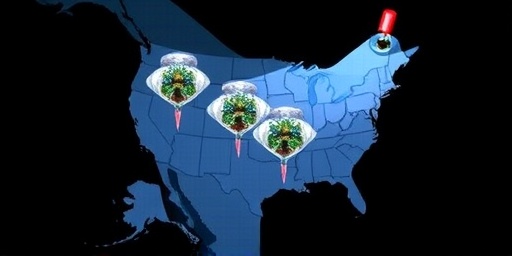
In a alarming development for public health, a Washington state resident has become the first confirmed human fatality from the H5N5 strain of bird flu, officials announced today. The individual, a 58-year-old poultry farm worker from Yakima County, succumbed to severe respiratory complications after testing positive for the H5N5 virus last week. This marks the inaugural human infection and death linked to H5N5 in the United States, prompting heightened surveillance as health authorities monitor for potential spread.
- Yakima County Farm Emerges as Epicenter of H5N5 Outbreak
- H5N5 Strain Profile: Genetic Insights and Transmission Risks
- Health Officials Ramp Up Surveillance Across Washington and Beyond
- Expert Warnings: Poultry Industry Braces for Economic Fallout
- Looking Ahead: Vigilance Key to Preventing H5N5 Escalation
The Washington State Department of Health (DOH) confirmed the case on Monday, noting that the patient had been exposed to infected birds on a local farm where an outbreak was detected earlier this month. Symptoms began with flu-like signs—fever, cough, and fatigue—before rapidly progressing to pneumonia and acute respiratory distress syndrome (ARDS). Despite intensive care at a Seattle-area hospital, the patient passed away on Saturday.
While the H5N5 strain is not yet deemed more transmissible to humans than the more notorious H5N1, this incident underscores the evolving threat of avian influenza viruses jumping species barriers. “This is a sobering reminder that bird flu remains a serious concern for our agricultural communities and beyond,” said Dr. Kathy Lofy, Washington State Health Officer, in a press briefing.
Yakima County Farm Emerges as Epicenter of H5N5 Outbreak
The infection traces back to a commercial poultry operation in Yakima County, a hub for Washington’s $4.5 billion poultry industry. State veterinarians identified H5N5 in over 15,000 birds last week, leading to the culling of the flock to contain the spread. This farm had reported unusual bird mortality rates—up to 20% in affected houses—prompting rapid testing.
Local farmers were alerted immediately. “We’ve seen bird flu variants before, but H5N5 is new territory,” said Tom Reynolds, president of the Washington Farm Bureau. “Our members are on high alert, implementing biosecurity measures like enhanced ventilation and worker PPE.” Preliminary investigations suggest the virus spilled over from wild migratory birds, common carriers of avian flu, which frequent the Yakima Valley’s wetlands.
Historical context reveals Washington’s vulnerability: The state reported 12 H5N1 outbreaks in dairy cattle and poultry since 2022, affecting over 1.2 million birds. This H5N5 case adds to a national tally of 50+ bird flu detections in mammals this year, per USDA data. Yakima officials have quarantined nearby farms, testing 500 workers with no additional human cases so far.
- Key Timeline: October 15: Elevated bird deaths reported. October 18: H5N5 confirmed in samples. October 22: Human case identified. October 26: Patient death announced.
- Exposed workers: 45 monitored, all negative except index case.
- Environmental sampling: Virus detected in farm wastewater.
H5N5 Strain Profile: Genetic Insights and Transmission Risks
Genomic sequencing by the CDC, completed within 48 hours of the Washington report, classifies this H5N5 as a low-pathogenic avian influenza (LPAI) reassortant, blending genes from Eurasian and North American lineages. Unlike highly pathogenic strains, it causes milder illness in birds but proved lethal in this human host due to secondary bacterial infection.
“The virus shows no evidence of sustained human-to-human transmission, a critical threshold for pandemic potential,” explained Dr. Timothy Uyeki, avian flu lead at the CDC. However, its ability to infect humans aligns with rare spillover events: Globally, H5 subtypes have caused 900+ human cases since 2003, with a 50% fatality rate for H5N1.
In Washington, wild bird surveillance detected H5N5 in 3% of sampled mallards this fall, up from zero last year. Climate factors—warmer winters driving migration patterns—may exacerbate risks. Public health experts emphasize that cooking poultry to 165°F kills the virus, but raw milk and undercooked eggs pose hazards, as seen in recent H5N1 dairy cases.
| Strain Comparison | H5N1 | H5N5 (This Case) |
|---|---|---|
| Human Cases (US) | 40+ since 2024 | 1 |
| Fatality Rate | Low (1%) | 100% (n=1) |
| Bird Impact | High pathogenic | Low pathogenic |
Health Officials Ramp Up Surveillance Across Washington and Beyond
In response to the death, Washington DOH activated its Avian Influenza Task Force, expanding testing to 200+ farms statewide. Contact tracing identified 120 close contacts, including family and coworkers, now under 10-day quarantine with antivirals like oseltamivir prophylactically administered.
Federal support surged: The USDA pledged $10 million for biosecurity upgrades, while the CDC deployed rapid test kits to Pacific Northwest clinics. “We’re treating this as a sentinel event,” said Umair Shah, King County Executive. Public advisories urge avoiding sick birds and reporting dead wildlife via state hotlines.
Broader public health implications ripple nationally. The WHO issued a Level 2 alert for H5N5 monitoring, citing Asia’s 2023 detections in China (5 human cases, no deaths). In the US, 11 states report active bird flu in poultry, with Washington now leading human concerns.
- Initiate daily farm reporting.
- Stockpile 1 million antiviral doses regionally.
- Train 5,000 vets on H5N5 diagnostics.
Expert Warnings: Poultry Industry Braces for Economic Fallout
The H5N5 death could cost Washington’s poultry sector $50-100 million in losses from quarantines and export halts, economists estimate. “Consumers may see egg prices rise 10-15%, echoing 2022’s H5N1 disruptions,” noted Dr. Angela Rasmussen, virologist at University of Washington.
Interviews with stakeholders reveal anxiety. “Farmers are our frontline; we need vaccines yesterday,” urged Sen. Patty Murray (D-WA), pushing for FDA approval of poultry flu shots. Vaccine trials show 70% efficacy against H5 variants, but rollout lags.
Globally, H5N5 has circulated since 2021, infecting pigs in Europe— a red flag for reassortment. US labs are accelerating candidate vaccines, targeting deployment by spring 2025.
Looking Ahead: Vigilance Key to Preventing H5N5 Escalation
As investigations continue, health leaders stress proactive steps. Enhanced genomic surveillance via the CDC’s SeqNet will track mutations, while public campaigns promote hygiene: Handwashing, avoiding bird markets, and pasteurization.
“One death is tragic, but it galvanizes action,” Lofy affirmed. With flu season looming, Washington‘s robust systems—boasting 95% vaccination coverage—position it well. Nationally, experts call for $500 million in avian flu funding to avert a larger crisis.
Residents are advised to watch for symptoms like persistent fever or shortness of breath post-bird exposure, seeking care promptly. As wild flocks migrate south, inter-agency collaborations promise early detection, safeguarding public health from this nascent threat.