

In a stark warning to public health officials and parents nationwide, the Centers for Disease Control and Prevention (CDC) has reported over 25,000 cases of Whooping cough, also known as pertussis, across the United States so far in 2023. This figure shatters previous years’ totals, marking the highest incidence since 2014 and signaling a troubling outbreak driven by waning vaccination rates. Tragically, at least two deaths—one in Louisiana and another in Washington—have been linked to the disease, underscoring its potential lethality, especially among unvaccinated infants.
CDC Tracks Pertussis Surge to Record Levels in 2023
The CDC‘s latest data, released this week, reveals that as of mid-December 2023, confirmed Whooping cough cases have climbed to 25,357, a more than threefold increase from the 5,099 cases recorded in 2022. This escalation positions 2023 as the second consecutive year of significantly elevated numbers, following a 2022 uptick that experts attributed to post-pandemic immunity gaps.
Historically, pertussis cases peaked in the early 2010s, with 48,277 reported in 2012 amid questions over vaccine efficacy. But after dipping during the COVID-19 era due to masking and social distancing, the disease has roared back. “We’re seeing a perfect storm,” said Dr. Shannon Stokley, a CDC epidemiologist, in a recent briefing. “Lower vaccination rates combined with high contagiousness are fueling this outbreak.”
The agency’s surveillance system, which relies on state health departments, shows cases accelerating since spring. By July, numbers had already surpassed 10,000, prompting alerts in multiple states. Infants under six months remain the most vulnerable, accounting for nearly 40% of hospitalizations, per CDC figures.
Fatalities in Louisiana and Washington Expose Whooping cough Dangers
The deaths of an infant in Louisiana and a young child in Washington state serve as grim reminders of whooping cough‘s severity. In Louisiana, health officials confirmed the passing of a four-month-old unvaccinated baby in October, the state’s first pertussis-related fatality in over a decade. “This heartbreaking loss highlights why vaccination is critical,” stated Louisiana Department of Health Director Dr. Ralph Abraham.
Similarly, Washington’s case involved a toddler who succumbed despite medical intervention, amid a cluster of 150+ cases in the Pacific Northwest. Both fatalities occurred in unvaccinated individuals, aligning with national trends where 95% of whooping cough deaths target those too young for full immunization.
Symptoms of pertussis start mildly like a common cold but evolve into violent, paroxysmal coughing fits that can last weeks, earning the disease its “whooping” moniker from the gasping sound upon inhalation. Complications include pneumonia, seizures, and apnea, particularly in babies. The CDC reports over 5,000 hospitalizations this year, with ICU admissions up 25% from 2022.
- Classic signs: Runny nose, low-grade fever, followed by intense coughs lasting 10+ weeks.
- High-risk groups: Infants, pregnant women, and those with waning immunity.
- Transmission: Airborne via coughs/sneezes; one infected person can spread to 17 others.
Declining Vaccination Rates Ignite National Pertussis Outbreak
At the heart of the whooping cough surge lies a precipitous drop in vaccination rates. National coverage for the DTaP vaccine among kindergartners fell to 92.7% in 2022-2023, below the 95% herd immunity threshold, according to CDC school surveys. Tdap booster rates among adolescents and adults have plummeted further, with only 57% of teens up-to-date.
Contributing factors include vaccine hesitancy amplified by COVID-19 misinformation, school mandate exemptions rising 5% annually, and disruptions in routine pediatric care during the pandemic. “Hesitancy isn’t just anti-vaxxers; it’s complacency,” noted Dr. Yvonne Maldonado, a Stanford pediatric infectious disease specialist. “Parents forget boosters wane after 5-10 years.”
State disparities exacerbate the issue. Exemption rates exceed 5% in 10 states, correlating with higher pertussis incidence. For instance, vaccination rates in Idaho dipped to 82%, mirroring its top-10 case ranking.
| State | Kindergarten Vax Rate (2022-23) | Cases (2023) |
|---|---|---|
| National Avg. | 92.7% | 25,357 |
| Idaho | 82.0% | 1,800+ |
| Pennsylvania | 93.5% | 2,100+ |
| New York | 94.2% | 1,500+ |
State Hotspots Lead US Whooping Cough Case Explosion
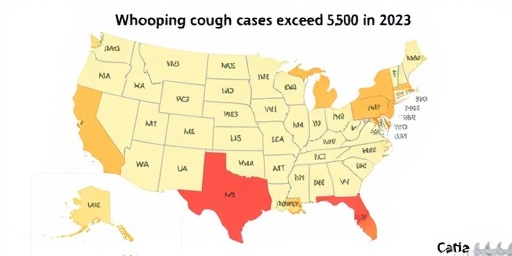
Pennsylvania leads with over 2,100 cases, followed by Ohio (1,900+), and New York (1,500+). Western states like Idaho and Colorado report explosive growth, with school outbreaks closing classrooms. In the South, Louisiana’s 450 cases include the fatal infant, while Texas logs 1,200 amid border-related spread concerns.
The CDC map highlights clusters in urban areas like Philadelphia and rural pockets with low vaccination rates. California, despite high population, maintains control via strict mandates, with under 800 cases. “Targeted interventions in hotspots are key,” advises CDC Director Dr. Mandy Cohen.
- Pennsylvania: 15 school outbreaks; 200 hospitalizations.
- Ohio: Adult cases drive spread to infants.
- Idaho: 300% year-over-year increase.
- Washington: Fatal toddler case sparks probe.
Demographically, cases skew toward children 1-6 years (45%) and adults 20+ (30%), reflecting incomplete boosters. Pregnant women are prioritized for Tdap to protect newborns via maternal antibodies.
Experts Demand Vaccination Surge to Curb Pertussis Threat
Responding to the outbreak, health leaders are ramping up campaigns. The CDC urges Tdap for all adults every 10 years, especially caregivers and pregnant women in third trimester. “Boost now—it’s safe and 90% effective against severe disease,” emphasizes American Academy of Pediatrics President Dr. Moira Szilagyi.
States are mobilizing: Pennsylvania launched free clinics; Idaho tightened exemptions. Antibiotic prophylaxis for contacts reduces spread by 80%, per CDC guidelines. Long-term, experts eye vaccine improvements, as current DTaP wanes faster than hoped.
Looking ahead, winter gatherings could amplify transmission, potentially pushing cases toward 30,000 by year-end. Without vaccination rates rebounding to 95%, officials warn of sustained pertussis cycles. Public health campaigns, school requirements, and pharmacy boosters offer hope. “This is preventable—let’s vaccinate to vaccinate our way out,” Dr. Stokley concluded.
Families are advised to monitor coughs lasting over two weeks, seek testing, and ensure up-to-date status via Vaccines.gov. As the nation grapples with this resurgence, renewed commitment to immunization stands as the frontline defense against further whooping cough devastation.