
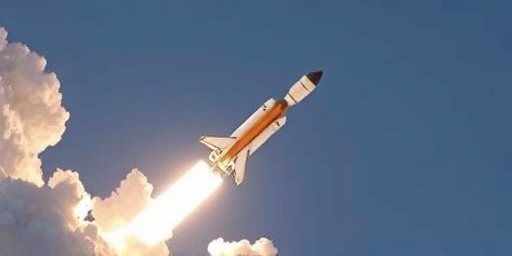
In a significant setback for U.S. spaceflight ambitions, NASA and Boeing announced on Thursday the indefinite postponement of the next crewed mission aboard the Starliner capsule. The delay stems from unresolved technical glitches that have plagued the spacecraft since its inception, raising fresh concerns about the reliability of Boeing’s contribution to America’s commercial crew program. This decision disrupts the planned rotation of astronauts to the International Space Station (ISS), potentially extending reliance on international partners and rival companies.
Starliner’s History of Launch Setbacks and Safety Concerns
The Starliner program, a cornerstone of NASA‘s efforts to achieve independent access to the ISS, has been mired in challenges almost from the start. Developed by Boeing under a $4.2 billion contract awarded in 2014, the spacecraft was intended to ferry NASA astronauts to low Earth orbit, reducing dependence on Russia’s Soyuz rockets. However, the journey has been anything but smooth.
Initial uncrewed test flights in 2019 and 2022 exposed critical flaws. During the first orbital flight test in December 2019, software errors caused the capsule to fire thrusters incorrectly, preventing it from reaching the ISS. That mission, costing taxpayers over $400 million, ended with the Starliner returning empty-handed. The 2022 uncrewed test, dubbed Orbital Flight Test-2 (OFT-2), finally succeeded after extensive fixes, docking successfully with the ISS in May of that year. Yet, even then, helium leaks in the propulsion system hinted at deeper issues.
Now, as preparations ramp up for the Crew Flight Test (CFT)—the first crewed mission slated to carry NASA astronauts Butch Wilmore and Suni Williams—these problems have resurfaced. Recent ground tests revealed persistent concerns with the propulsion system, including potential valve malfunctions and thruster performance under vacuum conditions. NASA Administrator Bill Nelson stated in a press briefing, “Safety is our absolute priority. We cannot risk the lives of our astronauts on a vehicle that isn’t 100% ready.” This echoes sentiments from previous delays, underscoring the high stakes in human spaceflight.
Statistics highlight the program’s turbulence: Boeing has incurred over $1.5 billion in losses on Starliner, far exceeding initial projections. Meanwhile, NASA’s commercial crew initiative, which includes both Boeing and SpaceX, has seen only the latter achieve routine operations since 2020. The Starliner delays have pushed back U.S. astronaut missions, affecting NASA’s overall cadence of about four crew rotations per year to the ISS.
Boeing Faces Mounting Pressure Amid Starliner Scrutiny
Boeing, already under fire for issues with its 737 MAX aircraft, is grappling with intensified scrutiny over the Starliner. Company executives acknowledged the delays in a joint statement with NASA, emphasizing their commitment to resolving the issues. “Our teams are working around the clock to address these technical hurdles,” said Boeing’s Vice President for Space and Launch, Mark Nappi. He added that recent static fire tests at the Kennedy Space Center in Florida revealed anomalies in the service module’s reaction control system, necessitating further redesigns.
The propulsion woes are particularly vexing. Engineers have identified that seals in the propellant valves may degrade under the extreme conditions of space, leading to leaks that could compromise maneuverability during re-entry. This isn’t a new revelation; similar helium leaks were noted during the 2022 test, where they stabilized but never fully resolved. To mitigate, Boeing is exploring enhanced materials and redundant systems, but certification by NASA’s rigorous standards could take months.
Financially, the strain is evident. Boeing’s space division reported a $1.8 billion charge related to Starliner in 2023 alone, contributing to the company’s broader losses exceeding $2 billion that year. Analysts from investment firm Jefferies noted in a recent report that continued delays could erode Boeing’s market share in commercial spaceflight, especially as SpaceX’s Crew Dragon has completed 13 missions without major hitches. For astronauts, the human element can’t be overstated—Wilmore and Williams, both veteran NASA pilots, have undergone extensive training, only to face repeated postponements that test their patience and the agency’s morale.
In a broader context, this delay intersects with Boeing’s corporate challenges. The Federal Aviation Administration’s ongoing investigations into the company’s safety culture following the Alaska Airlines door plug incident in January 2024 have spilled over into perceptions of its space operations. Lawmakers, including Sen. Maria Cantwell (D-WA), chair of the Commerce Committee, have called for congressional hearings on the Starliner program, questioning whether NASA’s oversight has been sufficient.
Disrupted Timelines for ISS Operations and Astronaut Rotations
The postponement ripples through NASA’s operational calendar, directly impacting spaceflight to the ISS. The station, a collaborative outpost orbiting 250 miles above Earth, relies on a steady influx of crew for maintenance, experiments, and scientific research. With Starliner’s Crew Flight Test now delayed from its targeted summer 2024 launch—potentially into late 2025—NASA must adjust its crew rotation strategy.
Currently, the ISS hosts a multinational crew of seven, including NASA astronauts, Roscosmos cosmonauts, and representatives from the European Space Agency and Japan Aerospace Exploration Agency. The next U.S. crew rotation, Expedition 71, was to include Starliner’s debut astronauts, ensuring a balanced handover. Instead, NASA is leaning on SpaceX’s Crew Dragon for the foreseeable future. This means an extended stay for current crew members or reshuffled schedules, which could strain resources.
Statistics from NASA’s ISS program reveal the stakes: Over 3,000 experiments have been conducted aboard the station since 2000, many requiring continuous human oversight. Delays in astronaut transport could halt progress in fields like microgravity medicine and materials science. For instance, a recent study on protein crystal growth for drug development might face interruptions if crew time is reallocated to maintenance.
Astronauts like Wilmore, a former Navy test pilot with over 6,000 flight hours, and Williams, a record-holding spacewalker with 50 hours outside the station, embody the program’s human capital. Their training, costing millions, includes simulations at the Johnson Space Center in Houston, where they practiced everything from docking procedures to emergency aborts. The delay means additional months in quarantine-like prep, a psychological toll not lost on experts. Dr. Leroy Chiao, a former ISS commander, commented to Reuters, “These setbacks remind us that spaceflight is unforgiving. But they also drive innovation.”
Geopolitically, the delay bolsters Russia’s position in crew transport, with Soyuz launches continuing at $90 million per seat—double what NASA pays SpaceX. This undermines the U.S. goal of commercial spaceflight independence post-2011 Space Shuttle retirement.
SpaceX Steps In as NASA’s Backup for Critical Missions
As Starliner’s troubles mount, SpaceX emerges as the reliable backstop in NASA’s dual-provider strategy. The Elon Musk-led company has flown 13 Crew Dragon missions since 2020, transporting over 40 astronauts without a single failure. This track record positions it to absorb the slack from Boeing’s delays.
NASA’s Commercial Crew Program was designed with redundancy in mind, but Starliner’s lag has tipped the scales. In response to the announcement, NASA confirmed that an upcoming SpaceX mission in September 2024 will include additional cargo and potentially crew adjustments to maintain ISS operations. Steve Stich, manager of NASA’s Commercial Crew Program, explained, “We’re prepared to utilize our partners flexibly. SpaceX’s proven capabilities ensure we don’t miss a beat.”
Yet, this reliance isn’t without controversy. Critics argue it creates a monopoly risk, with SpaceX capturing 80% of NASA’s crewed missions. Boeing’s troubles have fueled calls for contract revisions; under the current agreement, NASA cannot terminate Starliner without significant justification, but penalties for delays are capped. A Government Accountability Office report from 2023 criticized the fixed-price model, noting it hasn’t incentivized timely delivery.
For the broader spaceflight ecosystem, this means heightened focus on certification processes. The FAA’s role in licensing commercial launches adds another layer, as Starliner’s issues could prompt stricter reviews. Meanwhile, astronauts training for future missions must adapt to dual systems—learning both Starliner and Dragon protocols—adding complexity to NASA’s workforce of over 18,000.
Looking ahead, the delay accelerates discussions on next-generation vehicles. NASA’s Artemis program for lunar return incorporates lessons from Starliner, emphasizing robust testing. Boeing, in turn, is investing in upgrades, including AI-driven diagnostics for propulsion health monitoring.
Future Roadmap: Rebuilding Trust in U.S. Commercial Spaceflight
While the immediate path forward is uncertain, NASA and Boeing outline a roadmap to restore momentum. The agency plans a thorough review board, comprising independent experts, to audit Starliner’s fixes by Q3 2024. If successful, a new launch window could open in early 2025, aligning with ISS extension plans through 2030.
Boeing commits to $500 million in additional funding for resolutions, aiming for full operational capability with six missions per year post-certification. This includes partnerships with suppliers like Aerojet Rocketdyne for improved engines. For astronauts, the delay offers a silver lining: more simulator time to refine skills, potentially enhancing mission safety.
Industry watchers predict this could catalyze innovation across the sector. With private spaceflight booming—over 100 orbital launches in 2023—the Starliner saga underscores the need for agile development. NASA’s partnerships with emerging players like Blue Origin and Sierra Space may diversify options, ensuring U.S. leadership in human spaceflight.
Ultimately, the delay tests the resilience of America’s space program. As Nelson put it, “Challenges like these have always propelled us forward.” With Starliner’s hurdles, NASA eyes a horizon where reliable, routine astronaut transport becomes reality, securing the ISS’s legacy and paving the way for Mars ambitions.