
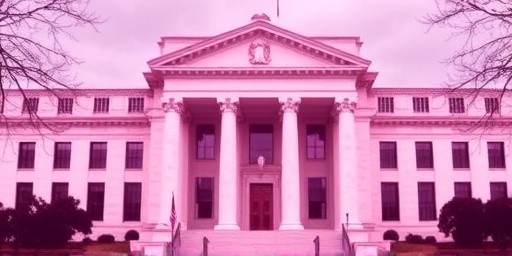
In a move that sent ripples through financial markets, the Federal Reserve has indicated a possible interest rate cut in the coming months, responding to mounting evidence of a slowing U.S. economy. Fed Chair Jerome Powell, during a recent press conference, emphasized that while inflation remains under control, recent data points to decelerating growth in key sectors like manufacturing and consumer spending. This subtle shift in policy stance has ignited optimism among economists and market watchers, who see it as a timely intervention to prevent a deeper downturn.
The announcement comes at a pivotal time, with U.S. GDP growth dipping to 1.6% in the second quarter of 2023, down from 2.1% in the prior period, according to the Bureau of Economic Analysis. Unemployment rates have ticked up slightly to 3.8%, signaling potential labor market softening. Powell noted, ‘We are closely monitoring the evolving economic landscape and stand ready to adjust our tools to support sustainable growth.’ This rhetoric marks a departure from the Fed’s hawkish tone earlier in the year, when aggressive rate hikes were the norm to combat post-pandemic inflation.
Fed’s Close Watch on Inflation and Growth Indicators
The Federal Reserve‘s latest signals are rooted in a comprehensive review of economic data that paints a picture of moderation rather than recession. Core PCE inflation, the Fed’s preferred gauge, held steady at 2.6% year-over-year in June, inching closer to the central bank’s 2% target. However, retail sales grew by just 0.1% last month, the weakest since early 2022, while industrial production fell 0.5%, per Federal Reserve Bank of St. Louis reports. These figures underscore the cooling pressures on the U.S. economy that have prompted the rate cut discussions.
Economists at Goldman Sachs highlighted in a recent note that ‘the Fed’s pivot reflects a balanced approach, avoiding premature easing while acknowledging downside risks.’ Indeed, the Summary of Economic Projections from the Fed’s June meeting adjusted 2023 GDP forecasts downward to 1.0%, from 1.3% previously, and raised unemployment projections to 3.6%. This recalibration suggests the Federal Reserve is prioritizing stability, with interest rates potentially dropping from the current federal funds rate range of 5.25%-5.50% to 5.00%-5.25% as early as September.
Historical context adds weight to these signals. During the 2008 financial crisis and the 2020 pandemic, the Fed swiftly implemented rate cuts to bolster the economy. Today’s environment, though less severe, shares similarities in terms of supply chain disruptions and geopolitical tensions affecting growth. Fed Governor Michelle Bowman echoed this sentiment, stating in a speech last week, ‘Our decisions will be data-dependent, but the trajectory is clear: we aim to foster conditions that support employment and price stability.’
Borrowers Eye Relief from Easing Interest Rates
For millions of American households and businesses grappling with high borrowing costs, the prospect of a Federal Reserve rate cut offers much-needed respite. Mortgage rates, which hover around 6.9% for a 30-year fixed loan according to Freddie Mac, could decline by 0.5 percentage points or more if the Fed acts, potentially unlocking pent-up housing demand. The National Association of Realtors reports that home sales have stagnated at 4.1 million units annually, partly due to elevated interest rates squeezing affordability.
Auto loans and credit card debt, already at record highs of $1.1 trillion per the New York Fed, stand to benefit similarly. A lower federal funds rate typically cascades through the banking system, reducing prime rates and consumer loan APRs. ‘This could save the average borrower hundreds of dollars monthly,’ said Greg McBride, chief financial analyst at Bankrate. Small business owners, facing commercial loan rates above 8%, are particularly hopeful. The U.S. Chamber of Commerce survey indicates that 62% of small firms cite high interest rates as a top barrier to expansion.
Yet, not all borrowers will feel immediate effects. Variable-rate debts like adjustable mortgages or HELOCs will adjust faster than fixed ones. Moreover, the Federal Reserve’s actions influence but do not dictate market rates; lender competition and credit risk play roles too. Still, the anticipation has already spurred a 2% drop in 10-year Treasury yields to 3.8%, a bellwether for broader interest rates.
- Mortgage Impact: Expected 30-year rates to fall to 6.4% by year-end.
- Consumer Debt: Credit card rates could ease from 20.5% average.
- Business Loans: SBA loans may see terms improve for startups.
This relief is crucial as household debt service payments reached 9.7% of disposable income in Q2, the highest since 2008, per Federal Reserve data. A rate cut could alleviate this burden, encouraging spending and investment to counteract the slowing U.S. economy.
Wall Street’s Mixed Response to Rate Cut Hopes
Investors reacted swiftly to the Federal Reserve’s dovish hints, with the S&P 500 climbing 1.2% on the day of Powell’s remarks and the Dow Jones Industrial Average gaining 450 points. Tech stocks, sensitive to interest rates due to their growth profiles, led the charge—Nvidia and Apple surged over 3%. Bond markets also rallied, as lower rates boost the present value of future cash flows.
However, the response wasn’t uniformly bullish. Energy and financial sectors lagged, with banks like JPMorgan Chase dipping 0.8% amid fears of compressed net interest margins. Analysts at Morningstar point out that while a rate cut supports equities, it may signal deeper economic woes. ‘The U.S. economy is at an inflection point; rate cuts could be a soft landing or a prelude to harder times,’ warned Mohamed El-Erian, chief economic advisor at Allianz.
Global markets echoed the sentiment, with European indices up 0.9% and Asian bourses mixed. The U.S. dollar weakened against the euro by 0.5%, reflecting expectations of looser monetary policy. Cryptocurrencies, often correlated with risk assets, saw Bitcoin rise 4% to $31,000. Hedge fund managers are positioning for volatility, with options trading volume spiking 15% on the Chicago Board Options Exchange.
From a longer view, the Federal Reserve’s strategy aims to navigate the U.S. economy through uncertainties like the ongoing effects of the Russia-Ukraine conflict on energy prices and potential labor strikes in key industries. Market futures now price in a 75% chance of a September rate cut, up from 50% a week ago, according to CME FedWatch Tool data.
Global Ripples from U.S. Federal Reserve Policy Shift
The Federal Reserve’s potential rate cut extends beyond U.S. borders, influencing global trade and emerging markets. As the world’s reserve currency, the dollar’s movements affect commodity prices and capital flows. A weaker dollar could ease import costs for developing nations, but it also risks inflating asset bubbles abroad.
Central banks worldwide are watching closely. The European Central Bank, facing its own 6.1% inflation rate, may delay cuts to avoid diverging too far from the Fed. In Asia, the Bank of Japan hinted at tweaking its yield curve control policy in response. ‘Coordinated easing is key to stabilizing the global U.S. economy interdependence,’ said Kristalina Georgieva, IMF Managing Director, in a recent interview.
Trade implications are significant too. With U.S. exports softening—down 2.3% in May per Census Bureau data—a rate cut might stimulate domestic demand, indirectly boosting imports from China and Mexico. However, if the U.S. economy slows further, global growth forecasts could be revised down; the World Bank already cut its 2023 projection to 2.1%.
- Europe: ECB holds rates at 4% but signals flexibility.
- Asia: China’s PBOC injects liquidity amid property sector woes.
- Emerging Markets: Brazil and India brace for capital outflows reversal.
This interconnectedness means the Federal Reserve’s interest rates decisions reverberate, potentially averting a synchronized global slowdown.
Outlook: Federal Reserve’s Path Forward and Economic Scenarios
Looking ahead, the Federal Reserve’s next policy meeting in July will provide clearer clues, though most expect no change until September. Projections suggest two to three quarter-point cuts by year-end, bringing the federal funds rate to around 4.75%-5.00%. This measured approach balances inflation risks—persistent in services at 4.2%—with growth concerns.
Optimistic scenarios envision a soft landing, where the U.S. economy achieves 2% growth without recession, aided by rate cuts and fiscal support like infrastructure spending. Pessimistic views, from firms like Moody’s, warn of a 35% recession probability if consumer confidence—now at 69.0 per Conference Board—continues eroding.
Business leaders are preparing accordingly. Ford Motor Co. announced plans to ramp up EV production if rates fall, while retailers like Walmart anticipate holiday spending boosts. Policymakers in Washington are also discussing targeted relief, such as extending unemployment benefits if needed.
Ultimately, the Federal Reserve’s rate cut signals represent a proactive stance to nurture the U.S. economy’s resilience. As data unfolds, borrowers, investors, and global players will hang on every update, hoping for a trajectory that sustains prosperity amid headwinds.